

The Journey of a Photon: Energy Resistance, Water and the Missing Physics of Infrared Light
What Happens to Light After Your Body Absorbs It?
Examining what happens to sunlight's energy inside the human body reveals how living systems capture environmental energy, move it through water and molecular structures, hold it via resistance to perform work, and release it as heat. Beneath enzymes and signaling pathways lies energy that moves electrons and keeps living systems away from equilibrium. A 2026 preprint by Fosbury et al. proposes "photometabolism," suggesting the solar photon field (peak around 0.75 eV) overlaps with mitochondrial electron transfer activation barriers (0.5 to 0.8 eV) described by Marcus theory. Infrared interacting with water and biomolecules may alter electron transfer probabilities. This aligns with Biological Energy Capture and Resistance (BECR): living systems must capture environmental energy, resist immediate dissipation, perform work, and allow entropy to exit.
Following the Energy After Absorption
Conservation of energy dictates that absorbed photons cannot simply disappear. Although energy is ultimately degraded into randomized molecular motion and heat, complex physics occurs beforehand. Optical penetration depth shows where a photon is initially absorbed, but fails to describe the complete spatial or temporal fate of deposited energy inside a coupled biological matrix. Once absorbed, energy redistributes through electronic states, molecular vibrations, hydrogen bond networks, conformational changes, and electrical potentials. In mid- and far-infrared wavelengths strongly absorbed by surface water, penetration depth alone does not dictate how far, how long, or through what mechanisms energy subsequently influences biological processes.
Water as the Biological Energy Matrix
The body is an aqueous system where proteins, membranes, ions, and mitochondrial machinery operate within structured hydration shells. Infrared photons can couple to collective vibrational modes of water and surrounding biomolecules, altering the energetic environment rather than requiring direct photon strikes on specific complexes. Like ripples spreading across a pond, absorbed photon energy redistributes through the medium. Gerald Pollack's work on interfacial water demonstrates that radiant energy interacting with hydrophilic surfaces alters physical organization and charge, showing biological water is an active matrix.
The Ocean Skin Layer and the Human Body
The ocean illustrates this principle: longer-wavelength infrared is absorbed within the immediate surface boundary layer (micrometers to ~1 mm), yet this thin interface regulates heat, evaporation, and CO2 exchange for the vast ocean below. Similarly, human skin is an aqueous interface separating the body from the environment. Far-infrared light absorbed close to the surface redistributes energy through water, lipids, and proteins, potentially creating intermediate vibrational or electrical states before thermalizing.
Marcus Theory, Electron Transfer and Why Resistance Matters
Under Marcus theory, mitochondrial electron transfer depends on donor-acceptor states, electric fields, and molecular organization, with activation barriers around 0.5 to 0.8 eV. Infrared energy interacting with the surrounding matrix can modify vibrational landscapes, altering the probability of electron transfer. Within the BECR model, controlled resistance prevents immediate thermal dissipation, maintaining gradients (such as membrane potentials) necessary for biological work. The process follows a clear sequence: Capture, Resistance, Transformation, Work, and Dissipation.
What Happens Before Heat?
Absorbed infrared energy eventually becomes heat, but living systems operate far from thermodynamic equilibrium. Biological processes convert rapidly arriving electromagnetic energy into persistent molecular states and gradients on timescales ranging from femtoseconds to years before final thermalization occurs.
The Wider Infrared Spectrum
While photobiomodulation focuses heavily on 600–1,000 nm, longer wavelengths (3,000 nm to 6,000 nm+) strongly overlap with vibrational absorption features of water (OH bonds) and lipids (CH bonds). Quantized infrared photons carry energy capable of interacting with specific molecular vibrational states. Life evolved continuously under this broadband solar spectrum.
Glen Jeffery, 670 nm and the Incandescent Experiment
A 2026 study by Barrett and Jeffery showed that supplementing LED-lit environments with 60 W broadband incandescent desk lamps improved visual performance by ~25% across color contrast measurements. These benefits persisted four to six weeks post-treatment, outperforming single-wavelength 670 nm interventions. Operating incandescent filaments at reduced temperatures offers an efficient way to deliver broadband infrared output.
Why We Are Building BioLux
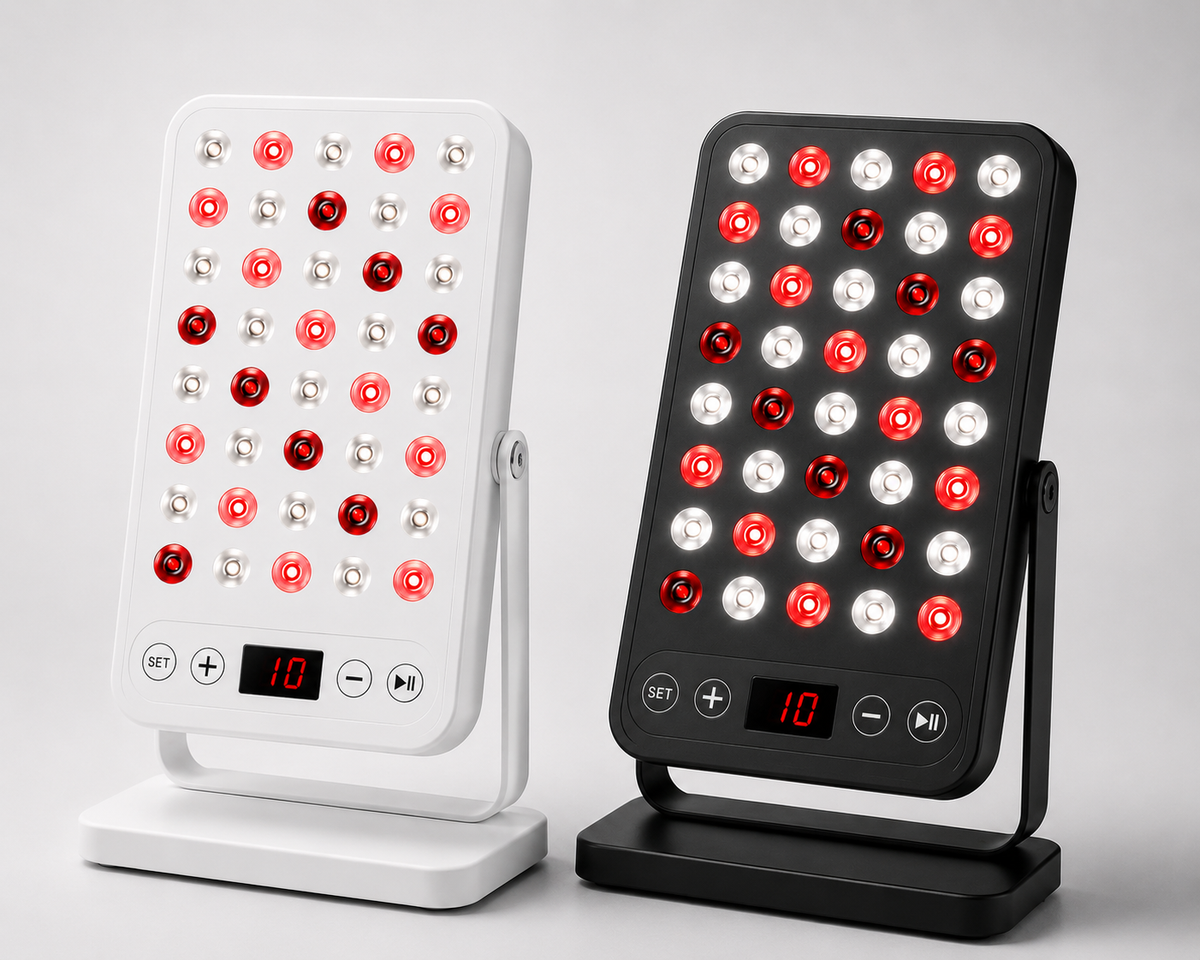
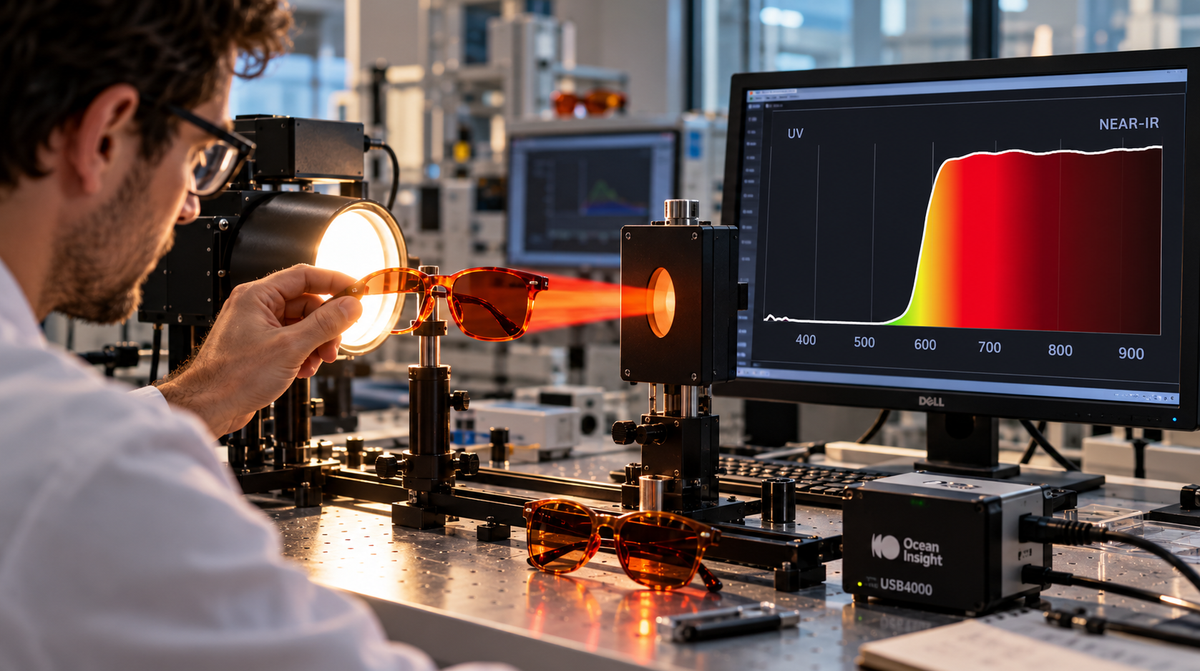
BioSpectral Systems is developing BioLux, a hybrid biological light source combining controllable LEDs with incandescent filaments to supply continuous broadband red and infrared light. The system dims by systematically removing shorter blue and green wavelengths, leaving a red and infrared-dominant spectrum designed for whole-body biological function.
Capturing Energy Without Overheating
Organisms must balance energy capture with dissipation to prevent overheating, emitting long-wave infrared at physiological temperatures. Controlled impedance—facilitated by membranes, ion channels, enzymes, melanin, and biological water—allows energy to be retained long enough for biological work without causing damaging heat accumulation.
Practical Implications
-
Spend time outdoors under natural broadband light.
-
Treat indoor lighting as a biological input rather than simple illumination.
-
Recognize that lumen-equivalent light sources are not biologically equal.
-
View red and near-infrared photobiomodulation as part of a broader infrared spectrum.
-
Consider what indoor environments lack compared to daylight and follow emerging broadband research.
The Most Fascinating Part of the Story of Life
The central question remains how energy moves between initial absorption and final thermalization. Penetration depth alone does not define the spatial boundary of energetic events, as energy redistributes through water, lipids, and proteins to perform work. Emerging photometabolism research and human lighting studies highlight the importance of broadband light. Nathan Siles concludes that understanding health requires tracing how energy enters biology, is resisted, performs work, and is ultimately released.
References
Barrett, E., & Jeffery, G. (2026). LED lighting (350 to 650 nm) undermines human visual performance unless supplemented by wider spectra (400 to 1500 nm+) like daylight. Scientific Reports. https://doi.org/10.1038/s41598-026-35389-6
Fosbury, R. A. E., Seheult, R., Zimmerman, S., & Jeffery, G. (2026). Metabolism in the solar photon field: A physical framework for photon assisted modulation of mitochondrial electron transfer kinetics. bioRxiv. https://www.biorxiv.org/content/10.64898/2026.08.11.744135v1
Robertson, J. E., & Watson, A. J. (1992). Thermal skin effect of the surface ocean and its implications for CO2 uptake. Nature, 358, 738 to 740. https://www.nature.com/articles/358738a0
Wong, E. W., & Minnett, P. J. (2018). The response of the ocean thermal skin layer to variations in incident infrared radiation. Journal of Geophysical Research: Oceans, 123. https://doi.org/10.1002/2017JC013351
Pollack, G. H. (2013). The Fourth Phase of Water: Beyond Solid, Liquid, and Vapor. Ebner & Sons Publishers.



Disclaimer
The information on this site is provided by BioSpectral Systems for educational and informational purposes only. It is not intended to diagnose, treat, cure, or prevent any disease and has not been evaluated by the U.S. Food and Drug Administration or any other regulatory authority. Always consult a qualified healthcare professional before making any changes to your health regimen. By using this site, you acknowledge that you do so at your own discretion and agree that BioSpectral Systems, its affiliates, and contributors are not liable for any outcome resulting from the use of the information presented.
Share:
Cold Adaption Protocol: Cold Thermogenesis
Green Light Therapy for Migraines: Natural Migraine Relief, Light Biology and What the Research Shows