

A little history
Our world has changed a lot in the last century. Changes have occurred faster by far than the century preceding the last and even faster than the centuries before that. Chief among these changes has been the exponential growth of human technology and the many ways in which it shapes the world we live in. One of the most drastic transformations to our way of life came with the invention of electric light. A major shift occurred on our planet when the natural glow of fire and starlight was no longer the only force to separate life on earth from the darkness of night. For billions of years life forms lived, grew, and evolved alongside the natural rhythms of incandescent light from our closest star until not very long ago, humans augmented the planetary environment with the addition of artificial light. Fast forward to modern day over what seems like a millisecond on earth’s timeline and every landmass on the planet is glimmering with light from billions of systems and devices. Our ‘cities that never sleep’ are clearly visible from space as they are brightly illuminated even when night blankets the globe. Every street, home and living room in America, adorned with LED lighting systems and screens emitting blue light while every free hand scrolls away on a smartphone or tablet. It's no longer dark when the sun goes down on our world and in many ways, this is a great luxury of convenience for our species. Yet, in recent years, science has come to understand that this convenience may come at a cost to our health.
Artificial light, most notably the high energy visible blue light emitted from LED lights, screens, and devices, has been shown to disrupt our circadian biology in ways that can lead to numerous deleterious effects throughout the human brain and body. From disrupted sleep cycles and wakefulness states to a cascade of unwanted hormonal and physiological changes, exposure to excessive high energy visible blue light has the power to negatively impact our wellbeing in far reaching significant ways. Blue light is one of the colors found in the 7 natural colors of the rainbow spanning a range of roughly 420nm to 475nm and outdoors our sun emits this light always accompanied by the other 6 color complement of visible light as well as a very large portion of infrared light. When this blue light is delivered in this way the biological effects of generally excitation responses are tempered with energy and informational programming from the other colors of light and the regenerative effects of infrared. Even a blue sky is mainly infrared (~75%) not just blue in isolate. In fact no where in nature do you find isolated blue light being experienced by an observer without any complement of majority infrared and/or the other 6 colors. This is a unified rule that nature has built that would be wise not to break, except for very specific targeted/deliberate reason.
But blue light is powerful, not just because a world illuminated by blue wavelength light allows human eyes to see the surrounding environment with peak visibility due to the lining up of one of our key cone photoreceptors in the eye, but for deeper reasons. This blue light when experienced by the human eye and skin has attention grabbing, cortisol raising, blood glucose boosting and dopamine stimulating effects, just to name a few, and has been purposefully used in environments for these reasons. In fact, when blue light is not accompanied by infrared these responses are immediately extenuated, resulting in an even stronger excitation reaction. Perfect for placing in Casino's in the 1940's and 50's, in restaurants, candy stores and bars in the 1960's and 70's and shopping malls in the 1980's and 90's and then in technology screens in the 2000's and beyond. Excite the unconscious nervous system, biochemistry and hormones immediately, deliver great customer service, get the sale while in a heightened stimulated state and rinse and repeat.
Despite this technology being strategically used for mind control in some situations, in many others it was just 'the thing to do to illuminate an environment', this proved to be a mistake from a health perspective. Now the education around the biological effects of different wavelengths of light is very accessible to people, many are waking up and choosing lighting that contains broad spectrum visible and infrared within it. But the uptake is slow on this because climate agendas say infrared is a waste of energy, rating that as more important than the foundational impact that infrared light has on sustaining all life on earth as we know it at the deepest sub cellular level. That being said, until all lighting is changed to mimic natural daylight during the day, indoors, it's vital for every human on planet earth to own at least a pair of yellow lens melanin infused Biospectral glasses. And assuming a world where lighting is perfectly reflecting sunlight, there is still darkness at night and not everyone wants to just experience firelight spectrum after sunset, so there will still be a deep need for these blue light blocking glasses after sunset, so they are an enduring need for human life unless we begin to live completely with nature like in some very remote places in the world, that may or may not exist in 20 years time.
As more understanding about the harmful potential of artificial light begins to trickle into the mainstream through the help of industry-leading doctors and scientists, many top performers, athletes, and health gurus have begun utilizing blue light blocking eyewear in their arsenal of health-optimization and recovery tactics.
“the vast majority of blue blockers sold today are virtually useless from a blue light protection standpoint”
In recent years, glasses specifically marketed for their ability to protect the wearer from the harmful effects of blue light have exploded into the market as nearly every big eyewear company offers some version of this lens technology in their lineup. Going to the optometrist for a new pair of prescription glasses or readers? No problem. Just ask for the blue light blocking option, right? Well, there’s a catch:
Most of the blue light blocking glasses on the market are a gimmick that provide no relevant protection to the wearer from the harmful effects of blue light.
Sadly, it’s true. Whether companies are deliberately misleading their customers or simply don’t understand the science, we won’t speculate, but the vast majority of blue blockers sold today are virtually useless from a blue light protection standpoint.
Let’s break down why this is the case:
Most harmful blue light exposure comes from LED lights, screens and other devices which are known for emitting a powerful blast of blue light at 455 nanometers on the light spectrum. On a spectral analysis diagram this appears as a tall, narrow blue spike with a peak around 455nm as shown in the image below.

This “spike” of blue light not only constitutes the most intense light energy emitted by common LED light sources, but light measured at this wavelength has been proven to negatively impact our health and sleep by triggering the release of cortisol and suppressing the melatonin production in the body. So, in order for blue light blocking glasses to provide meaningful protection from common LED light sources and screens, they must block these wavelengths of light.
Here’s where the problem comes in.
Most blue light blocking glasses on the market use a nearly clear lens which only blocks blue light up to a range of 420nm-430nm and completely fails to block the powerful spike of blue light at 455nm. That’s because it’s not possible to block this spike of blue light without using a lens that is yellow in color. Some effective blue light blocking glasses go a step further to block both blue and green light, and in this case they may appear orange or red but if the lens does not appear in one of these colors, it’s not providing meaningful protection for your health.
This news may come as a shock to some people who have purchased a pair of nearly clear blue light blocking glasses under the impression that they are providing protection against his harmful artificial light. They may have even seen a demonstration like the one shown here wherein a blue laser or light is shined through a “normal” lens and a nearly clear blue light blocking lens for comparison.

The light is clearly unable to pass through the special blue light “blocking” lens. This effect is achieved because these special light pens are specifically designed to emit a beam of light in the range of up to around 400nm-430nm which is easily blocked by the lens technology and creates the illusion that these lenses are protective against blue light. However, as is illustrated in the below image, this is not the kind of light which is emitted by the LED lighting, screens and devices which surround us every day. These lenses are simply filtering a small portion of the light spectrum while failing to block the wavelengths that have a real impact on health.

Here's where BioSpectral Systems comes in:
From its inception, BioSpectral Systems was determined to offer blue light blocking eyewear that is effective at blocking the most harmful wavelengths of blue light while still offering as much color perception and clarity as possible. With this in mind, we designed a yellow lens infused with natural melanin pigment which blocks 100% of the blue light spike at 455nm while simultaneously providing a comfortable, optically superior experience for the wearer.

Click HERE to learn more about BioSpectral Systems lens technology.
Our goal has been to make eyewear that has a noticeable impact on health, sleep, and recovery for anyone who uses it, and our lens technology has done exactly that for thousands of people across the globe. Wearers of BioSpectral Systems lenses report significantly improved sleep and recovery scores on fitness tracking devices such as Oura and Whoop, even after a short time of use. In one example, professional volleyball player Travis Mewhirter reported that wearing the glasses in the evenings resulted in a 12.5 percent improvement in his sleep score according to his Whoop fitness tracker. He also noticed a reduced resting heart rate; increased heart rate variability and an overall recovery score improvement of around 20 percent. By effectively protecting his eyes from the spike of blue light emitted by LED light sources, Travis is able to maintain proper melatonin production, and regulate the circadian rhythm of his body. The result is better sleep and the benefits to health and recovery that come with it.
The Science Behind BioSpectral Glasses
Protecting Your Eyes, Brain and Sleep in a World of Artificial Light
Modern life has changed faster than our biology. We wake up to phone screens, work under LED panels, stare at laptops, then wind down with televisions and tablets. Our eyes and brain experience more artificial blue light in a single day than many of our grandparents saw in a week.
This is where BioSpectral glasses come in. They are not a fashion accessory. They are a biophysics tool that restores something simple and powerful: the correct light signal to your nervous system so your brain can tell time, make energy and sleep deeply.
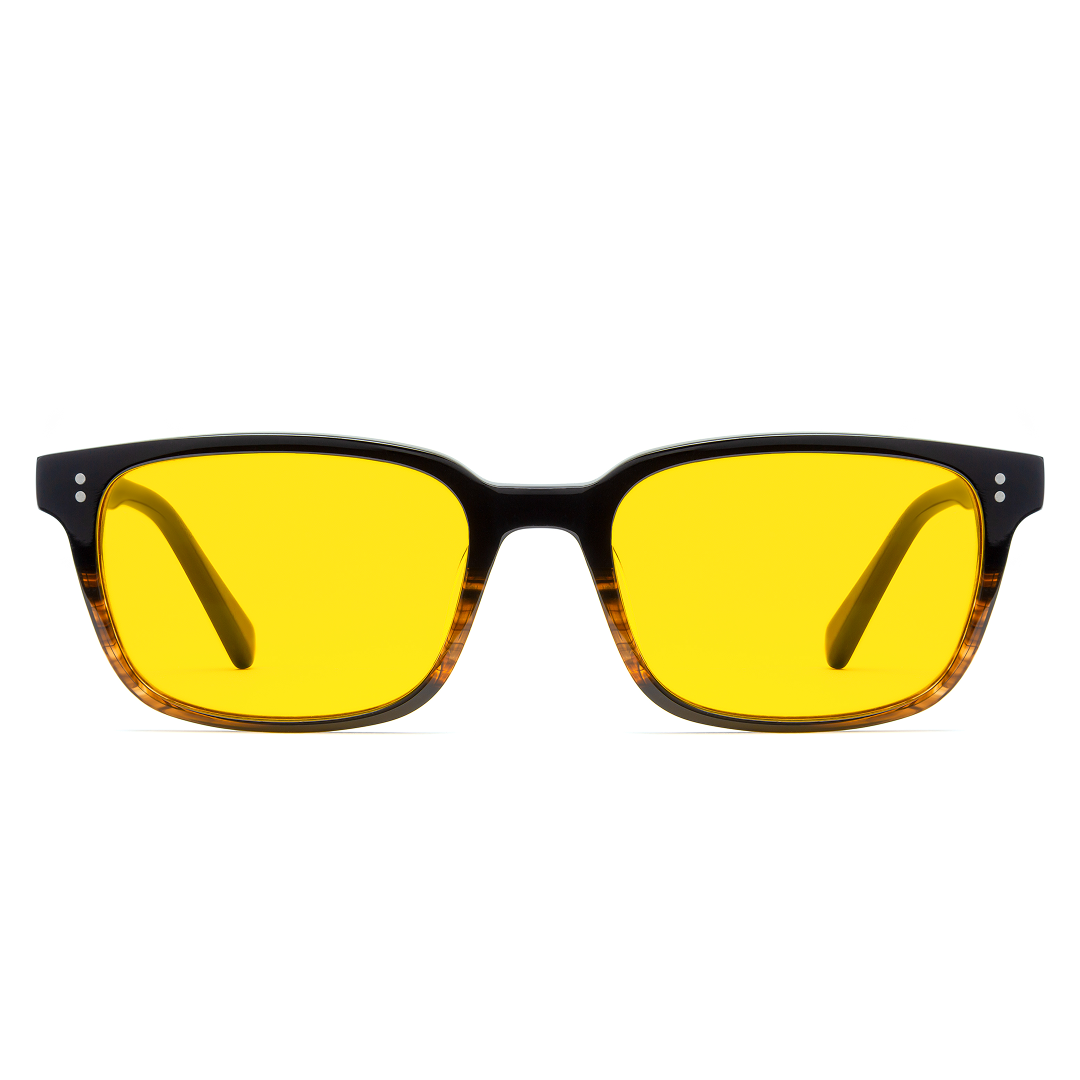
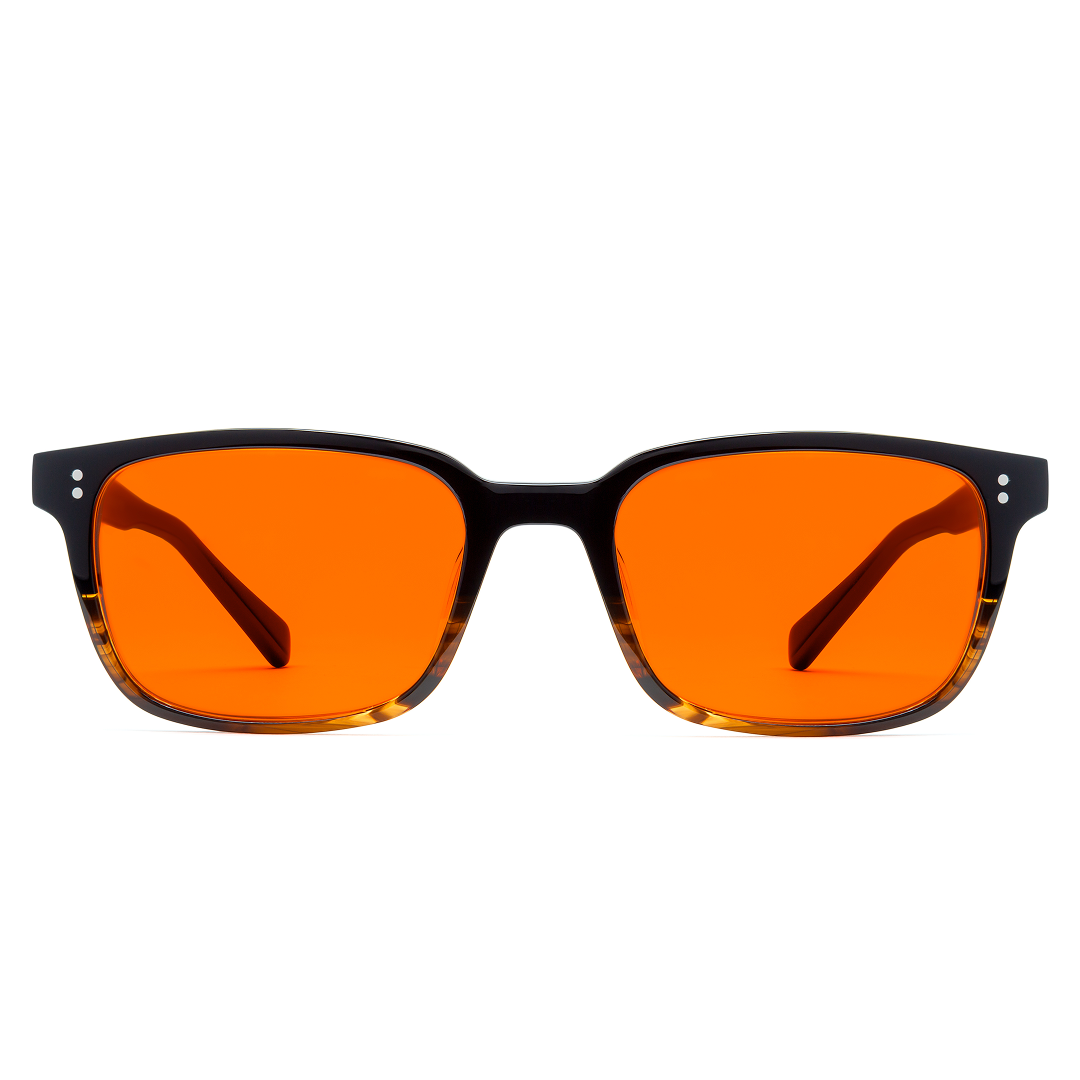
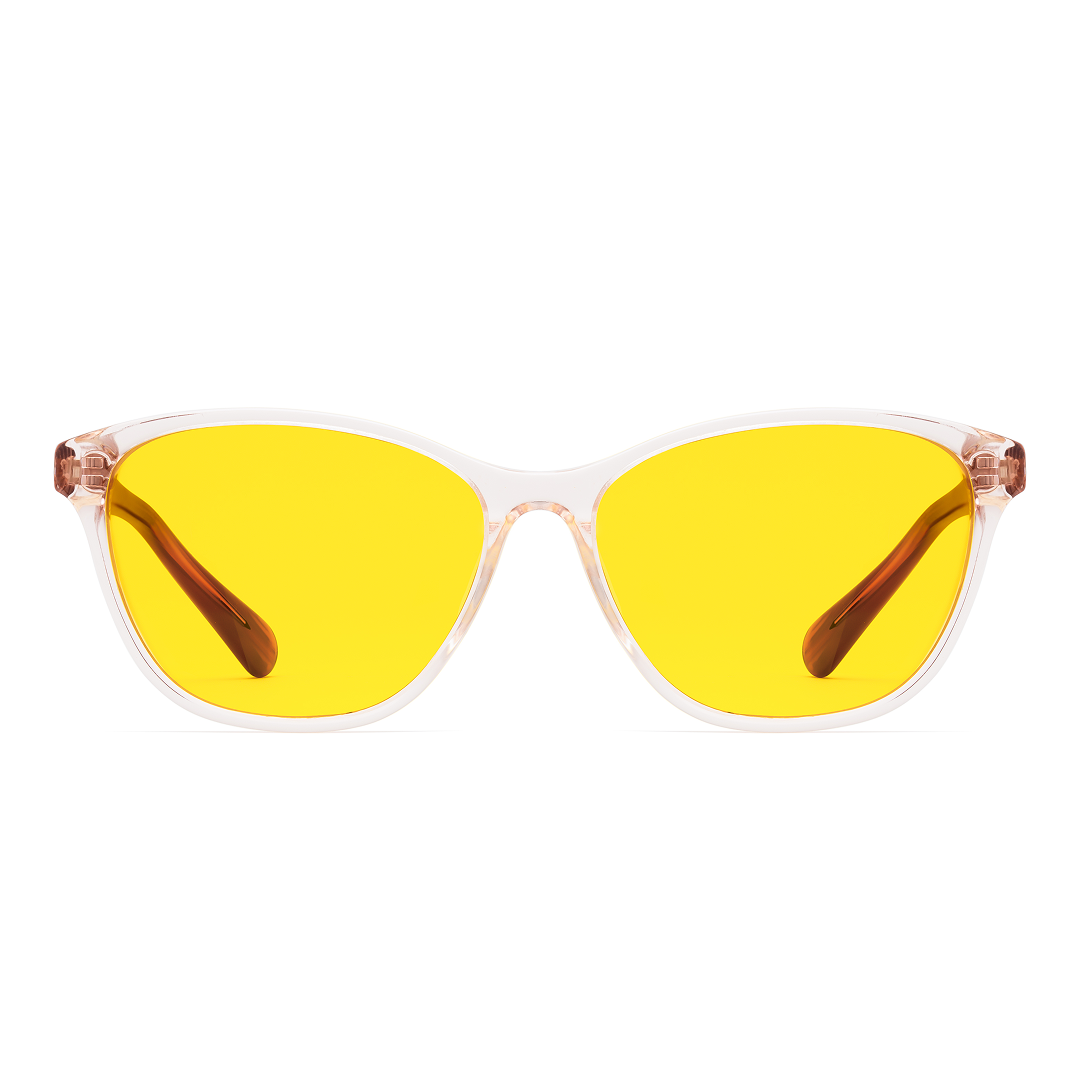
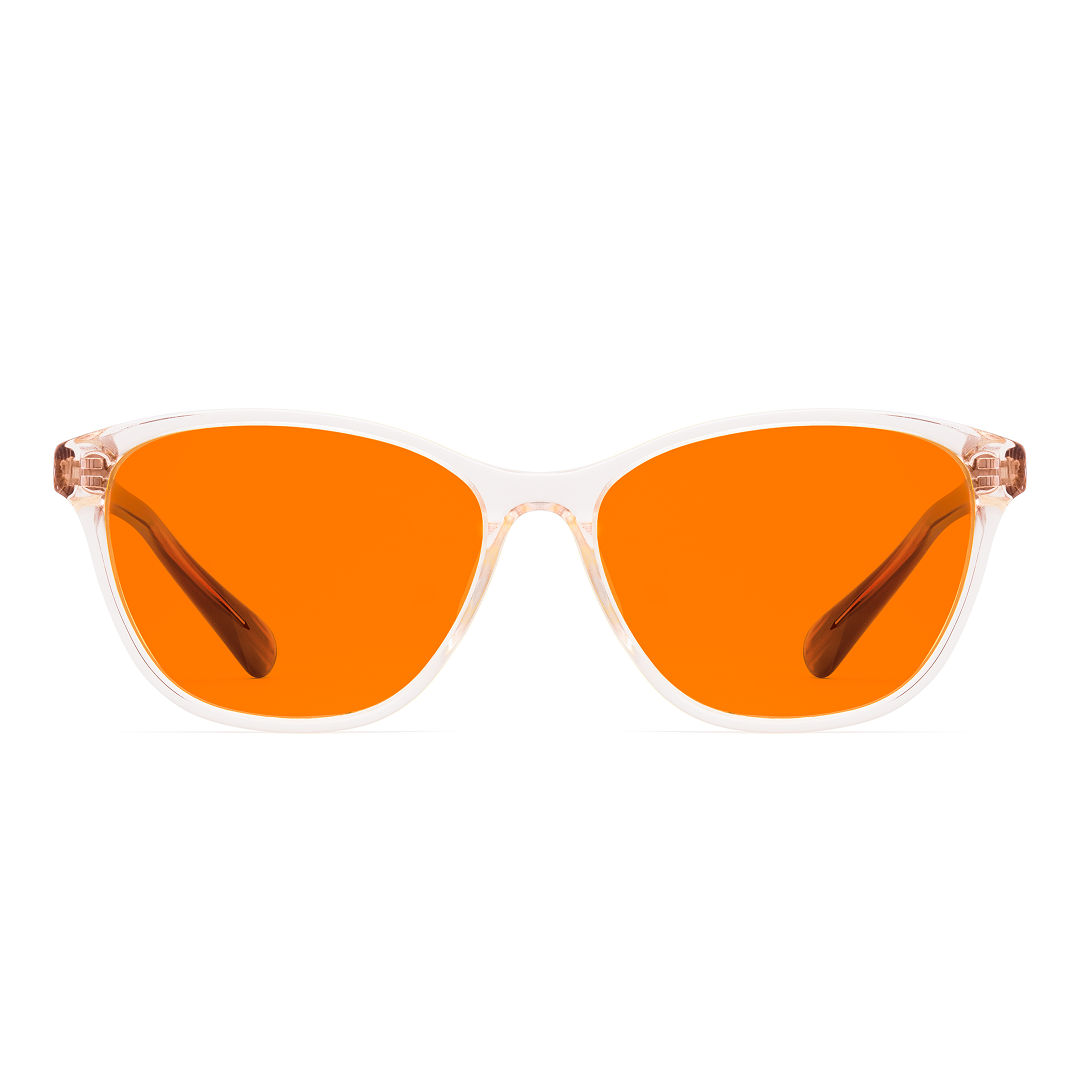
BioSpectral uses melanin infused lenses to filter harmful wavelengths while preserving the parts of light your biology needs. Yellow lenses are designed for daytime indoor light. Orange lenses are designed for after sunset. Together they help realign your circadian rhythm, protect your eyes and support your mitochondria.
Let us explain how and why.
Why Blue Light Matters
Blue light is not the enemy. It is essential. Natural blue wavelengths from the sun during the day tell your brain that it is time to be alert, focused and active. They stimulate cortisol in the morning and suppress melatonin so you can think clearly and move your body with power.
The problem is timing and context.
At night, that same blue light becomes a confusing signal. Your brain does not distinguish between sunlight and a phone screen. When blue light enters the eye after dark, it tells your circadian system that it is still daytime. Melatonin drops, sleep is delayed and the timing of hormones and cellular repair is pushed out of sync. Studies show that artificial blue light at night can significantly shift circadian rhythm and suppress melatonin, which is one of your most powerful antioxidant and repair hormones.
Over time this mismatch does more than make you tired. It affects blood sugar regulation, cardiovascular health, mood, immune function and the ability of cells to repair DNA and clear out damaged components.
- https://pubmed.ncbi.nlm.nih.gov/35286195
- https://pubmed.ncbi.nlm.nih.gov/27191727
- https://www.ahajournals.org/doi/10.1161/CIR.0000000000001388?url_ver=Z39.88-2003&rfr_id=ori:rid:crossref.org&rfr_dat=cr_pub%20%200pubmed
So the goal is not to delete blue light from your life. The goal is to enjoy natural blue light in the morning and daytime, while shielding your brain and eyes from artificial blue at the wrong times.
The BioSpectral Approach
Melanin Infused Lenses That Work With Your Biology
Your body already has a light filter built in. It is called melanin. Melanin absorbs a wide band of wavelengths, converts light into useful forms of energy and protects sensitive structures from excess high energy light. BioSpectral glasses are designed to complement this natural system rather than fight it.
Our lenses are infused with a melanin based filter that selectively removes the wavelengths that are most disruptive under artificial lighting. Instead of a simple tint or a cosmetic coating, the filtering is built into the lens material itself. That means:
-
Smooth natural color balance without the washed out, grey look of sunglasses
-
Thoughtful wavelength targeting for circadian health rather than only eye comfort
-
Stable filtering performance over time
We created two main lens types because your needs in the middle of the day are different from your needs at night.
Day Lens
Protecting Your Brain While You Work Indoors
Sunlight during the day is your best friend. You should never wear BioSpectral glasses outdoors in natural daylight when your eyes can safely adapt, because you want the full solar spectrum to reach your retina and skin.
Indoors it is a different story.
Most modern lighting and digital displays create a light environment that is very heavy in the blue range and very poor in red and near infrared. This is the exact opposite of natural sunlight, where red and infrared dominate and buffer the impact of blue.
BioSpectral Day lenses are designed for these indoor conditions.
What they do
-
Filter one hundred percent of the harsh artificial blue spike from common LEDs and screens
-
Allow generous amounts of green, yellow, red and near infrared to pass through
-
Preserve color perception enough for normal work and social life
When to wear them
-
Any time you are indoors around LED or fluorescent lighting
-
When working on computers, phones or tablets during the day
-
During late afternoon and early evening screen time when you still need to be productive
By restoring a more natural spectral balance, the Day lenses reduce eye strain, headaches and mental fatigue and help protect the delicate retinal circuitry that keeps your circadian timing accurate.
Night Lens
Deep Sleep, Recovery and Hormone Rhythm
Once the sun goes down, your biology is supposed to switch modes. Cortisol falls, melatonin rises and your mitochondria move from performance to repair. This process depends on a strong darkness signal to the brain. Artificial blue and green light from screens and room lighting blunt that signal.
BioSpectral Night lenses are built specifically for this window.
What they do
-
Block one hundred percent of blue light and almost all green light up to the range that is known to suppress melatonin
-
Let through red and near infrared wavelengths which support relaxation and repair
-
Create a warm amber view that your brain reads as a safe evening environment
When to wear them
-
Two to three hours before bed any time you are under artificial light
-
While using televisions, laptops, phones or tablets after sunset
-
In airports, hotels and travel environments where you are surrounded by bright LEDs
Most people notice three consistent changes after a few nights of correct use. They fall asleep faster, wake up less and feel more mentally clear the next day.
Why Not Just Use Any Blue Light Glasses
The market is full of products that claim to be blue blocking. Many are simply fashion frames with a slight coating that blocks ten percent to thirty percent of blue. That is not enough to change circadian signals in a meaningful way when you are under strong LEDs all day.
Key differences with BioSpectral:
-
Melanin infused lenses not simple surface coatings
-
Wavelength targeting designed from a circadian biology perspective, not just digital eye strain comfort
-
Day and night specific designs instead of a one size fits all compromise
-
High optical clarity so you forget you are wearing a filter
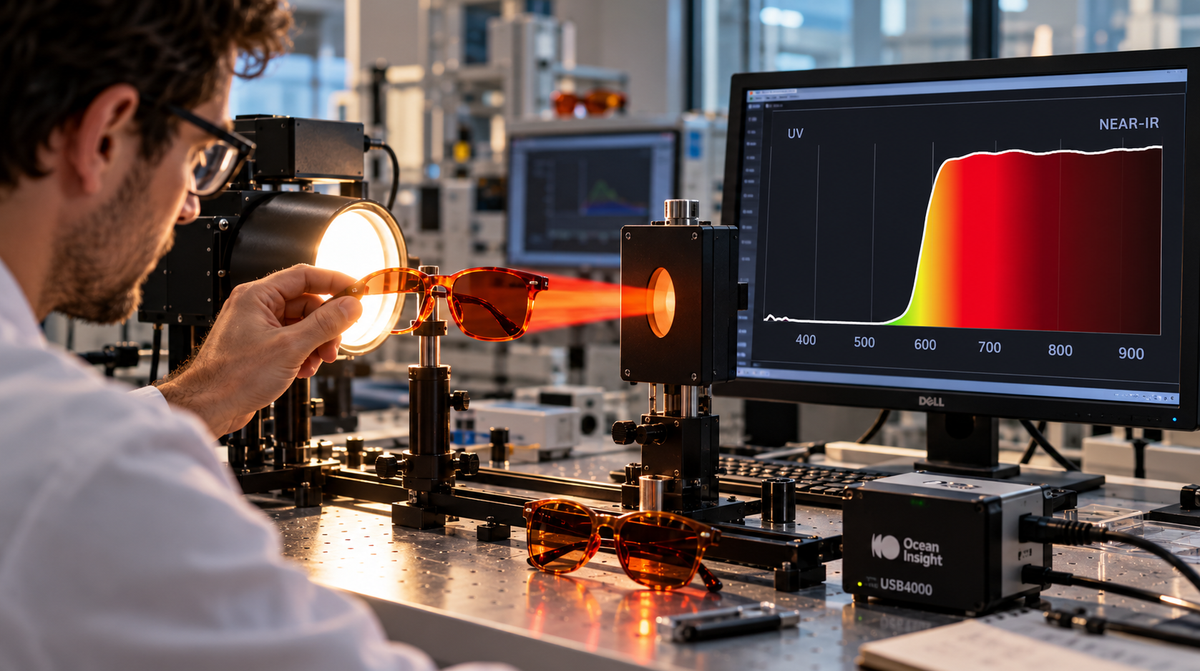
We didn't just want to say this. In 2026 we had an independent lab (Optimize Your Biology) run spectrometer testing on our lenses alongside seven competitor brands. The results: our Night lens blocked 99% of melanopic light — tying the best in the field — while passing 94% of red and near-infrared light through, more than every other brand tested. Our Day lens blocked 97% of blue light overall, and 71% of melanopic light specifically — ahead of every clear/light-tint competitor tested. See the full comparison and the research behind it here.
For people who already live in a high stress, high device world, these details matter. The whole point is to give your nervous system a stronger, clearer signal with as little friction as possible.
How To Use BioSpectral Glasses In Real Life
You do not need another complicated protocol. You need a simple set of habits that are easy to keep.
Morning
Do not wear BioSpectral glasses outdoors. Get natural light directly into your eyes and onto your skin within the first hour of waking. This is the anchor for your internal clock.
Daytime indoors
-
Put on your Day lenses any time you start working on a screen or sit under office style lighting
-
If you move outside into natural daylight, take them off
After sunset
-
Dim overhead lights and use lamps where possible
-
Switch from Day lenses to Night lenses as soon as your main work for the evening is complete
-
Keep them on through all screen use until you are ready to sleep
Sleep environment
-
Aim for a dark bedroom
-
If you need a night light, choose a very low level red or amber light
This pattern works with your biology. Daytime protection indoors without blocking natural sunlight. Night time protection from artificial light without trying to live in complete darkness in a digital world.
Beyond Glasses
Light As A Foundational Health Input
BioSpectral exists because light is a missing pillar in modern health. We focus on melanin infused eyewear, full spectrum lighting and education because we have seen how powerful it is when people align their environment with basic biophysics.
For most people, three simple moves create a huge shift:
-
More morning sunlight on skin and eyes
-
Less artificial blue indoors during the day
-
Almost zero blue and green light to the eyes after sunset
BioSpectral glasses make steps two and three practical.
If you are curious to go deeper into the biophysics of light, water and magnetism, our learning hub and podcast explore how these same principles relate to sleep, mood, metabolic health, children, athletes and healthy aging.
Bringing It All Together
Your body runs on light driven timing. Your mitochondria listen to the spectrum at your eyes and skin to decide how to allocate energy between performance, repair and defense.
BioSpectral Day and Night glasses are designed to correct the signal in the environments where it has drifted the furthest from nature. They protect your retina and brain, support deeper sleep and give your cells a fair chance to do what they are already wired to do: keep you clear headed, resilient and fully alive.
Developed by nature, backed by science.


Disclaimer
The information on this site is provided by BioSpectral Systems for educational and informational purposes only. It is not intended to diagnose, treat, cure, or prevent any disease and has not been evaluated by the U.S. Food and Drug Administration or any other regulatory authority. Always consult a qualified healthcare professional before making any changes to your health regimen. By using this site, you acknowledge that you do so at your own discretion and agree that BioSpectral Systems, its affiliates, and contributors are not liable for any outcome resulting from the use of the information presented.
Share:
Autism Disorder: Red and Infrared Light Photobiomodulation
Benefits of Blue Light Glasses: Why Blue Light Protection Is So Important (And So Uncommon)