

Modern gaming takes concentration, determination, and no small amount of skill. Unfortunately, it may also be taking its toll on your health. That’s because the digital screens we use to dive into our virtual worlds emit large amounts of high-energy blue light, throwing the body’s natural sleep cycle completely out of whack. And contrary to popular belief, clear blue light gaming glasses aren’t doing anything to help.
But let’s back up for a second. What exactly are blue light gaming glasses, and why should gamers care?
Blue Light and Gamers
Have you ever had a difficult time falling asleep after a long gaming session? Have you ever awoken from a full night of sleep only to feel groggy and unfocused through the rest of your day? If so, then you may be suffering from over exposure to blue light — more specifically, the blue light emitted by computers, TVs, mobile devices, and other digital screens.
You see, the human body naturally calibrates sleep cycles (AKA circadian rhythms) based on the sun. Sunlight, particularly blue-spectrum light at or near the 455n range, suppresses our production of the sleep hormone melatonin, helping us feel more alert throughout the day. Then once the sun goes down and blue light disappears, we resume melatonin production and become tired enough to lay down for a restful night’s sleep.
However, the sun isn’t the only source of 455nm blue light. Digital screens also produce high-energy blue light, and when we expose ourselves to this light for long periods of time, melatonin production dries up, circadian rhythms become unbalanced, and restful sleep turns into a pipe dream. Melatonin suppression from blue light exposure can lead to other problems too, including blurred vision, headaches, depression, and more.
Blue light exposure has become a major issue in the last few years, as the average person is now spending more than half of the waking day using digital screen devices. Gamers, who tend to turn on the screens and keep them on into the wee hours of the morning (when the human body is at its most sensitive to blue light), may be at even greater risk.
What most gamers do not realise is that this is not just a sleep issue. Blue light at night is a performance issue, a brain recovery issue, and over time, potentially a mental health issue. The eye is not just a camera. It is also part of the timing system for the entire brain and body. Specialised retinal cells containing melanopsin send blue light information directly into the suprachiasmatic nucleus, the master circadian clock, as well as pathways that influence dopamine, cortisol, alertness, mood, and the timing of melatonin release. When a gamer sits under LED lighting and stares into a bright monitor late into the night, they are not simply “awake because the game is exciting.” They are sending a powerful daytime signal into a nervous system that is supposed to be shifting into repair mode. That mismatch can leave reaction time, working memory, emotional regulation, and recovery all worse the next day, even if total sleep time looks acceptable on paper.
There is another important layer here too: dopamine. Gaming is already a highly dopaminergic activity. It demands attention, reward seeking, pattern recognition, and often emotional intensity. Blue light, especially in the evening, supports wakefulness and further biases the brain toward alert, stimulated states. In the short term that can feel like better performance, more focus, and one more match. In reality, it often comes at the cost of sleep architecture, reduced overnight brain cleanup, lower next day motivation, and a progressively flatter baseline mood. This is one reason some gamers end up feeling wired at night but foggy, flat, and unmotivated during the day. The issue is not gaming alone. It is the combination of a high stimulation task with biologically inappropriate light at the exact time the brain should be shifting toward melatonin, deep sleep, memory consolidation, and tissue repair.
And that brings us to blue light gaming glasses.
A Clear Solution? Maybe Not
In response to gamers’ blue light woes, several companies have begun marketing clear-lens blue light gaming glasses. These glasses look just like normal glasses, but include a clear, semi-reflective resin covering the lenses themselves. This coating is designed to filter out blue light, leaving the wearer free to enjoy digital screens without impacting melatonin production.
There’s just one problem: Clear-lense gaming glasses don’t work.
Why not? Well, the answer is in the name.
- Clear lenses: lenses that are not tinted in any noticeable way, allow essentially the full color spectrum to pass through.
- The semi-reflective outer coating on the lenses blocks some blue light, but not enough to make any real difference to the wearer. In fact, even the most effective clear-lens gaming glasses are only capable of blocking out ~30% of harmful blue light. As such, wearing these glasses while gaming leads to circadian disruption, and all of the issues that go along with it.
From a biophysics perspective, that remaining blue light is not a trivial detail. Melanopsin does not need huge amounts of light to keep sending an alerting signal into the brain, especially at night when the nervous system is more light sensitive. This means that partial filtering often fails to solve the real problem. A gamer may feel more comfortable in clear lenses because there is slightly less glare, but comfort is not the same as circadian protection. What matters is whether the light stimulus reaching the retina is still strong enough to suppress melatonin and keep the clock in a false daytime state. In most cases with clear gaming glasses, it is. That is why so many people buy them, feel a slight improvement in eye strain, but notice no real change in sleep, next day recovery, or nighttime alertness.
bioSpectral Systems Tinted Lenses
The sad fact is that clear lenses don’t provide enough protection, but that doesn’t mean that the overall concept is flawed. Blue light gaming glasses can protect your eyes and help ensure better sleep, provided that they use the right kind of tinted lenses.
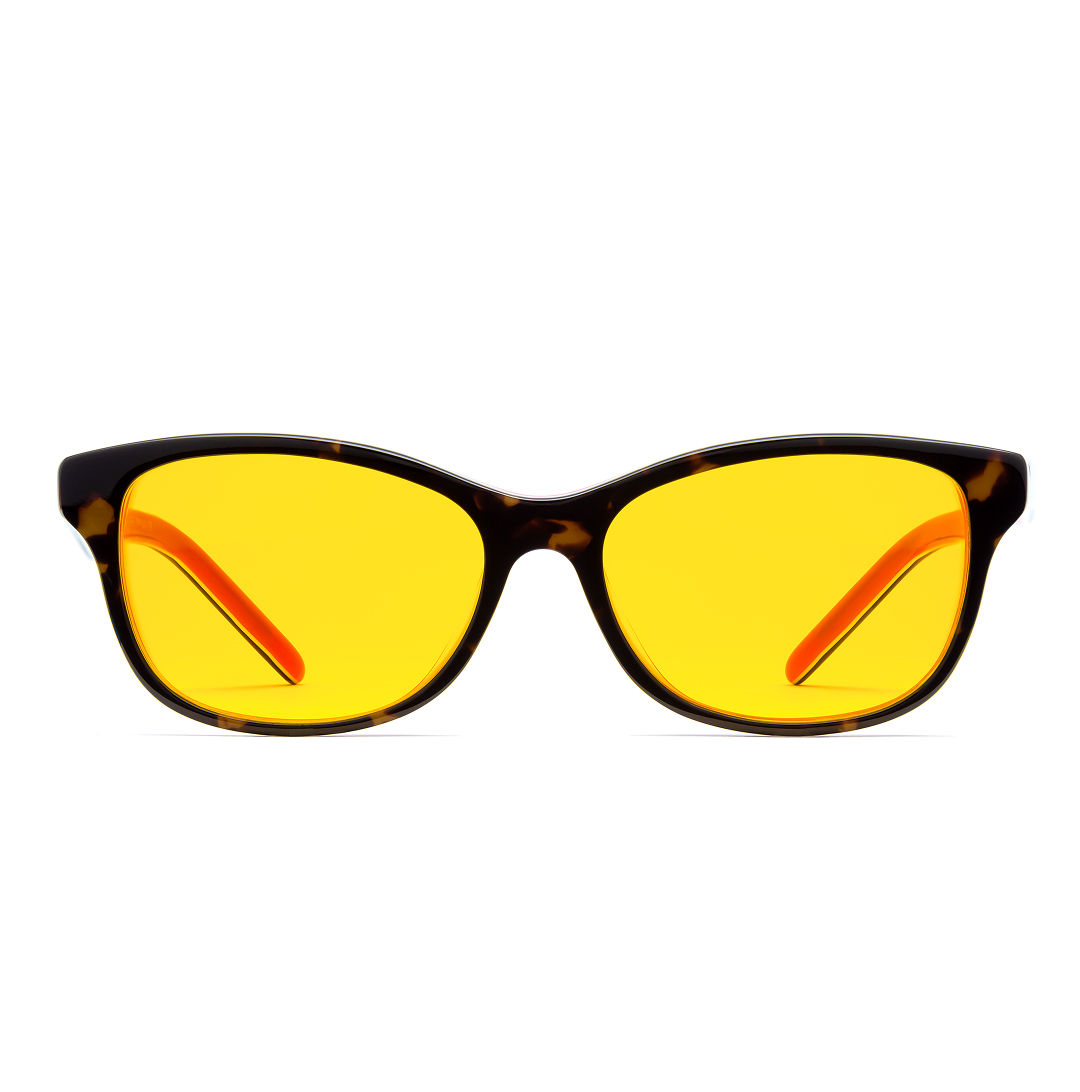
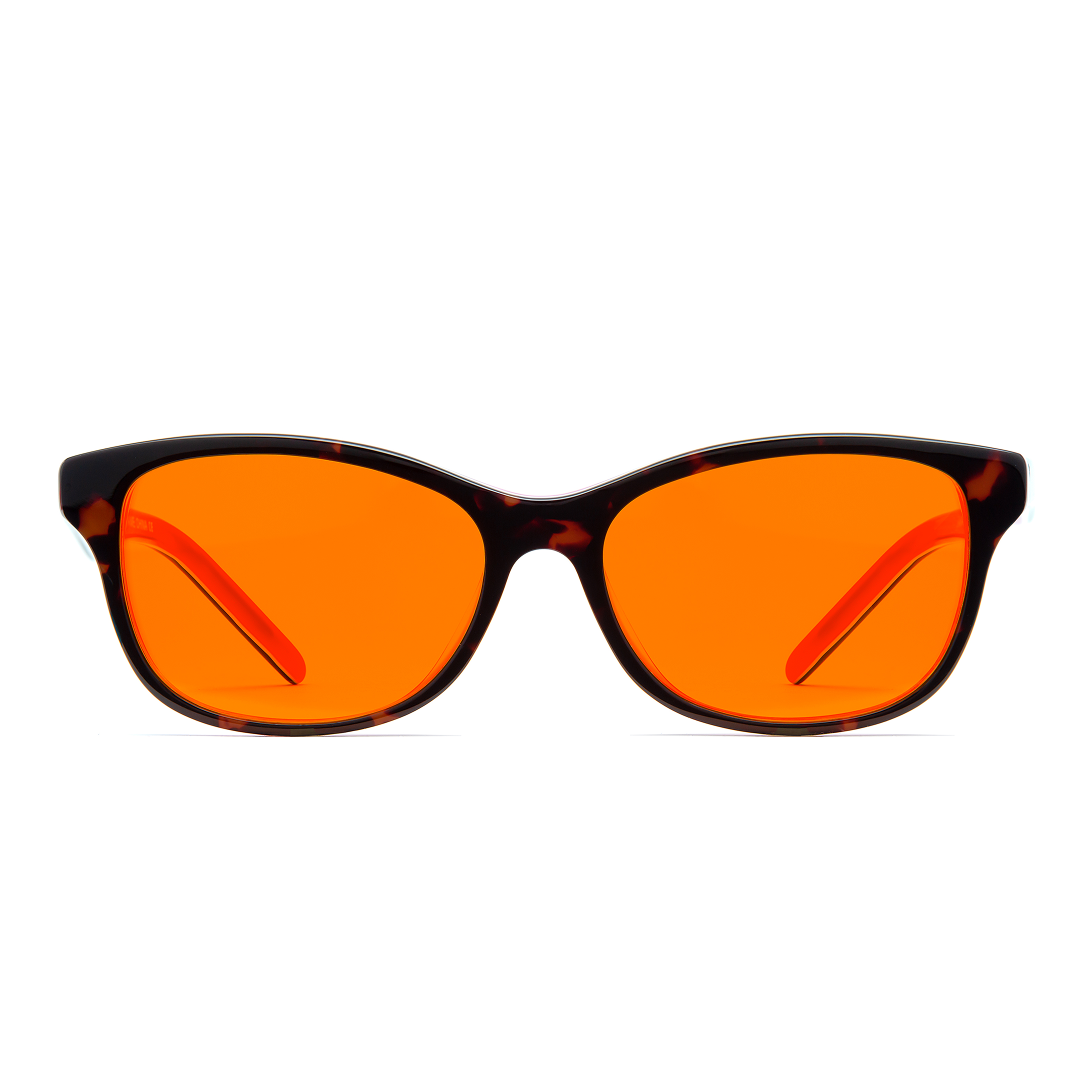
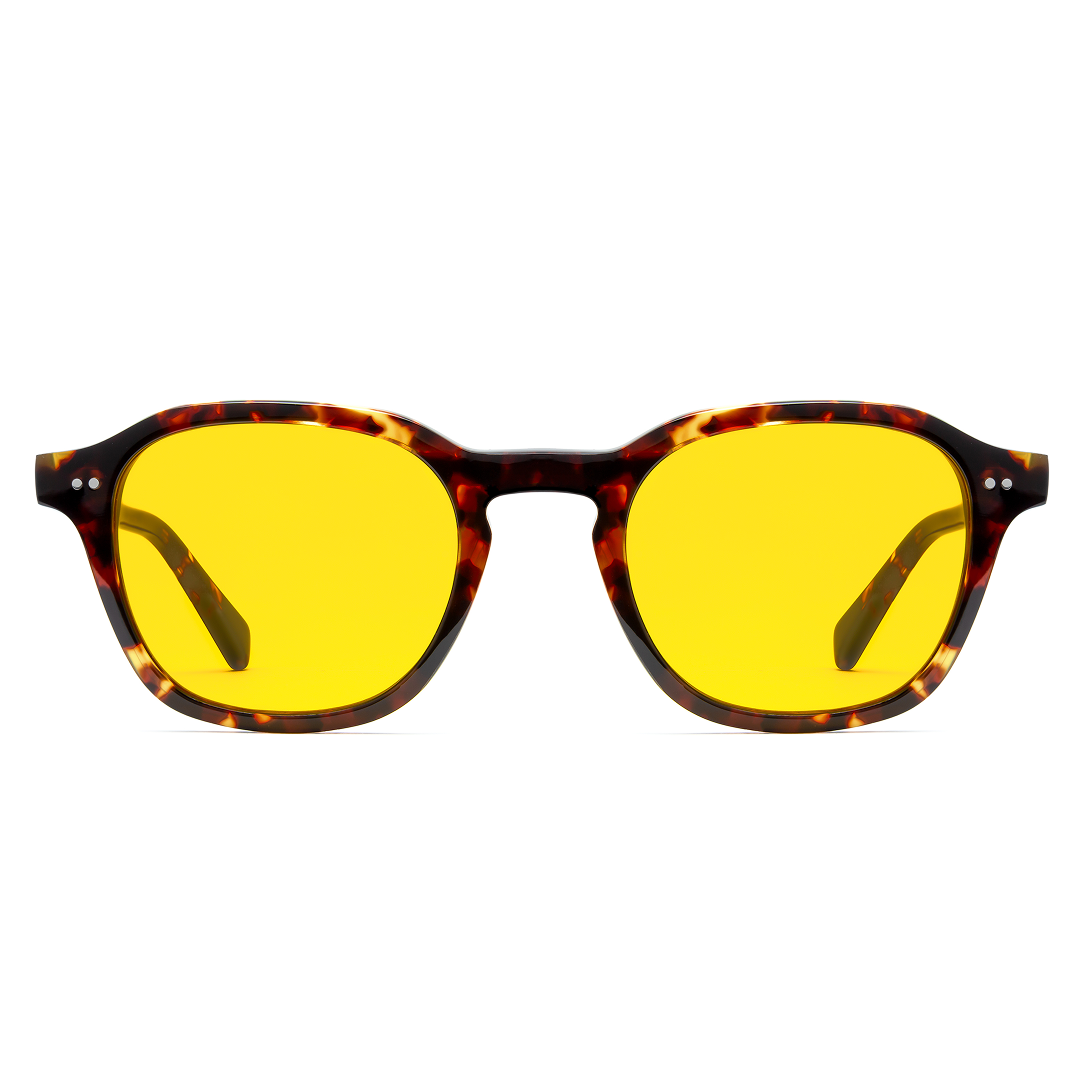
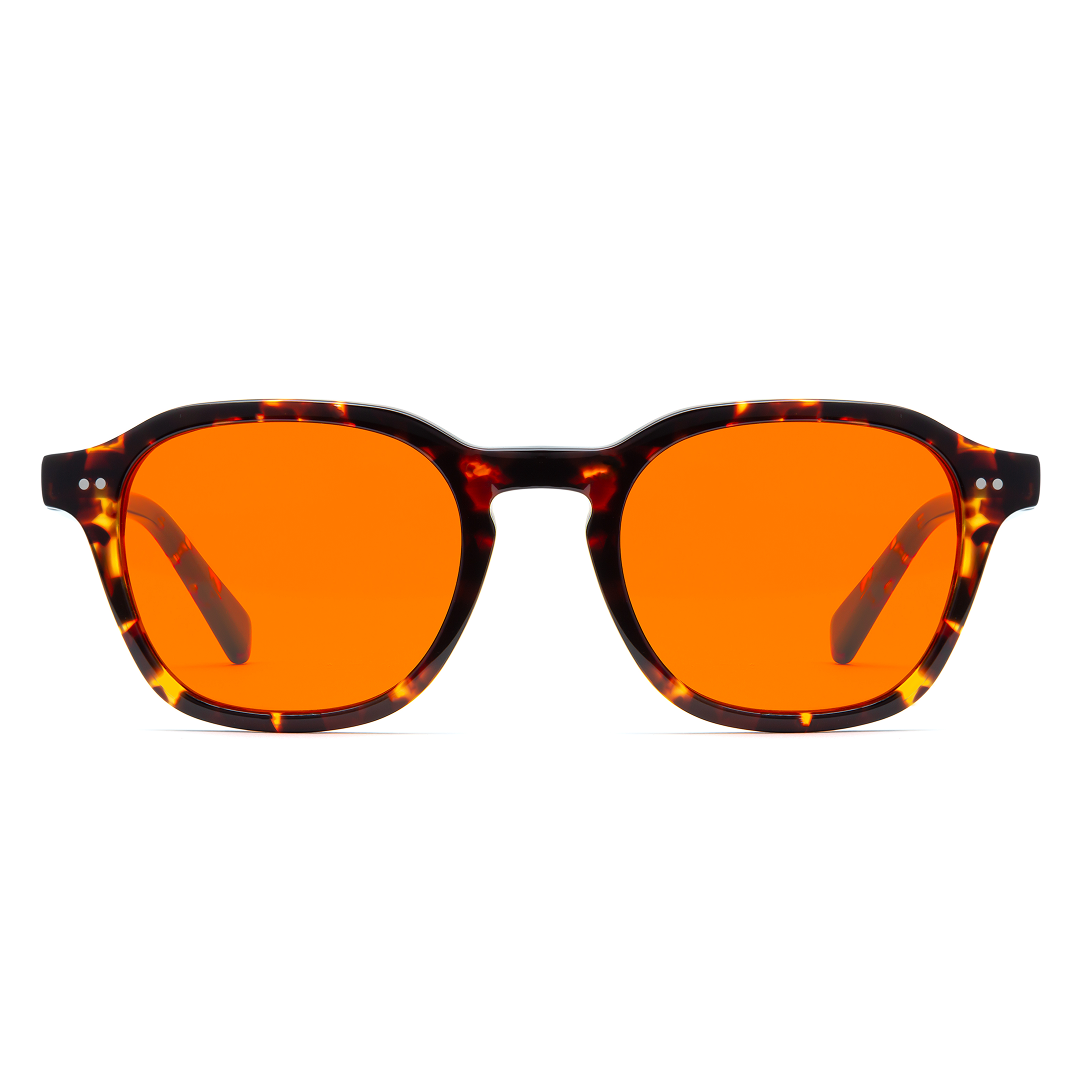
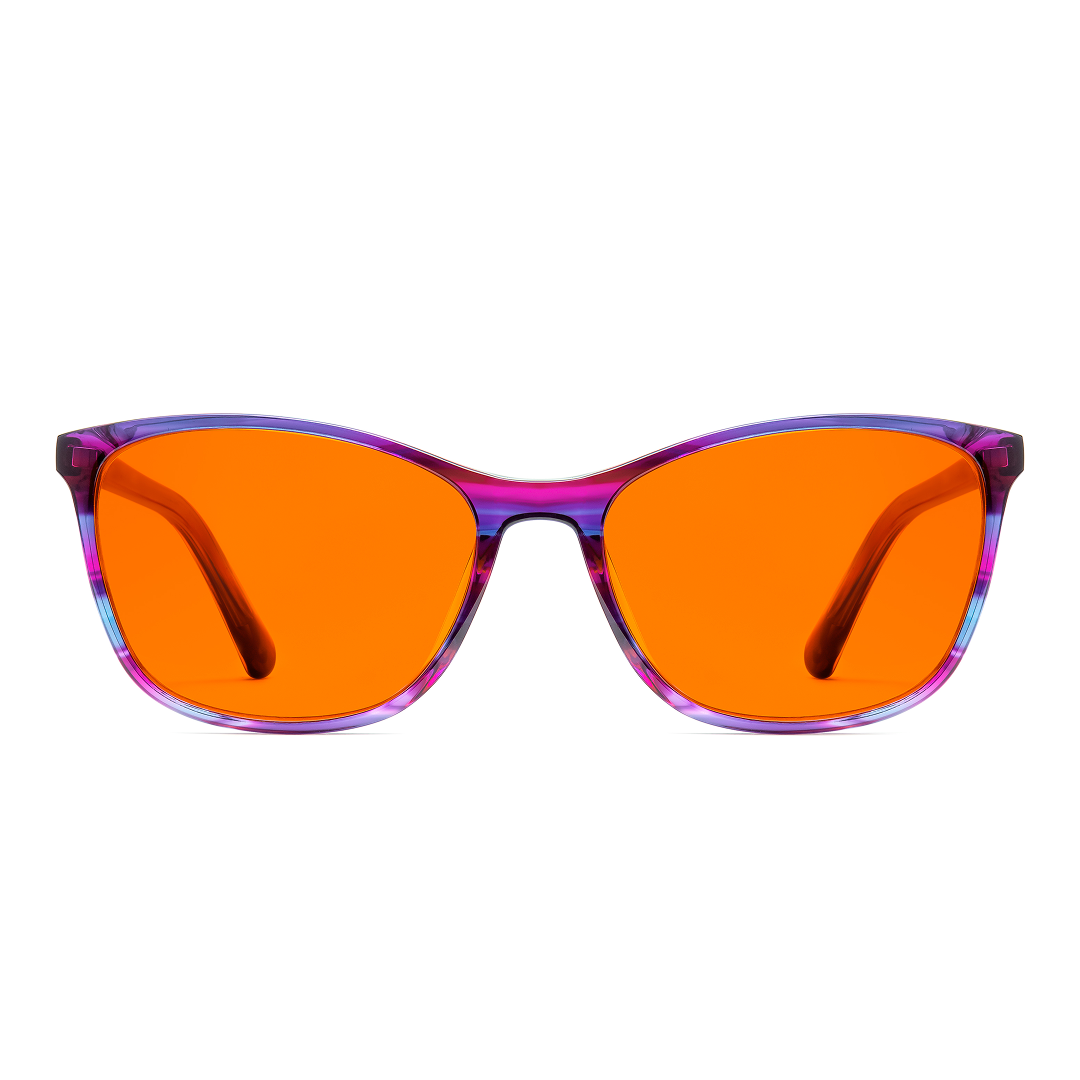
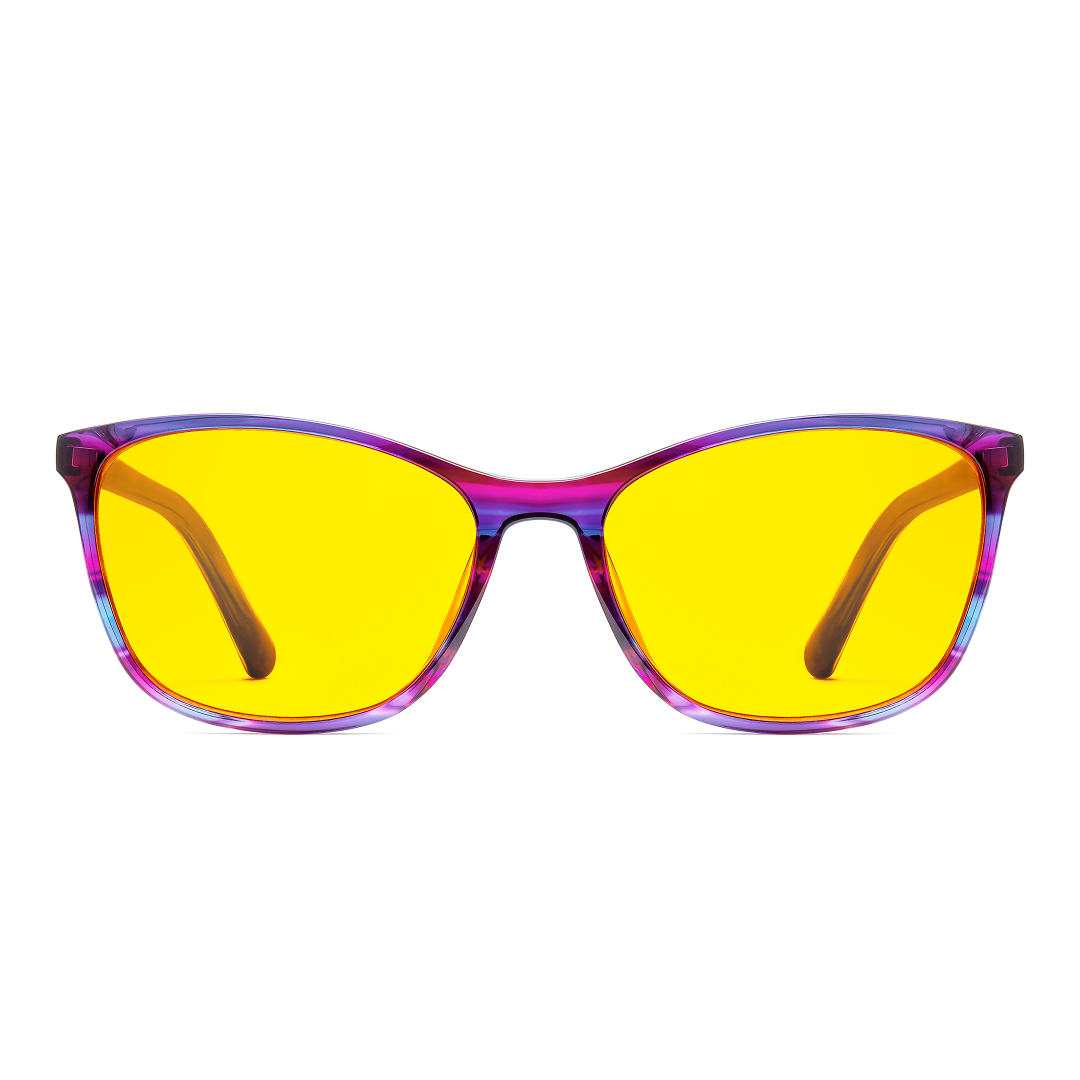
bioSpectral Systems tinted gaming glasses are the only complete blue light gaming solution. Instead of a clear resin coating that allows blue light to pass through unhindered, these glasses incorporate synthetic melanin built directly into tinted lenses. This mimics the natural filtration curve of the human eye, filtering out 100% of harmful 455nm blue light, while still preserving optimal color perception.
This is where proper spectral filtering becomes a real competitive advantage, not just a wellness extra. The best gaming setup in the world means very little if your sleep is shallow, your nervous system is overclocked, and your brain is trying to learn, adapt, and recover in the wrong light environment. A well timed tinted lens allows a gamer to keep enjoying the modern digital world while dramatically reducing the biological cost of that exposure. It protects the retinal pathways that feed the brain’s timing centers, reduces the likelihood of late night melanopsin overstimulation, and gives the body a much better chance of transitioning into real recovery once the session ends. Good light hygiene does not make someone less serious about gaming. It makes them serious enough to protect the system that gaming depends on: the eyes, the brain, the circadian rhythm, and the next day’s performance.
The end result? Gamers enjoy the freedom to play for as long or as late as they’d like, and still achieve restful, rejuvenating sleep once it’s time to put the controller down.
So, are gaming glasses worth it? Well, it all depends. If you’re thinking about buying clear blue light glasses for your marathon gaming sessions, then you might want to reconsider. Clear lenses don’t block 455nm blue light, and they don’t help keep your circadian rhythms on course. On the other, tinted lenses from Blue Free Optical are proven to block 100% of blue light at the most damaging wavelengths up to 455nm, so you can enjoy a full day’s worth of gaming without suppressing your melatonin production.
The real conversation here is bigger than glasses. It is about whether you want to keep trading tomorrow’s cognition, mood, recovery, and performance for tonight’s screen exposure, or whether you want a setup that respects how the brain actually works. Great gamers care about inputs, precision, and edge. Light is one of the most powerful inputs of all. Once you understand that, proper blue light protection stops being a gimmick and starts becoming part of a serious performance strategy.
Ditch your clear gaming glasses; take blue light protection to the next level, with bioSpectral Systems.
Want more information and exclusive deals? Sign up for our newsletter!



Disclaimer
The information on this site is provided by BioSpectral Systems for educational and informational purposes only. It is not intended to diagnose, treat, cure, or prevent any disease and has not been evaluated by the U.S. Food and Drug Administration or any other regulatory authority. Always consult a qualified healthcare professional before making any changes to your health regimen. By using this site, you acknowledge that you do so at your own discretion and agree that BioSpectral Systems, its affiliates, and contributors are not liable for any outcome resulting from the use of the information presented.
Share:
Folic Acid Trap: Fortified Food May Harm Brain Development
Guest Post on Sleep: Travis Mewhirter, Podcast 05/13/22