

Workplace wellness explained
Light, sleep, brain health, circadian rhythm, and the indoor environment are the missing foundations of employee wellbeing.
Most workplace wellness programs begin with good intentions. They usually encourage movement, nutrition, hydration, stress management, meditation, mental health support, and healthier habits. These all matter, but they often miss the environmental signal that silently shapes every one of these behaviors: light.
The human body does not experience light as simple brightness. Light is biological energy and information. It reaches photoreceptors in the eyes and skin, and influences the nervous system, mitochondria, blood vessels, hormones, immune system, and circadian clock. It helps the brain know when to wake, when to focus, when to digest, when to repair, and when to sleep.
This is why workplace wellness can no longer be separated from the lighting choices within the indoor environment.
For most of human history, our days were shaped by sunrise, full-spectrum daylight, the changing angle of the sun, infrared rich natural environments, sunset, darkness, and sleep. Morning outdoor light helps anchor the circadian clock. Midday light supports alertness and biological activation. Evening light gradually softens and red shifts so the nervous system can move toward recovery. Darkness at night allows melatonin, deep sleep, tissue repair, and immune regulation to occur.
Modern indoor lighting often does the opposite. Many buildings are too dim during the day to strongly support circadian activation, yet too bright and blue enriched at night to support sleep. This “brighter nights and darker days” pattern has become one of the most underappreciated wellness
challenges of modern life. For employees, this can show up as eye strain, afternoon crashes, poor sleep, low mood, reduced focus, reduced recovery, and a nervous system that never fully shifts out of stress mode.
This does not mean lighting is a treatment for disease. It means the human body is light-responsive, and indoor environments should be designed with that reality in mind.
Why Infrared Belongs In The Conversation
When people talk about light and health, they usually focus on blue light. That conversation is important, but incomplete.
Natural sunlight does not deliver blue light alone. It delivers visible light alongside red and infrared wavelengths. In nature, the more stimulating parts of the visible spectrum are always accompanied by longer wavelengths that interact with tissue, water, circulation, and mitochondria.
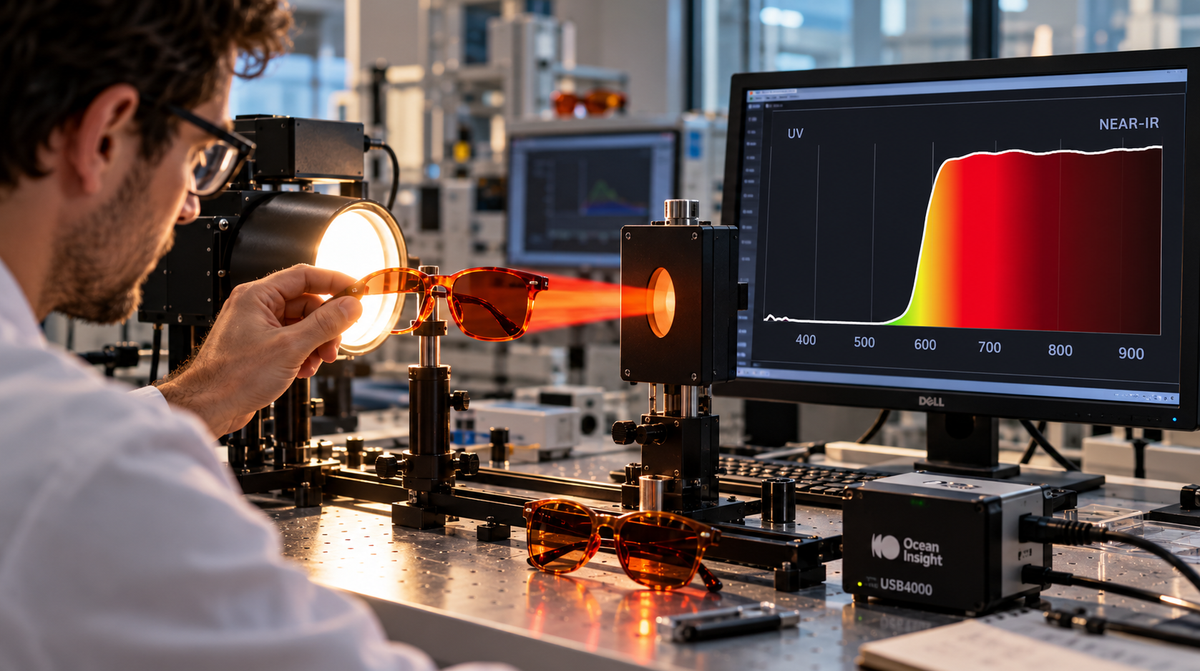
Red and near-infrared light are widely studied in the field of photobiomodulation. Research reviews describe how red and near infrared light can interact with mitochondrial enzymes such as cytochrome c oxidase and influence nitric oxide, ATP, calcium signaling, reactive oxygen signaling, and cellular metabolism.
Infrared is also deeply connected to water biology. Work from Gerald Pollack’s laboratory has explored how infrared energy can expand the exclusion zone of structured water near hydrophilic surfaces. From a practical wellness perspective, this points to a broader idea: the body is not only biochemical. It is also aqueous, electrical, and photonic. Water, fascia, blood flow, cell membranes, mitochondria, and connective tissue are all part of the light environment.
A Brief History Of Corporate Office Lighting
Today, many people spend the majority of their day indoors under artificial lighting that is bright enough to see by, but biologically incomplete.
In the early 1900s, corporate and commercial spaces relied mostly on incandescent lighting. This light was inefficient, but it was warm, red, rich, and infrared rich. By the 1950s, fluorescent tube lighting became widespread throughout workplaces because it produced more visible light for less power. In the 1960s, fluorescent troffers became the standard look of the modern office. Uniform brightness, productivity, and efficiency were prioritized over spectral quality.
In the 1970s and 1980s, energy concerns accelerated the push toward more efficient lighting. Compact fluorescents and improved fluorescent systems became common. In the 1990s and 2000s, LED technology rapidly advanced, especially after the commercial rise of blue LED technology. By the 2010s, LED panels, strips, and recessed fixtures became the dominant lighting choice in offices, malls, airports, hospitals, schools, and most indoor environments.
Each step improved energy efficiency, but reduced the red and infrared richness that was present in firelight, incandescent bulbs, halogen bulbs, and sunlight. No light is inherently harmful or beneficial by itself. The better question is whether the ratios, timing, and spectrum match the conditions human biology evolved under.
The result is a mismatch: darker days, brighter nights, more screen exposure, less outdoor light, less infrared, and more circadian confusion.
A Monash University led study, published in Nature Mental Health, examined more than 85,000 people and found that greater nighttime light exposure was associated with increased risk for several psychiatric disorders, while greater daytime light exposure was associated with reduced risk for several outcomes.
This makes the workplace relevant. Employees are not only affected by what they eat, how much they move, or whether they meditate. They are also affected by the lighting environment under which they sit under every day.
The positive news is that companies are starting to pay attention. Human-centric lighting systems are beginning to change color temperature throughout the day, often moving from warmer morning light toward brighter midday light and back toward warmer evening light. This is a step in the right direction. But one major element is still often missing: infrared.
Sunlight contains about 45% broadband infrared all day long. Firelight contains over 80% infrared. Incandescent, halogen, and kerosene lamps also preserved over 45% infrared. And most LEDs contain none or very little. It is no surprise the red and infrared light industry is growing quickly across skin health, pain, athletic recovery, sleep, and brain health. But there may be a simpler idea: reintroduce infrared back into everyday indoor lighting in an energy-efficient form.
A Case Study: Japa Health Hot Yoga Center In Land O Lakes, Florida
One example of a forward thinking indoor wellness space is Japa Health, a yoga center in Land O' Lakes, Florida.
Japa Health installed approximately 40 BioSpectral BioLux A19 full spectrum broadband infrared-enriched bulbs in its studio environment. The goal was not simply to make the room brighter. The goal was to create a lighting environment that better matched the rhythm and feeling of nature throughout the day.
During the middle portion of the day, classes can be held under a fuller spectrum mode that includes visible light and broadband infrared. This creates a brighter, more active environment that better supports daytime movement, mood, alertness, and physical engagement.
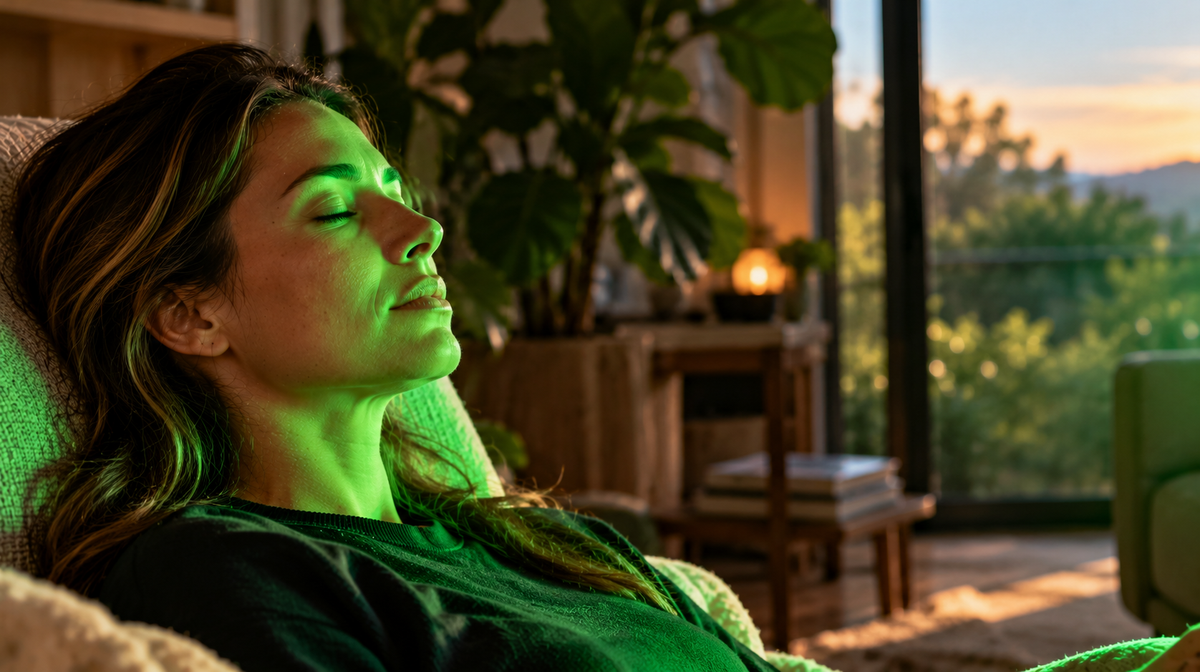
As the day progresses, the teacher can gradually dim the lights. Unlike conventional bulbs that only reduce brightness, this lighting approach allows the room to move toward a warmer evening spectrum. Later afternoon and evening classes can shift closer to an incandescent or candlelight style environment, rich in amber, red, and infrared tones.
For yoga, this matters. A class is not only muscular. It is neurological, fascial, emotional, respiratory, and circadian. The light in the room helps shape the state of the nervous system. A harsh overhead light can make the body adopt a guarded biochemical strategy. A warmer light spectrum with abundant broadband infrared in the environment can nourish more fluid movements and feel safer, softer, and more restorative.
In practice, the studio has reported a more enjoyable class atmosphere, strong teacher and participant satisfaction, better mood during sessions, and a sense that the environment supports movement rather than fighting it. While these observations are not clinical trial data, they are exactly the kind of qualitative feedback workplace wellness leaders should pay attention to. People know when a room feels good. They know when their eyes relax, their breath deepens, their body opens, and their nervous system settles. Feel free to reach out to Sheryl Utal at Japa for her full account.
Why This Matters For Workplaces
The same principles apply beyond yoga studios.
Offices, clinics, conference rooms, wellness rooms, schools, hotels, gyms, and corporate spaces all use light as an invisible management system. Most buildings still manage light for visibility and energy codes, not biology.
A biologically intelligent lighting strategy asks better questions. Does the space support alertness during the day? Does the lighting reduce eye strain? Does the environment help people transition into recovery at night? Is blue enriched light balanced by red and infrared? Does the lighting support sleep after work, or silently disrupt it?
This matters because sleep is not separate from work. Poor sleep affects mood, metabolic health, immune resilience, decision making, reaction time, focus, pain sensitivity, and emotional regulation. A wellness program that ignores light may be trying to solve downstream symptoms while leaving the upstream environment unchanged.
The Next Generation Of Healthy Buildings
Better light does not require every building to become complicated. It begins with a simple principle: brighter, fuller light during the day, warmer light in the evening, less blue-enriched light at night, more access to outdoor light, and more respect for red and infrared wavelengths indoors.
BioSpectral’s BioLux range was created around this principle, beginning with A19 bulbs and expanding into recessed can downlights for homes, clinics, wellness spaces, and workplace environments. The aim is to help indoor spaces move beyond commodity lighting and toward lighting that supports human biology.
This is not about turning every office into a clinic. It is about recognizing that the indoor environment is part of the wellness program.
A workplace can offer the best nutrition education, meditation apps, step challenges, and mental health workshops available. But if employees spend all day in biologically poor light, stare into screens, miss the sun, and return home to bright artificial light at night, the body receives conflicting instructions.
Better workplace wellness starts when we stop treating the building as neutral. The room is participating. The light is participating. The nervous system is listening.
The future of workplace wellness will belong to organizations that understand that health is not only created by what people do, but by the environments they live and work inside.
References
1. Burns, A. C., Windred, D. P., Rutter, M. K., Olivier, P., Vetter, C., Saxena, R., Lane, J. M., Phillips, A. J. K., & Cain, S. W. (2023). Day and night light exposure are associated with psychiatric disorders: An objective light study in >85,000 people. Nature Mental Health, 1, 853 to 862. https://doi.org/10.1038/s44220-023-00135-8
2. Chai, B., & Pollack, G. H. (2010). Solute free interfacial zones in polar liquids. The Journal of Physical Chemistry B, 114(16), 5371 to 5375. https://doi.org/10.1021/jp100200y 3. Wang, A., & Pollack, G. H. (2021). Effect of infrared radiation on interfacial water at hydrophilic surfaces. Colloid and Interface Science Communications, 42, 100397. https://doi.org/10.1016/j.colcom.2021.100397
4. Quirk, B. J., & Whelan, H. T. (2020). What lies at the heart of photobiomodulation: Light, cytochrome c oxidase, and nitric oxide. Review of the evidence. Photobiomodulation,
Photomedicine, and Laser Surgery, 38(9), 527 to 530.
https://doi.org/10.1089/photob.2020.4905
5. Siles, N., Dawe, N., & Barraclough, R. (n.d.). BioTra Book: An Approach to Healthy Living in a Modern World https://biotra.com.au


Disclaimer
The information on this site is provided by BioSpectral Systems for educational and informational purposes only. It is not intended to diagnose, treat, cure, or prevent any disease and has not been evaluated by the U.S. Food and Drug Administration or any other regulatory authority. Always consult a qualified healthcare professional before making any changes to your health regimen. By using this site, you acknowledge that you do so at your own discretion and agree that BioSpectral Systems, its affiliates, and contributors are not liable for any outcome resulting from the use of the information presented.
Share:
Mastic Gum Benefits: Brain, Gut & Vagus Nerve Health
Bipolar Disorder, Light, Darkness, And The Biology Of Rhythm