

Screen Time and Light Exposure
Not too long ago, children really only had access to one screen: the television screen. Generally, this screen was in a fixed location, and would play programs at preset times. Kids would plop down in front of the TV, watch a show or two, and then head out to do other things. Screen time was relatively limited and clearly defined.
Fast forward to today.
Thanks to advances in mobile technologies, screens now go where the kids go. At the same time, streaming and other on-demand entertainment services present nearly unlimited content options, available whenever a child might want them. And, with recent changes to educational guidelines, many young students are now learning remotely as well, using digital video conferencing during school hours to interact with teachers and peers in virtual classrooms.
The end result? Screen time is becoming all the time. And that may be having some serious ramifications to your child’s sleep habits.
Blue Light and Sleep
Human beings are diurnal animals, as a species we’re more active during the day and prefer to rest and recuperate at night. As such, our bodies have evolved to use daylight specifically high-energy blue light in the 455nm wavelength range , to help us calibrate our natural sleeping cycles. When the sun is out and shining, we’re more alert and energetic. When the sun goes down, we become more tired and our bodies get to work producing melatonin and repairing themselves from the stresses of the day. These cycles are called circadian rhythms.
However, digital screens produce that same 455nm blue light. And because our bodies use blue light as an indicator of time of day, overusing digital screens and using them during non-daylight hours can throw our vital circadian rhythms completely out of balance. This disrupts the body’s natural melatonin production, resulting in poor sleep, and potentially leading to reduced focus, memory and cognitive impairment, anxiety, depression, eyestrain, headaches, obesity, and even reduced immune system function.
And unfortunately, children are the most susceptible to the negative effects of blue light.
A child’s developing brain is not just more sensitive to blue light because they need more sleep. It is more sensitive because the retinal pathways that translate light into brain timing, dopamine tone, stress chemistry, and emotional regulation are still being shaped. Specialised retinal ganglion cells containing melanopsin send light information directly into deep brain structures such as the suprachiasmatic nucleus, the master circadian clock, as well as pathways influencing the hypothalamus, pineal gland, brainstem, and mood related circuits. When those melanopsin pathways are repeatedly exposed to high intensity artificial blue light at biologically inappropriate times, they do not simply delay melatonin. They distort the time keeping signals that guide everything downstream, including cortisol timing, dopamine release, brain derived neurotrophic factor, and the architecture of deep sleep. In a child, that means the signal that says “it is daytime, be alert, learn, grow, and wire new circuits” starts arriving at the wrong time, and that confusion is expensive for a nervous system still under construction.
This matters far beyond sleep. Dopamine in the retina and brain is one of the key signals involved in focus, mood, motivation, and healthy visual development. It is also strongly tied to outdoor light exposure. One of the lesser known reasons childhood myopia is rising so rapidly is that children are spending too much time indoors under narrow spectrum artificial light and too little time outside under broad spectrum sunlight, where retinal dopamine release is naturally supported. That same light deprivation and mistiming can affect mood and resilience through overlapping pathways involving dopamine, serotonin, and brain derived neurotrophic factor, which is a critical molecule for neuroplasticity, learning, and emotional regulation. In other words, the modern child is not only at risk of poorer sleep. They are at risk of developing eyes, brains, and stress systems in an environment that does not remotely resemble the one those systems evolved to calibrate against.
Glasses for Screen Time?
Children need more sleep than adults. As such, they experience the negative effects of sleep disruption much more clearly. At the same time, children’s eyes are less fully developed, and more sensitive to high-energy blue light. Or, as the American Medical Association explains: “Exposure to excessive light at night, including extended use of various electronic media, can disrupt sleep or exacerbate sleep disorders, especially in children and adolescents.”
Of course, digital screens do provide certain benefits:
- They allow kids a chance to explore new ideas, communicate with loved ones across long distances, attend school remotely, and more, simply cutting children off from digital screens could do more harm than good.
And remember, it’s not the screens themselves that are the problem; it’s the 455nm blue light produced by the screens that interrupts circadian rhythms and keeps kids from getting enough rest. So, if you want to protect your child from digital screens, your best option is to filter out the blue.
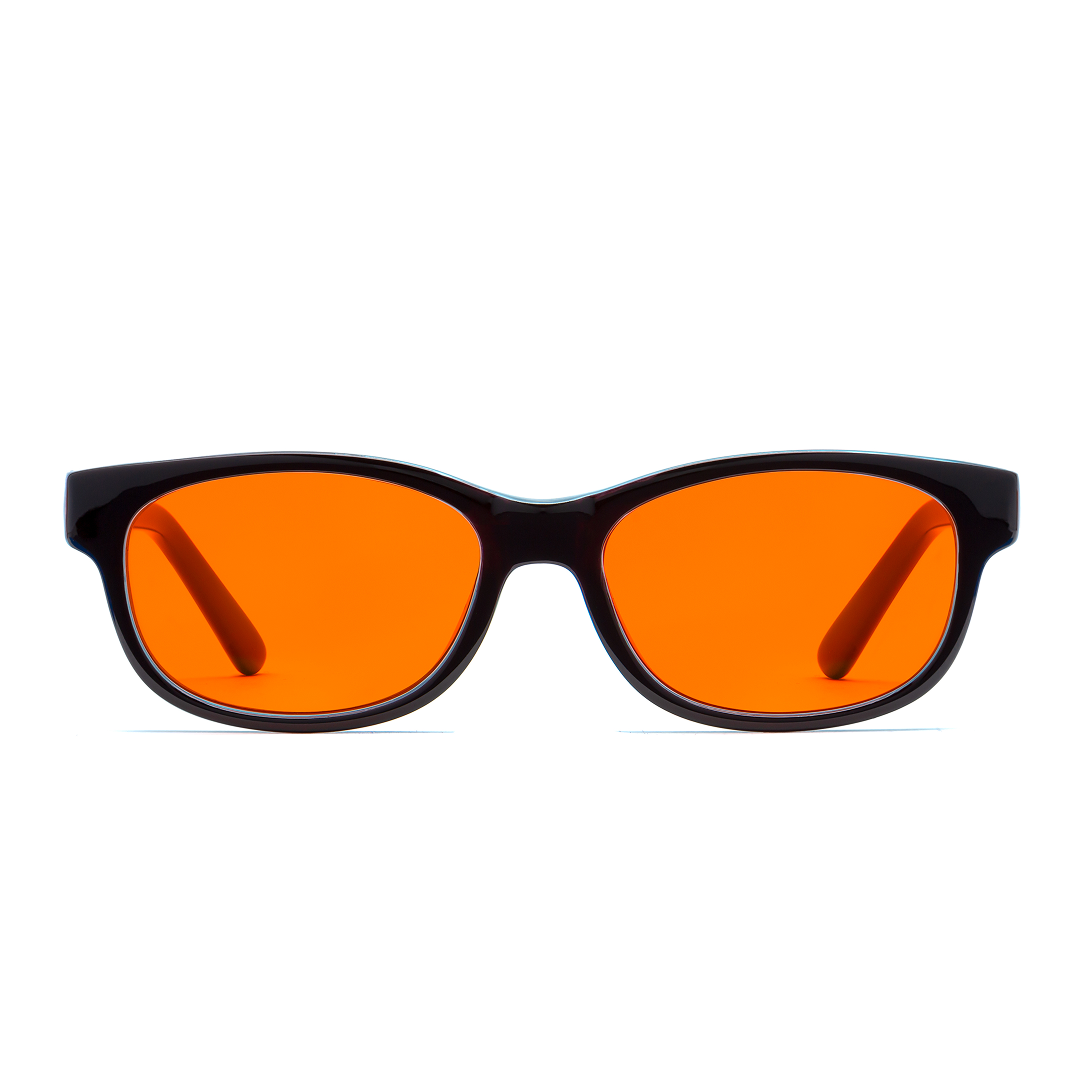
This is where lens quality becomes non negotiable. If a child is going to spend hours under screens, classroom LEDs, tablets, phones, and overhead lighting, then partially blocking blue light is not good enough, especially in the evening. A developing retina, a developing brain, and a developing circadian system need decisive protection, not cosmetic filtering. This is exactly why our orange night lenses matter so much. By blocking 100 percent of blue light and extending protection through much of the green range as well, they remove the wavelengths most responsible for suppressing melatonin and overstimulating melanopsin after sunset. That gives the child’s nervous system a genuine opportunity to shift into the repair, recovery, and integration state that should define the evening. It is in these hours that memory consolidates, growth hormone pulses rise, glial cells clear waste, and the brain physically remodels itself from the experiences of the day.
And that means finding effective blue light glasses for screen time.
Unfortunately, most blue light glasses on the market are not capable of providing the level of protection that young eyes need. Clear blue light glasses that use standard lenses coated in resin can only block 20% – 30% of harmful blue light. Other companies that sell tinted lenses are able to do slightly more, but still fall short of 100% protection. The end result in both cases is the same: After only a few hours of screen time, the wearer’s melatonin production drops significantly, possibly leading to sleep disorders and related health concerns.
BioSpectral Systems: 100% Blue Light Protection for Kids
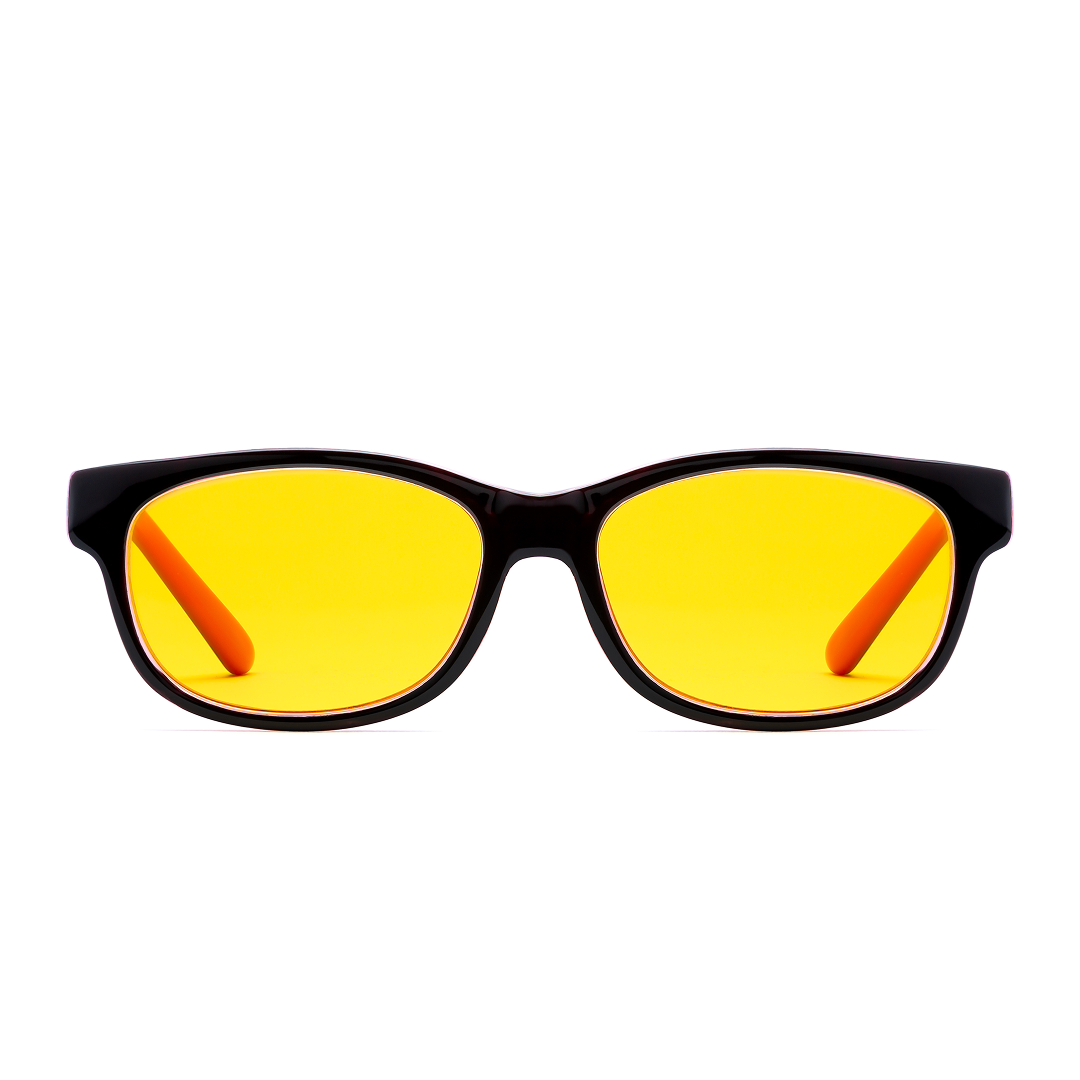
BioSpectral Systems lenses are the only blue light glasses that offer complete blue light protection. Constructed using synthetic melanin built into the lenses themselves, these glasses are able to block out 100% of blue light at the most damaging high-energy wavelengths up to 455nm, while still allowing the wearer to see non-blue colors clearly.
And, because children’s bodies are more susceptible to blue light at night than they are during the day, BioSpectral Systems also offers orange tinted nighttime lenses that extend blue light protection up to 550nm (into the green portion of the spectrum), to ensure optimal melatonin production, improved sleep, and reduced risk of blue light related health problems in children and youth.
For me, this is not abstract. The founder of BioSpectral Systems survived brain cancer as an eight month old infant and grew up living with the consequences of what it means when the brain is under extraordinary stress early in life. That lived experience is one of the reasons we care so deeply about protecting children’s brains before symptoms ever appear. We do not believe children need to be wrapped in fear or removed from modern life, but we do believe their eyes and brains deserve a far more intelligent light environment than the one most homes and schools currently provide. If we are serious about children’s mental health, focus, resilience, visual development, and long term neurological potential, then the quality and timing of light entering their eyes must become a central part of the conversation.
Screen time has grown in recent years, and we’re growing along with it. With BioSpectral Systems, kids can enjoy all of the advantages of modern digital screens, and still get a full night’s sleep once it's time to put the devices away.
With BioSpectral Systems, children can engage with the modern world while protecting the retinal, hormonal, and neurological pathways that shape sleep, learning, vision, mood, and long term brain health.
Related: our kids' blue-light-blocking glasses.




Disclaimer
The information on this site is provided by BioSpectral Systems for educational and informational purposes only. It is not intended to diagnose, treat, cure, or prevent any disease and has not been evaluated by the U.S. Food and Drug Administration or any other regulatory authority. Always consult a qualified healthcare professional before making any changes to your health regimen. By using this site, you acknowledge that you do so at your own discretion and agree that BioSpectral Systems, its affiliates, and contributors are not liable for any outcome resulting from the use of the information presented.
Share:
How Light, Sleep, and Stress Shape Your Brain and Body: The Orexin Eye Prism
Disruption of Human Light Bio: Brighter Nights, Darker Days