


Jet lag is a new concept in health since the invention of the airplane and adherence to time keeping in different locations on the planet. We are now travelling faster and further than ever before and this results in a much needed strategy to compensate to ensure our most fundamental health need, our circadian rhythm, remains as optimal as possible.
Our circadian rhythm directly controls 50% of our genes and the rest indirectly. This was shown by the Circadian Researcher John Hogenesch. This means every one of our cells pays attention to the time of day our eyes and skin experience. This cycle is roughly 24 hours because it corresponds with the spin of the earth in a single day. Hence our timing is inextricably linked to mother earth. In the human body, the suprachiasmatic nucleus (SCN) is our master clock paying attention to light, electromagnetic and temperature signals from our environment in order to tell biologic time.
Astronauts see a sunrise and sunset every 90 minutes adding up to 16 per 24-hour period. This results in a necessity for artificial lighting to control their circadian rhythm. This also speeds up time and destroys sleep purely by the action of unnatural sunlight exposure.
When we fly East, we are more likely to experience jet lag than flying West. This is because travellers would need to go to bed earlier and wake up earlier, essentially shortening the day. Travelling eastwards on a plane regresses our circadian clocks, whereas travelling Westward advances them.
So, for example, if you fly west to Los Angeles on a business trip from New York, all things being equal, you’ll likely experience more severe jet lag after your return flight home back to New York. Many people have circadian rhythms slightly longer than 24 hours, meaning it’s easier to stay up late than go to bed earlier. Simply put, our master circadian clock is easier to delay than it is to advance. So when we travel West and gain a few hours, the body has a better time adjusting. This is especially true for younger demographics because of the way their endocrine system acts in adolescence. It is beneficial to gradually shift your circadian rhythm 1-2 days before your flight and begin adjusting to the new time zone.
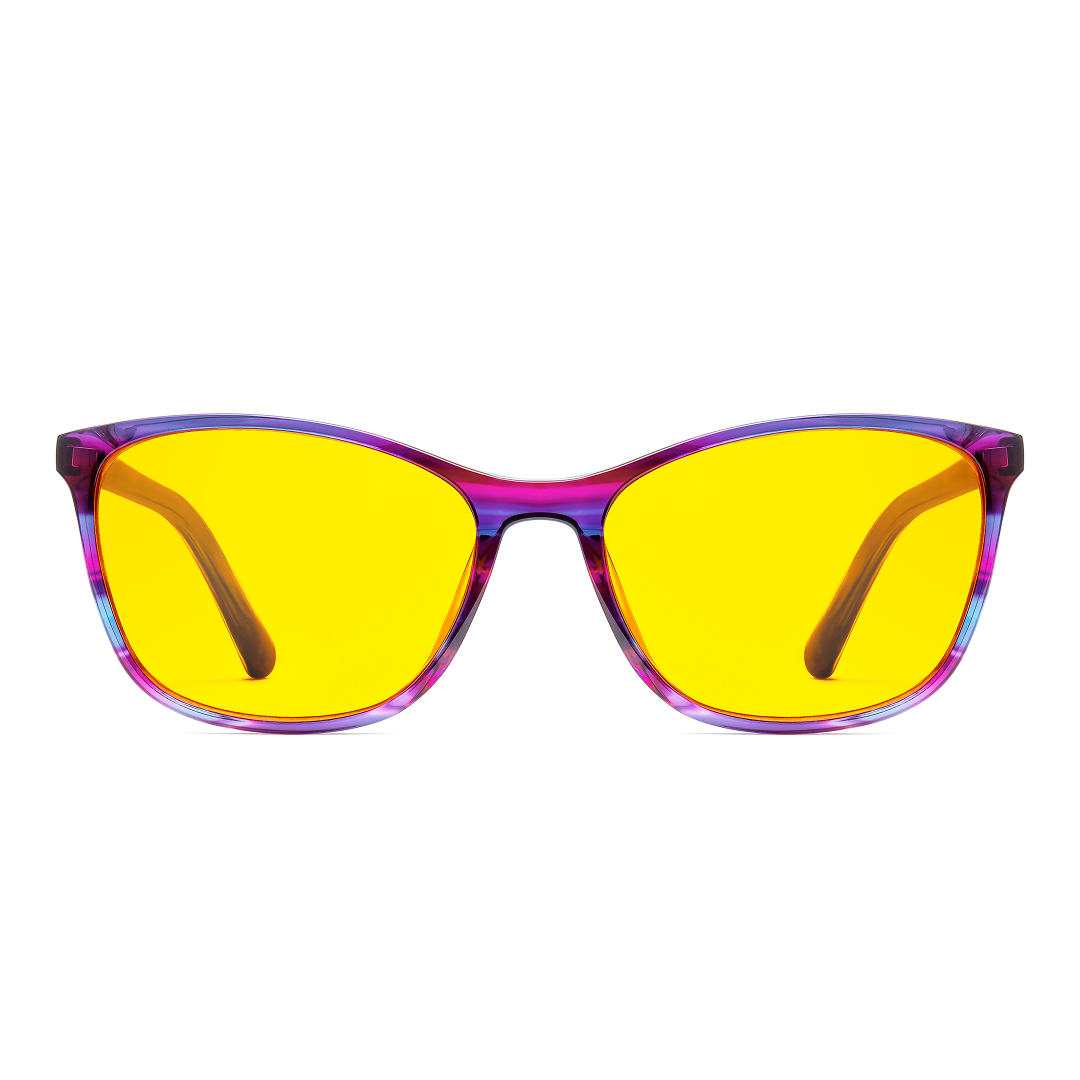
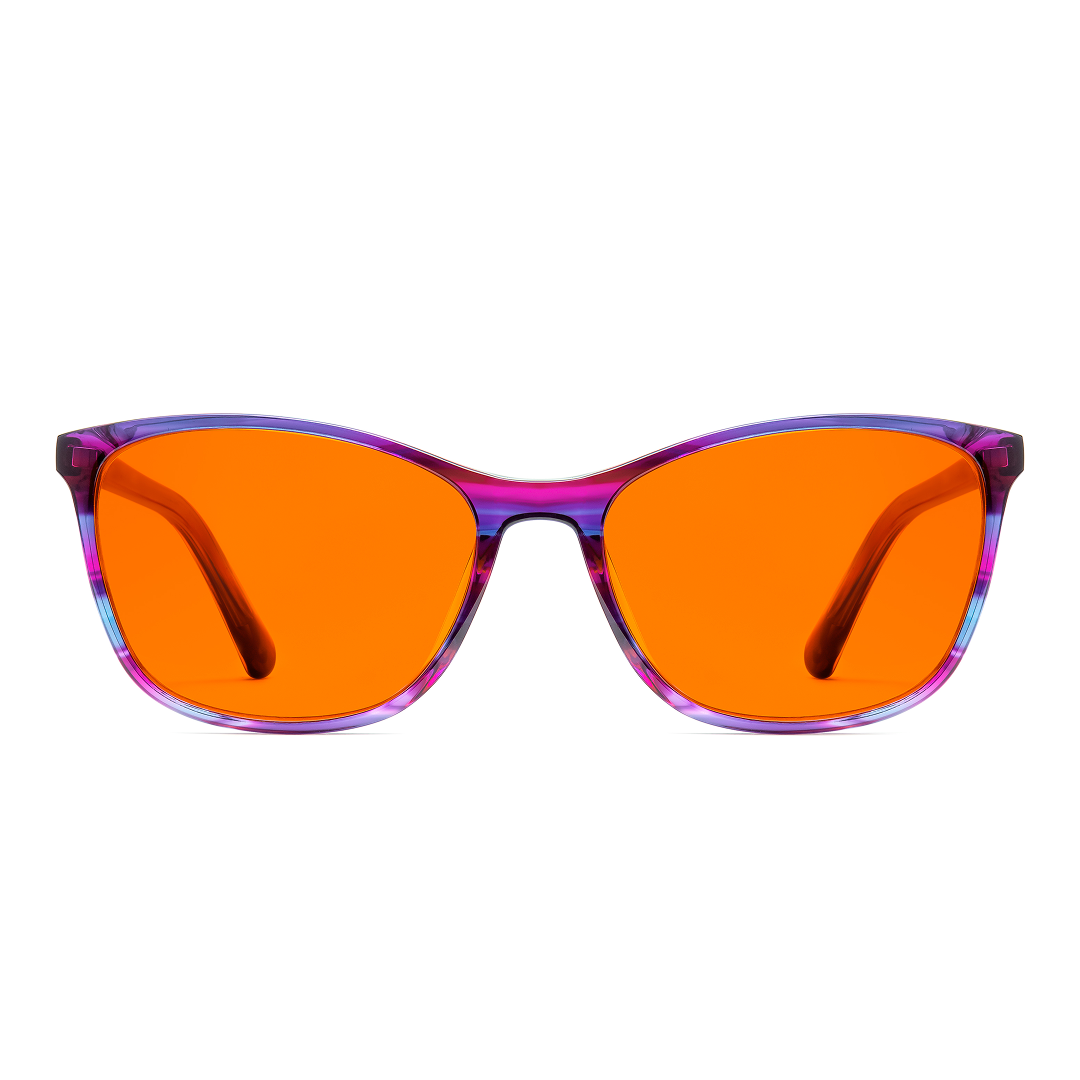
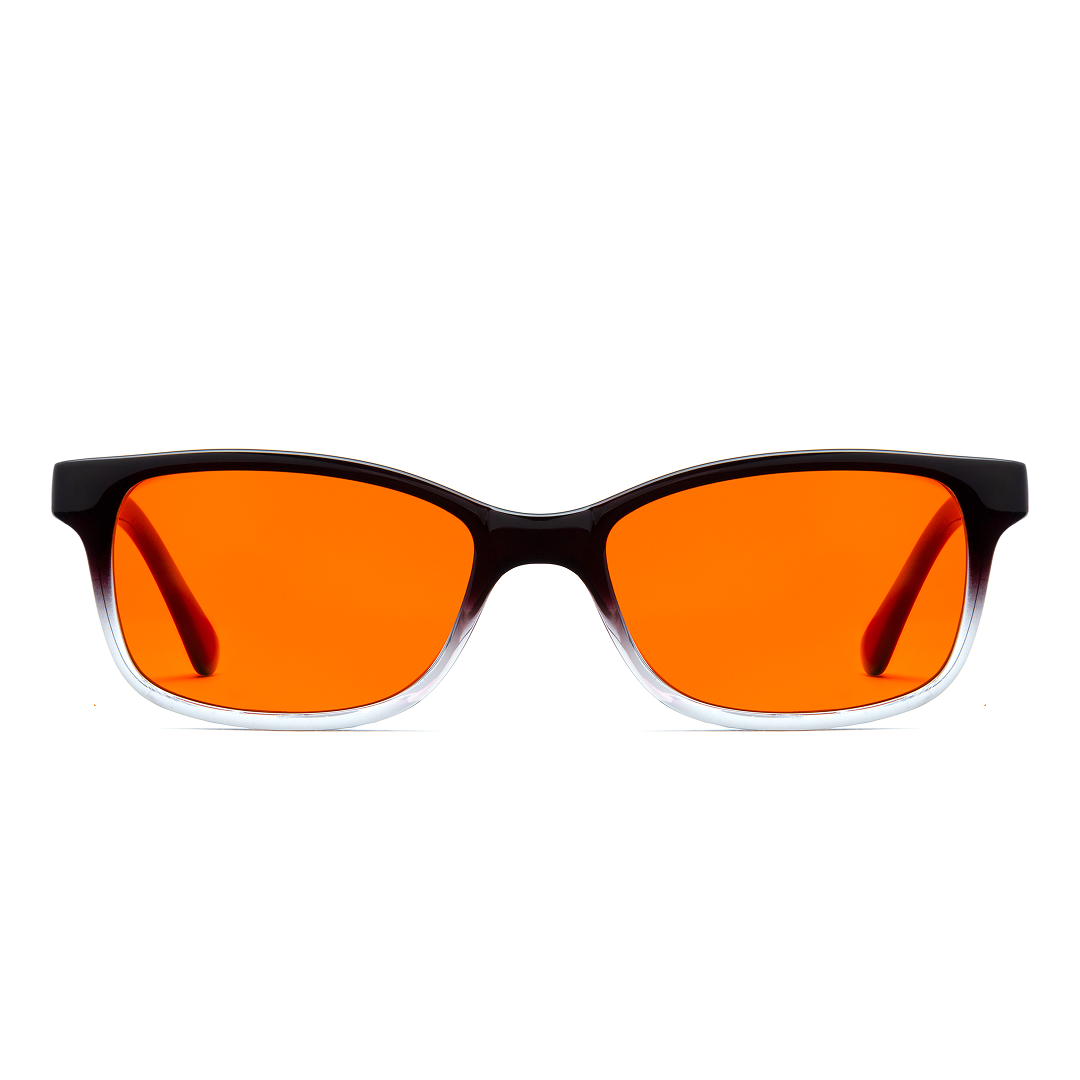
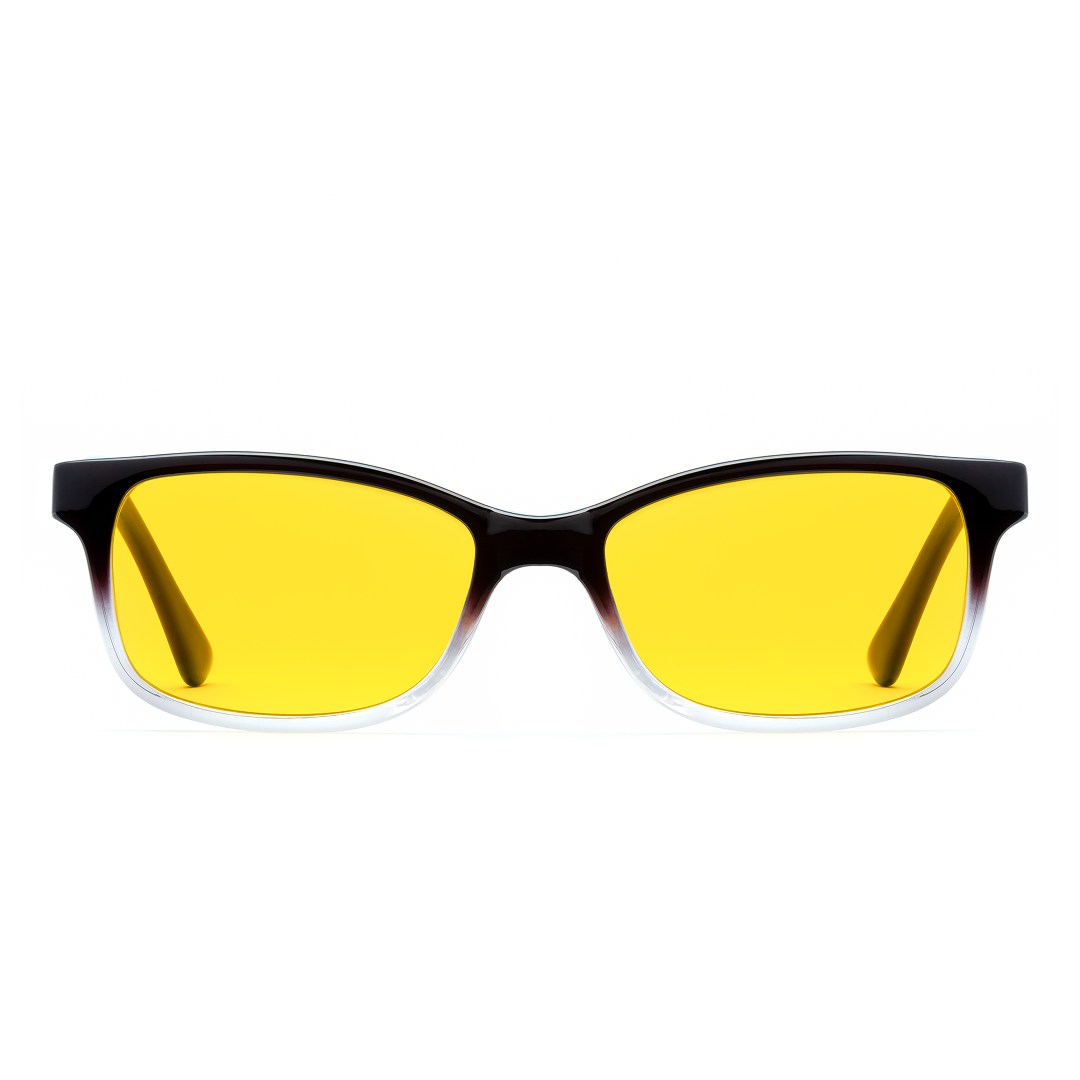
If travelling East – Advance your body clock. Wake up early and go to bed early. Avoid bright light when it’s night-time in your arrival location and seek out light as early as sunrise in your departure time zone. One of the best ways for getting over jet lag quickly is to arrive at your destination in the evening. You will most likely be exhausted from flying and if you arrive at your destination in the evening you can just go straight to bed and fall asleep, helping regulate your circadian rhythm faster. When you travel east, you should synchronise your timepiece to the destination time zone. For example, when it's daytime in your destination’s time zone, make sure you are wearing yellow lens blue light glasses and when it's post sunset in your destination wear blue light blocking glasses. When it is time to sleep in the destination, take off your blue light blocking glasses and pop on a good quality black out sleep mask and try to get as much sleep as possible by going to bed early.
If travelling West – Delay your body clock. Become a temporary night owl. Seek out light when your body clock thinks its past sunset in your departure time zone and avoid bright light, especially in the blue and green spectrum when it otherwise would have been bright in your departure location, such as in the early morning. Make sure you expose yourself to evening light, ideally from the sunset but you may also want to start putting your blue blockers on later as well in the evening and exposing yourself to artificial blue and green light a little at the start of the evening. Set your watch as soon as you arrive on the flight to the destination time zone and use yellow lens blue light glasses during the daytime and your blue light blocking glasses (red lenses) at the destination's night time. This can be hard to achieve but well worth it for jet lag management.
Pro Tips
-
If it’s night time in your arrival location and daytime in your departure location, avoid bright light like the plague.
-
If it’s daytime in your arrival location and night-time in your departure location, make sure you have slept on the plane and stay awake at the arrival location.
-
If it’s night time in your arrival destination wear blue light blocking glasses. If it’s daytime in your arrival destination try to stay up and not sleep at the airport or on the plane.
-
Fast on your flight, or at least stay as ketogenic as you can. It’s always best to avoid food on a flight for a multitude of reasons. It can be challenging to fast when everyone else is eating but practice your discipline and know that you are not messing up your gut clock timing like the others around you are, and you’ll find the motivation. If you must eat for any reason, ensure you are eating during the daytime in your arrival location. Avoid the processed foods on board.
-
Tune your Circadian Clock Prior to Flight: When travelling long distances (8 hours East or West), you can begin tuning your clock two days beforehand. Begin advancing your circadian clock 30 minutes each night for 7 days prior to your eastward flight, or 2 hours earlier each night for 3 days prior to your eastward flight. Of if flying west, delay your clock 30 minutes later each night for 7 days prior to your flight or if rushing 2 hours later each night for 3 days prior to your westward flight. As stated earlier, adjusting for your eastward flight is more important.
-
For example: If the time zone difference is 8 hours and you’re travelling east, then aim to wake up 2 hours earlier two days before your flight and 2 hours earlier on the day of your flight. In this way you’re gently entraining your rhythm prior to the flight. Then simply respect these light alterations you have just made during your flight. When you add fasting and radiation mitigation to this protocol, your jet lag should become almost non-existent.
-
Wear earplugs or earmuffs or noise cancelling air tube earphones to reduce noise induced hearing damage, these can also be an excellent sleep aid on top of the following jet lag avoiding measures.

-
Take a cold shower, swim or bath when you land, this increases the periodicity and thus accuracy of your circadian clock to your new environment. This helps you adapt faster to the new light cycle while transitting jet lag.
-
Get a massage when you land to improve circulation and any stagnant lymph or blood in your body and to alleviate tight muscles.
-
Create a debit in your Sleep Bank: If you know you will experience a sleep deficit one night, prepare for this by sleeping longer the night before so you build up a ‘sleep bank’.
-
Pro Tip: It’s the time zone that your body thinks it’s in those matters. Always aim to align with the sun wherever you go, watching sunrise and sunset each day.
Additional tips for avoiding jet lag
-
Drink LOTS of water. Drink 2 litres of water before the flight, 2 litres of water after the flight and stay hydrated on the flight. The key to staying hydrated on the flight is adding some sea salt to your water to increase water retention whilst the nnEMF’s around you are dehydrating you. Hence, sit in an aisle seat if you need to go to the bathroom regularly. If you begin a flight dehydrated, it is very difficult to become hydrated once again on the flight, so when in doubt drinking good quality water.
-
Monitor your urine colour to determine how much water consumption you need to manage during the flight. Darker urine means more dehydration.
-
Avoid alcohol, drink plenty of water to avoid dehydration and stay hydrated.
-
Eat a big seafood meal the day before the flight and fast on the flight. This helps add vital amino acids, fats and high-quality deuterium depleted water into your cells bolstering their defences, your mitochondrial function and your overall body voltage. It replenishes the vital Omega 3, docosahexaenoic acid (DHA), stores in your eye, brain and cell membranes.
-
Choose an aisle seat. Avoid a window seat to avoid exposure to the sun while at high altitudes. The light spectrum entering the plane cabin is much more blue dominant because it needs to pass through glass and plastic. With the cabin lighting already being blue dominant, this makes the cabin an even more blue light toxic environment. In addition, at this altitude the atmosphere cannot filter out as much of the UVC and x-ray radiation as we would normally receive on the earth. If this is perceived by our biologic surfaces it can lead to unnecessary free-radical damage.
-
Use a portable red light therapy device. If you have a portable red/infrared photobiomodulation device, a plane is a great time to use it. As mentioned previously, the blue light shifted environment in the cabin will throw off your circadian rhythm. It can be counteracted marginally by introducing red and infrared light photons to your biology. This is especially important if you are struggling to fall asleep during the night-time window of your arrival location. Pop it under your shirt when you’re in your seat, so you’re not disturbing others and your good to go!
-
Block Blue Light during your flight, especially if it’s nighttime in your arrival destination. Wear your blue light blocking glasses at the airport and during the flight. Cover as much skin as you can and your head/face, if possible, to protect your photoreceptors from oxidation. Bring a nice comfortable sleep mask for good sleep hygiene.
-
Bluefreeoptical.com (yellow and orange lenses)
-
Limit your non-native electromagnetic field (nnEMF’s) exposure.
-
If you want to listen to music or watch a movie, use air tube earphones or something similar, not regular wired or wireless headsets. This will help reduce the conduction of electric fields right to your brain.
-
Avoid connecting your electronic devices to the airplane WIFI. You are already receiving an exorbitant amount of radiation. Why create an even stronger signal towards yourself. Better read a paper book about jet lag!
-
There are more wireless devices in economy/coach class than in First Class or Business Class. It might be worth considering.
-
The WIFI router and repeaters on the plane are usually located in the various galleys and in areas with specific electrical systems. These areas, along with the emergency exits, containing powerful electrical hydraulics, are areas to avoid spending extended periods of time in. The extra leg room at the emergency exit rows comes with an EMF cost. If you have an EMF meter with you onboard measure the areas which are at lower exposure and spend more time, there. Standing up and moving around frequently is a great thing to do on flights.
-
Many people these days avoid placing their phones on airplane mode during the flight and this results in frequent bursts of radiation throughout the flight as the phone tries to search for a signal. Mitigation of the effects: Inverse square law. The inverse square law tells us that the further away we are from the man-made source of radiation, the greater is the drop-off of harmful exposure. Ask the people around you to put their phones on airplane mode or keep as much distance from them as you can.
-
Remove as much metal as possible from your body. Even your metal buckled seatbelt will attract nnEMF’s exposure to your lower abdomen region. So, whenever the seatbelt sign is off, take your seatbelt off. This goes for jewellery, and even those metal pendants which you believe protect you from EMF, they do more harm wearing them on a plane.
-
Wearing or wrap yourself in EMF shielded clothing/materials to attenuate the microwave/radio frequency radiation away from you lowering your body’s absorption of the fields. You can also carry native EMF emitting material or technology such as organise, shungite or the assortment of natural EMF generating technology (i.e. blue shield or q-link) I choose to wear an organize amulet around my neck and EMF shielded underwear and shielded beanie/hat as foundational for every flight. You get a funny look when you walk through the body scanners because your underwear stops their scan from irradiating your crown joules, so you know it’s working!
-
Ground. Grounding before and after the flight can regulate the circadian rhythm by normalising cortisol. Grounding before a flight and after a flight will reduce jet lag and during any layovers. The electrons in the earth which enter your body when your connected to it tell the body what the time is.
-
Ask a pilot or aerospace engineer how the electronics on an airplane work and they will tell you that the electronics need to be ‘grounded’ or ‘earthed’ the entire time the plane is in the air. That means touching any conductive material in the plane connected to the ‘grounded’ electronics can electrically ground your body. Normally, ‘grounding’ yourself in an environment filled with manmade radiation is not a wise move but connecting to ground every now and then electrically can have its own benefits and remind the body of its electromagnetic connection with earth whilst you’re on the plane. And if you’re a little bit woo woo like me, you can connect to earth spiritually through your intention and the placebo effect whilst you place your barefoot on the metal footrest under the seat in front of you sporadically during the flight. If you have individuals around you with Bluetooth earphones or have a WIFI enabled flight with everyone connected, grounding sporadically may help you neutralise the built-up charge you picked up whilst ungrounded.
-
Breathe. The best time to apply slow nasal breathing techniques, such as my favourite Buteyko breathing, is during occasional episodes of stress before or during the flight. Motion sickness, altitude sickness, panic disorders, blue light stress or nnEMF exposure can all be triggers of nervous system stress and a great impetus to practice your breathing techniques and breath holds.

-
If you like, wear an air filtration mask to assist with air quality onboard
-
Essential Oils. The air quality in aeroplanes is poor. There are no net negative ions and no Lenard effect because the air moisture is very tightly controlled. Ask for a hot cup of water and pop 2 drops of eucalyptus in it, drape a towel over your head and the cup and breathe the vapour in through your nose. This can help lubricate your nasal passage and donate more negative ions to the area.
-
Airplane supplements.
-
CoQ10 – Before, during and after the flight. This helps the heart, the immune system and the mitochondrial redox problem which occurs during a flight.
-
Iodine – Before, during and after the flight. Iodine is well known to assist the body with radiation toxicity and protect the thyroid.
-
Rhodiola – https://www.webmd.com/vitamins/ai/ingredientmono-883/rhodiola
-
These supplements can help you relax at times when you are meant to be sleeping on the plane.
-
L-Serine – helps bolster serotonin and melatonin production
-
Magnesium Malate + Vitamin K2 – helps to relax you and combat the calcium efflux issue caused by nnEMF.
-
L-Theanine – helps to calm your nervous system
-
Melatonin – Melatonin is a powerful hormone made in the mitochondria of cells and the pineal gland. Although short-term supplementation appears to be safe, I suspect the science will soon show long-term supplementation may harm your natural circadian cycle and your ability to produce this hormone naturally. That being said, melatonin can be a useful supplement to regulate your circadian rhythm when taking long flights. The Cochrane review concluded, “Melatonin is remarkably effective in preventing or reducing jet lag, and occasional short-term use appears to be safe. It should be recommended to adult travellers flying across five or more time zones, particularly in an easterly direction, and especially if they have experienced jet lag on previous journeys.”
Article Citations
https://www.cochrane.org/CD001520/DEPRESSN_melatonin-for-the-prevention-and-treatment-of-jet-lag
Scientific Citations
-
https://pubmed.ncbi.nlm.nih.gov/17398311/
-
https://www.ncbi.nlm.nih.gov/pubmed/17572456/
-
https://www.ncbi.nlm.nih.gov/pubmed/19083655/




Disclaimer
The information on this site is provided by BioSpectral Systems for educational and informational purposes only. It is not intended to diagnose, treat, cure, or prevent any disease and has not been evaluated by the U.S. Food and Drug Administration or any other regulatory authority. Always consult a qualified healthcare professional before making any changes to your health regimen. By using this site, you acknowledge that you do so at your own discretion and agree that BioSpectral Systems, its affiliates, and contributors are not liable for any outcome resulting from the use of the information presented.
Share:
How Light, Sleep, and Stress Shape Your Brain and Body: The Orexin Eye Prism
Blue Light and Sleep: How Does Blue Light Affect Your Children Sleep Habits?