

Diet does not solely control the microbiome. The microbiome is regulated by the solar spectrum. To illustrate this Jeff Leach completed a study on the Hazda, an equatorial community of people. No matter what the Hazda ate in their equatorial environment, there was no effect on their microbiome because the sun never varied on the equator. The sun CREATES the microbiome in humans. Light sculpts the microbiome primarily, not food.
-
https://escholarship.org/content/qt6v48571z/qt6v48571z_noSplash_eff793ad167a6710551d08716c68b20e.pdf
Research on the Yanomami, an isolated indigenous group in the Amazon, found that their gut microbiome exhibited higher diversity compared to urban populations. The study indicated that exposure to natural environmental factors, such as sunlight, could be associated with this increased microbial diversity .
Food entrainment and food anticipatory activity – Food can entrain peripheral circadian clocks in as strong or stronger manner than that of the light–dark (LD) cycle. Researchers have demonstrated food‐induced phase‐shifts of behavioral rhythms, independent of LD cycle‐induced behavioral rhythms. In fact, feeding time restriction in mice (scheduled feeding, SF) of 3–6 hours in the daytime can change their behavior from nocturnal to diurnal. Because mice have to eat food for their survival, food seeking behavior appears 2–3 hours before feeding time in this paradigm. We call this seeking behavior a “food anticipatory activity” (FAA) and believe that mice can recall feeding time using their own internal clock. In addition to the behavioral change, there are many physiological rhythms that can be changed by SF. Body temperature, blood hormone concentrations, blood glucose, and liver glycogen levels have classically been reported in this field to be entrained by SF (Shibata et al., 2010). It is also possible to shift and even entrain clock gene expression patterns by SF in peripheral tissues such as those of liver, kidney, and adrenal gland. Thus, the timing of food can have a major impact on the circadian system.
The nature around you sculpts your microbiome if you live amongst it! The diversity of life around you, promotes the diversity of life within you. When there is a little barrier between you and your regional species pool of microbiome bacteria (naked, barefoot, etc) your microbiome will recover very quickly. Humans have the most alkaline colons (you want it more acidic).
-
Jeff Leach https://www.youtube.com/watch?v=tjLW_DaQ9qI
What is required for gut health?
-
Diversity of the Microbiome – Bacterial, fungal ecosystem health
-
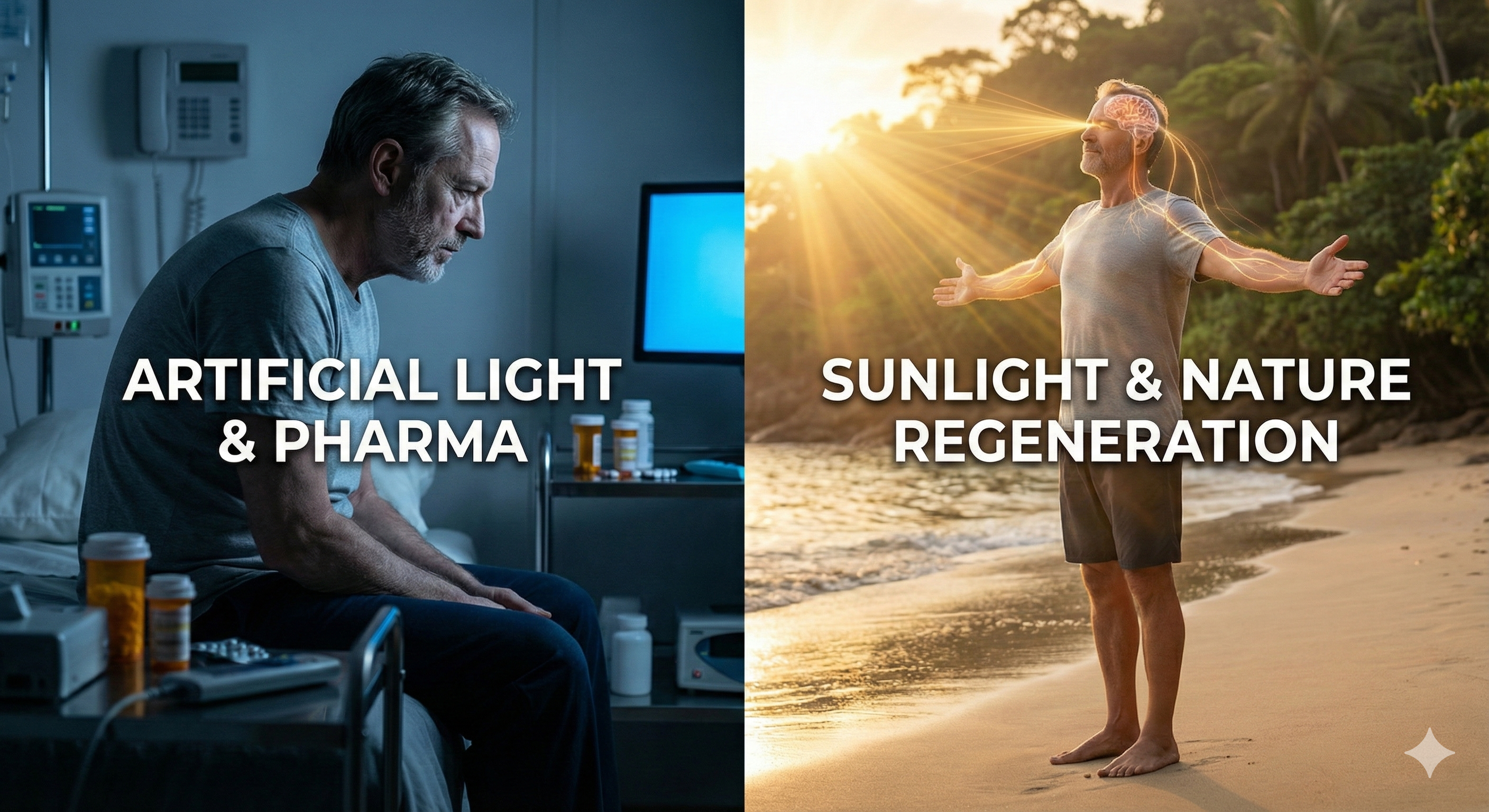
If you spend time in a sterile artificial environment like a hospital, office building, apartment, house, mall, airport, or other indoor area, your microbiome becomes very narrow, very quickly.
-
If you eat in an environment where your food is impregnated with anti-biotics all the time your microbiome is shrinking constantly. Chicken is the biggest culprit here. Foul is Fowl.
-
Depending on which anti-biotic are taken, the impact can be between 60% to 90% destruction of the Microbiome that day. In this case your microbiome is required to almost completely rebuilt every day!
-
Note: Supplemental probiotics typically contain between 3 to 7 species of bacteria in large numbers, this is helpful to a small extent, however the human gut typically carries trillions of different species of bacteria and 1 million or more species of fungi (there are 5 million species of fungi) and 10^31 species of viruses (10million times more viruses than there are stars in the universe). Thus, it is not beneficial to take most probiotics as your gut becomes flooded with a few particular types of bacteria and this narrows your microbiome.
-
Simple Solution to repair the gut: Spend more time outdoors under the power of sunlight, with your belly button exposed to the sun. Eat whole organic/grass-fed healthy foods and get out in unpolluted nature as naked and unshielded (no sunscreen, makeup, oils on skin, shoes, glasses, gloves, socks, etc) as possible. You can take colostrum too, especially if you wre not breast fed..
-
https://www.ncbi.nlm.nih.gov/pmc/articles/PMC4032928/pdf/fmicb-05-00237.pdf
-
Gut Membrane Integrity – Barrier system between the bacteria and the immune system
-
60% to 80% of the immune system lies just behind the mucosa (surface of the mouth-to-anus tract). If the bacteria and fungi are not there to decontaminate/detoxify food, this membrane is very vulnerable. The gut membrane is made up of billions of cells but only 1 layer thick (half as thick as a human hair – it is cellophane thin and covers 2 tennis courts in area). This is a vulnerable membrane and if breached, the immune system can become compromised as it is located directly behind this thin layer. This immune system behind the gut membrane makes 80% of the anti-bodies in the human immune system.
Liver and Leptin Resistance
Liver dysfunction, like leptin resistance and many gut diseases, can hinder this cycle. This is why gut dysbiosis and gut function cause brain and eye related diseases in some people.
-
Having your liver make a ton of SdLDL is a huge problem for health. Eating carbs result in high sdLDL and not fat or protein. Fructose is a special carbohydrate that makes more sdLDL than any other sugar nature builds because of the deuterium it contains. The liver’s physiologic function mimics the sun in many ways. Building sugars are one such example. Therefore, the liver has to handle it differently biochemically. The large amounts of these particles cause the liver to make a ton of triglyceride particles to store all the sdLDL’s for storage in the bad places like are arteries, viscera, heart or liver.
-
Key Point: Hepatic insulin resistance occurs when the liver decides all excess calories must be packaged and stored as fat which fuels the obesity.
-
The liver should use the stored 60% of those calories to feed the body fuel when we are not eating like during a fast or during sleep. This is done by raising the hormone glucagon to make fuel from the energy depots in the liver. This is how the body works to supply fuel it needs when we can’t eat or won’t eat. The liver is a fuel bank account for use on a rainy day when we are leptin sensitive. This pathway way does not work well at all when we are leptin resistant because the liver is spewing out excess fuel for storage instead of use. It also hinders how cell membranes work all over the body because DHA incorporation is blocked at the liver level.
-
When we are leptin resistant the end result is to package calories to fat in some form of LDL’s. That delivery has to leave the liver because there is a physical limit to how much fat can stay in the liver. If this process of LDL construction is chronic and overwhelms the liver, fat builds up inside the liver cell and causes extreme reactive oxygen species (ROS). The growth of your waist size is a very late development in your disease process. If your waist is large, you have been asking your liver to work like mad to store this excess fuel for a long time. The end result for the patient is a sign of a feeling of chronic fatigue. You also report a loss of energy if you are asked and it occurs slowly over time and nothing the doctor or you do seem to help. All your basal metabolic studies look fine. Your thyroid panel is unremarkable and you tell the doctor no matter how little you eat or as much as you exercise nothing seems to help the process. Does this sound familiar to anyone reading this? This is classic Leptin Resistance at the liver level!
The thyroid is not the key to metabolism, it’s the liver. The thyroid is the gas pedal of the livers engine and leptin is the overarching hormone controlling the process.
A more recent study has shown that mice with combined destruction of the SCN and the dorsomedial hypothalamus can still express normal Food entrainment and Food anticipatory activity (FAA) (Acosta‐Galvan et al., 2011). Thus, the current hypothesis is that neural networks among many parts of the brain organize the FEO for FAA. Another strategy for locating the FEO was the use of genetic mutations in mice. Clock gene mutant mice showed no or small weak effects on FAA formation (Shibata et al., 2010). Impairment of other genes such as Rgs16 (regulator of G protein signaling) and Melanocortin‐3 showed reductions in FAA, but none showed a complete loss of FAA using mutant mice (Shibata et al., 2010). Knockout of Orexin, an important neuropeptide for food intake behavior, was reported to reduce FAA in a mouse SF experiment. Therefore, not just the circadian clock systems but also food intake motivation may be involved in the formation of FAA. The FEO is governed by more complicated mechanisms than SCN oscillation, as it is an essential survival mechanism. Schematic cartoon of the liver clock entrained by light and food. The circadian system in the SCN is directly regulated by the light–dark cycle, and SCN regulates circadian clocks in a whole body. However, if food timing is restricted at the specific period in a day, the clock in the liver is strongly regulated by the food stimulus rather than by light.
Similar to “chrono‐pharmacology,” there are interactions between nutrient action and the circadian system. One is that we should consider food content and timing to maintain our health, as, for example, there are circadian variations of metabolic gene(s) expression throughout the day. A late night dinner caused an increase in fat synthesis and a phase‐shift of clock gene expression rhythms in peripheral clocks. Food can become a “zeitgeber” to entrain the circadian system. We can organize our body clock time to an appropriate time by considering daily meal timings.
Circadian control of liver function – The liver is (after the skin) the largest organ of the body. Its primary function is the metabolization of nutrients and the storage of glucose and, to a lesser extent, lipids as energy fuels for the body. It further shares an important role with the kidneys in detoxification and excretion processes. More recently, the liver has also been identified as an endocrine organ, secreting hormones such as insulin‐like growth factor‐1 (IGF‐1), angiotensinogen, thrombopoeitin, and hepcidin. Structurally the mammalian liver consists of several large lobes (four in humans and rodents). Roughly 60% of the cells in the liver are made up of hepatocytes of parenchymal origin. Hepatocytes are also the largest cells of the liver, making up to 80% of the liver volume. Other cells include endothelial, macrophage‐like Kupffer, and hepatic stellate cells (also known as Ito cells). Like many other growth factors, IGF‐1 secretion follows a circadian rhythm with peak levels during the rest phase. Circadian rhythms of thrombopoietin, but not of hepcidin and angiotensinogen, have been described (Levi and Schibler, 2007). Diurnal variations of blood pressure seem to rather depend on rhythmic release of vasopressin from the hypothalamus and aldosterone from the adrenal (see above).
The functions of the liver in energy metabolism and detoxification are tightly linked to the diurnal variation of food intake. In fact, transcriptome studies in rodents suggest that food intake may be a stronger synchronizer of liver transcriptome rhythms than the circadian clock itself (Vollmers et al., 2009). Together with nutrients, numerous substances are taken up that either need to be chemically modified to be useful to the body or, because of their toxicity, have to be removed again from the system. The liver prepares for these needs by regulating its transcriptional machinery to ready the enzymatic armory in times of need while saving energy during fasting times, for example, during the daily rest phase. Of note, feeding time is also a strong synchronizer of peripheral clocks and the liver clock can phase‐reset in response to regularly timed food intake, an effect that becomes important during jetlag when adjusting mealtime can have dramatic effects on the re‐entrainment process at the destination of travel (Angeles‐Castellanos et al., 2011).
Glucose metabolism – Glucose metabolism is probably the best described rhythmic process in the liver but its regulation is highly complex, influenced by both internal and external timing cues (Fig. 6.3). In the postprandial phase higher order carbohydrates are broken down to fructose and glucose and transported to the liver via the blood. Upon entry into hepatocytes glucose is quickly converted into glucose‐6‐phosphate – and by this taken out of the equilibrium – and either broken down to pyruvate for further conversion or stored as glycogen. Glycogen biosynthesis is high during the active (feeding) phase and glycogen breakdown becomes a major source of energy during the inactive (fasting) period of the day, that is, the night in humans or the day in nocturnal rodents (Kohsaka and Bass, 2007). The uptake into and release of glucose from liver storage is regulated by the insulin/glucagon endocrine system that responds to changes in blood glucose levels. Other hormones, such as cortisol and leptin/ghrelin, most of which are under the control of the circadian clock, also play a role (Levi et al., 2007). Cortisol induces gluconeogenesis, the de novo synthesis of glucose from pyruvate, and promotes the release of glucose into the blood. Leptin and ghrelin impinge on glucose metabolism primarily via indirect means, regulating appetite centers in the basal hypothalamus (Leproult and Van Cauter, 2010).

Lipid metabolism – Though circadian aspects of lipid metabolism have mostly been described for adipose tissues, similar to glucose, lipid metabolism in liver is tightly coupled to food intake. Lipids are transported in the blood in the form of lipoproteins. Upon food intake chylomicrons are assembled in the intestinal mucosa. Most chylomicrons are taken up from muscle and adipose tissues, but the so called remnants reach the liver where they can be used for conversion into lipid derivatives or for breakdown into acetyl‐CoA. Acetyl‐CoA is also the substrate for endogenous cholesterol. Thyamine is one of the key cofactors in the mitochondria to metabolise acetyl-CoA, so increased thiamine is required for good fat metabolism, good thing eating liver has lots of b-vitmains in it such as thiamine. Cholesterol biosynthesis is robustly rhythmic with a peak during the late active phase (i.e., the evening in humans and the early morning in rats). Remnants become problematic when lipids are taken up excessively or at the wrong time of day, for example, under high fat (Western) diet conditions or in patients with night eating syndrome. Circadian disruption, which is also seen in night shift workers or during jetlag, has strong effects on liver lipid metabolism, promoting excessive lipogenesis and the development of nonalcoholic fatty liver disease (NAFLD)(Levi and Schibler, 2007).
Detoxification – The rhythmic regulation of biotransformation and detoxification processes in the liver has important implications for the clinics as a critical determinant of drug pharmacokinetics, ‐dynamics and themanifestation of side effects (Fig. 6.4). As just one example, the lethal toxicity of a fixed dose of the anesthetic halothane in mice can vary between 5 and 76%, depending on the time of day when the drug is given (Levi and Schibler, 2007). Similar effects are described for various anti‐cancer agents and antibiotics. Circadian variations in the efficacy of drugs have been documented for all relevant parameters, absorption, distribution, metabolism, and elimination (ADME), most of which are regulated by the liver (or, sometimes, the kidneys). This has giving rise to the field of chronopharmacology (Levi and Schibler, 2007).

The liver clock may be important for buffering circulating glucose in a time‐of‐day dependent manner, thereby ensuring a constant supply of glucose as fuel for other organs such as the brain over the course of the day, while at the same time preventing the adverse effects of excessive blood glucose concentrations. Cho and colleagues have generated mice with liver specific mutations of two other clock components, Rev‐erbα and Rev‐erbβ (Cho et al., 2012). Double mutants show clock dysfunction in hepatocytes together with deregulated lipid metabolism. Microarray analyses reveal enrichment for changes in transcripts involved in insulin signaling, amino acid and lipid metabolism in the livers of the double mutants, correlating with increased circulating glucose and triglyceride levels, and a reduction in the level of free fatty acids observed in mice with an inducible (global) deletion of Rev‐erbα/β. Given that systemic and local (clock) controlled signals interact closely in the regulation of liver physiology more studies are needed to distinguish the function of local hepatocyte clocks from that of external regulatory factors.
In multicellular organisms, circadian timekeeping is organized in a complex hierarchical system with a central oscillator in the SCN and peripheral clocks in most tissues of the body. Adrenal and liver tissue clocks have been shown to impinge on the regulation of endocrine and physiological functions, including diurnal rhythms of glucocorticoid secretion and energy metabolism. While the SCN is entrained primarily by the light–dark cycle, peripheral clocks respond to different external stimuli such as food intake, emphasizing the tight interaction between peripheral clock function and metabolism and allowing for a high degree of plasticity in the entrainment of endogenous timers to the external environment. The good accessibility of peripheral clocks makes them prime targets for chronopharmacological approaches. On the other hand, assessment of peripheral clock phase may become an important tool for determining internal circadian phase and tailor medication in the clinical practice.
When we eat a meal about 60% of the calories end up in the liver to deliver energy to tissues between meals sustaining normal energy production. The hormone glucagon mediates this release of fuel from the liver. The remainder of the energy (40%) is sent to the peripheral tissues and the muscles where insulin allows the energy to enter the cells.
-
If the cells are leptin sensitive, they use all 40% of the calories with nothing left over.
-
If the cells are leptin resistant the excess calories go directly back to the liver to be placed into fat storage signalled by the high insulin levels. The more fat deposited, the higher leptin levels rise over time. If the fat remains in the liver, it leads to a large immune reaction driving up more inflammatory chemicals like IL6 and TNF alpha. This also reduces the delivery of DHA to cell membranes and leads to LDL particles remaining in the blood longer making it more susceptible to oxidation and disease. In the case of fasting while cells are leptin resistant, the liver attempts to store some of this 40% instead of effectively sending out the 60%. It’s equivalent to having thousands of delivery trucks coming and going at the same time. The liver can only store a certain amount of fat before fatty liver occurs and excess LDL is chronically created. The result is usually metabolic syndrome and chronic fatigue. Fatty liver occurs because the liver wants sunlight to turn the fat back into water to then charge separate the water to create more free electrons to power the liver and reverse the fatty liver once sun exposure on the liver occurs again increasing the ferroelectric current and free the stem cells in the fat to regenerate the liver. The liver has the most regenerative potential. The fat surrounding the liver encapsulates the stem cells required to rebuild the liver. Fat is present to preserve time.
-
If the meal is high in carbohydrates this makes small dense LDL (SdLDL). Fructose is the largest stimulus for sdLDL creation in the liver due to its relative high deuterium content. SdLDL is the particle that causes many chronic diseases when it is present in excess chronically. It correlates best with heart disease and stroke risk. In a lipid panel blood test, this number must be as close to zero as possible. SdLDL also causes high blood pressure and atherosclerosis because it damages the vascular endothelium (lining of an artery) and the LDL particle is small and dense, so it fits between the endothelial cells and is deposited in the arterial wall. Before it gets into the artery wall it usually becomes oxidized (rusted) because it is chemically very sensitive to chemicals like IL6, TNF alpha and ROS which cause oxidation. The large amounts of sdLDL particles cause the liver to make a ton of triglyceride particles to store all the sdLDL’s for storage in unfavourable places such as arteries, viscera, heart or liver.
-
High Blood Pressure (HBP)
-
high BP reflects low body energy with emphasis here on the charge of inter cellular fluids in the capillary walls that normally pull circulation, with the heart going into overdrive to compensate to push blood through. The weak links can be anything and numerous. The most basic are electrolytes like magnesium and potassium, and then sun of course that charges our water more than anything with help from sulfur and cholesterol.
-
Sulfur and Magnesium are key for total body health.
-
This review has identified a small body of evidence that suggests sun exposure protects against high BP and Cardio Vascular Disease. https://pubmed.ncbi.nlm.nih.gov/30412763/
-
If the meal is high in fat or protein the liver makes intermediate LDL (ILDL) or large fluffy LDL (VLDL). The large fluffy VLDL is not a problem because they cannot fit in vessel walls, so most go to our fat under the control of LPL and hormone-sensitive lipase. Estrogen and testosterone levels determine where in the body this fat goes and stays. This is the real reason why andropause and menopause cause weight gain in specific parts of the body with age. Sex steroid hormones vary with the amount of inflammation present at the cellular level because of resonance changes in the pituitary gland. Inflammatory chemicals from the fat are what cause this to happen over time.
-
If you eat a large amount of carbs after sunset, it spikes NPY, IL-6, TNF alpha, and raises sdLDL release at our liver. This has multiple effects on the system. The sdLDL blocks the ability of leptin to enter the hypothalamus at its evolutionary appointed time, 4 hours after you last eat or 4 hours after darkness falls. Il-6 and TNF alpha block the effects of leptin in the brain, liver and at muscles. The more carbs one eats, the higher NPY levels remain in the brain as well and this causes the carbohydrate cravings that most people report when they are leptin resistant.
Conclusion
Constipation is primarily caused by dehydration. Within our cells we make 1,500 gallons water per day and we only need to drink ½ a gallon per day. So, dehydration is caused by not making enough water in our cells rather than not drinking enough.
What is dehydrating our cells or stoping them from producing lots of water?
-
Wireless radiation – cell phone, Wi-Fi, airplane travel, smart electricity meters, solar inverters, 5G, Bluetooth, etc.
-
Living indoors – under artificial lighting instead of sunlight
-
Eating carbohydrates (especially out of season – i.e. tropical fruits in winter in the US)
What hydrates your cells or allows them to produce more water?
-
Exposure to natural sunlight – especially the first 4 hours of the day.
-
Red light therapy
-
Eating a high fat, high protein diet.
-
Wearing blue light blocking glasses after sunset.
-
Turning your cell phone on airplane mode and wi-fi off at night.
The gut is not a passive digestive tube that merely reacts to food. It is a dynamic interface shaped by energy signaling, hydrogen recycling, and environmental cues. One of the most overlooked drivers of gut energy is molecular hydrogen, which is produced during fermentation by gut microbes breaking down dietary fiber. This fermentation generates short-chain fatty acids such as butyrate, acetate, and propionate. Butyrate in particular is essential. It fuels the cells lining the colon, strengthens gut barrier function, lowers pH to protect against pathogens, and regulates gene expression through histone deacetylase inhibition. When this fermentation process breaks down, the gut becomes energy-deficient, inflamed, and permeable.
A critical piece of this equation is microbial diversity. The greater the diversity of bacteria in the gut, the more adaptable and resilient the system becomes. However, this diversity is not governed by food alone. Light, air, and contact with the microbial ecosystems of nature play a far more foundational role. The microbiome is shaped by the biosphere. Daily exposure to forests, soil, animals, and unfiltered natural waters restores the microbiome's lost complexity. Skin, lungs, and gut all act as gateways to the environmental microbial pool. Reconnecting with nature through barefoot movement, unshielded time outdoors, and sun exposure allows the body to re-integrate with the microbial world it co-evolved with.
Zinc is another crucial factor. It serves as a cofactor for hundreds of enzymes involved in maintaining gut lining integrity and immune balance. Without adequate zinc, the gut barrier weakens, inflammation increases, and microbial harmony is lost. Zinc deficiency impairs the gut’s ability to regenerate and defend itself, contributing to chronic gut dysfunction.
Ultimately, gut health is not driven solely by diet. It is a reflection of how we live, where we spend time, and how connected we are to the natural world. A healthy gut arises from coherence between the body and its environment, supported by light, hydration, natural microbial exchange, and deep cellular energy balance.
The most influential scientific studies addressing the regulatory role of light on the microbiome demonstrate that light-dark cycles are a primary environmental regulator of gut microbiota diversity, diurnal oscillation, and function. Experimental work in mice shows that disruption of normal light-dark cycles, such as through constant light, constant darkness, or phase shifts, alters microbial composition, reduces diversity, and impairs rhythmicity of the gut microbiome, with downstream effects on host metabolism, immunity, and intestinal barrier integrity.
Mechanistically, light information is transmitted from the retina to the brain’s circadian centers, which then modulate gut microbial oscillations via neuroendocrine and immune pathways. For example, intrinsically photosensitive retinal ganglion cells (ipRGCs) are essential for maintaining daily oscillations of gut microbes; aberrant light exposure (e.g., dim light at night) disrupts these oscillations and alters microbial composition. Irregular light-dark cycles also impair central circadian clock function, leading to gut dysbiosis, altered hepatic metabolism, and immune dysfunction.
Extended exposure to artificial light can induce gut inflammation and barrier dysfunction, mediated by changes in microbiota and activation of inflammatory pathways such as the NLRP3 inflammasome.[6] Restoration of a healthy microbiota via transplantation can mitigate these effects, highlighting the bidirectional relationship between light exposure and microbial homeostasis.
-
External Light-Dark Cycle Shapes Gut Microbiota Through Intrinsically Photosensitive Retinal Ganglion Cells. Lee CC, Liang F, Lee IC, et al. EMBO Reports. 2022;23(6):e52316. doi:10.15252/embr.202052316.
-
2.Homeostatic Crosstalk Among Gut Microbiome, Hypothalamic and Hepatic Circadian Clock Oscillations, Immunity and Metabolism in Response to Different Light-Dark Cycles: A Multiomics Study. Zhen Y, Wang Y, He F, et al. Journal of Pineal Research. 2023;75(2):e12892. doi:10.1111/jpi.12892.
-
Light Exposure Influences the Diurnal Oscillation of Gut Microbiota in Mice. Wu G, Tang W, He Y, et al. Biochemical and Biophysical Research Communications. 2018;501(1):16-23. doi:10.1016/j.bbrc.2018.04.095.
-
Circadian Dysregulation Induces Alterations of Visceral Sensitivity and the Gut Microbiota in Light/Dark Phase Shift Mice. Hu L, Li G, Shu Y, et al. Frontiers in Microbiology. 2022;13:935919. doi:10.3389/fmicb.2022.935919.
-
Circadian Disruption Changes Gut Microbiome Taxa and Functional Gene Composition. Deaver JA, Eum SY, Toborek M. Frontiers in Microbiology. 2018;9:737. doi:10.3389/fmicb.2018.00737.
-
Gut Microbiota Alleviates Intestinal Injury Induced by Extended Exposure to Light via Inhibiting the Activation of NLRP3 Inflammasome in Broiler Chickens. Ma D, Zhang M, Feng J. International Journal of Molecular Sciences. 2024;25(12):6695. doi:10.3390/ijms25126695.



Disclaimer
The information on this site is provided by BioSpectral Systems for educational and informational purposes only. It is not intended to diagnose, treat, cure, or prevent any disease and has not been evaluated by the U.S. Food and Drug Administration or any other regulatory authority. Always consult a qualified healthcare professional before making any changes to your health regimen. By using this site, you acknowledge that you do so at your own discretion and agree that BioSpectral Systems, its affiliates, and contributors are not liable for any outcome resulting from the use of the information presented.
Share:
Why Most People Are Fueling Their Engines Below Potential
Brighter Nights, Darker Days, and the Disruption of Human Light Biology