

Attention-Deficit/Hyperactivity Disorder (ADHD) has been associated with disruptions in circadian rhythms, neurotransmitter function (especially dopamine which controls executive function), sleep, behavioural and mood regulation and altered time perception.

A common aspect of sleep disturbance seen in those with ADHD is delayed circadian preference, aka delayed sleep/activity rhythm or delayed sleep phase disorder, which simply means the body clock is delayed and out of sync with natural night/day cycles. Adults with ADHD often have sleep problems that are caused by a delay of their internal circadian rhythm system. Such individuals are often typified as 'evening' or 'night' persons and are usually blue light toxic as a result. The mitochondrial basis for evening typology, overlap between ADHD symptoms and evening preference and risk factors for various chronic health conditions, including metabolic syndrome and cancer are real risks for these patients. [1-5].
Let’s recap on ADHD prevalence and put it in perspective. Medicine is asking where are all these new cases coming from? The answer medicine has no answer for is Why are ADHD rates increasing faster than medical diagnostic improvement or DNA mutations can explain.
The prevalence of attention-deficit/hyperactivity disorder (ADHD) diagnoses among children and adolescents has shown a significant increase from 1990 to 2020. In the United States, the estimated prevalence of diagnosed ADHD in children and adolescents increased from 6.1% in 1997-1998 to 10.2% in 2015-2016.[20] Similarly, another study reported that the prevalence of ADHD diagnoses rose TWOFOLD from 6.8% to 14.4% between 2005 and 2014.[21].
In the United States, the prevalence of medicated ADHD increased by 28% from 2007 to 2011.[22] We can no longer explain away the fact that in 2024 it’s estimated that 1 in 8 children between the ages of 3 and 17 are diagnosed with ADHD. This is staggering when you realise that 1 in 18 are diagnosed with Autism and not to mention OCD, autoimmunity, childhood cancer, opioid addiction, depression, obesity, and seasonal affective disorder rates which make a child in the USA almost statistically certain to be diagnosed with at least one of these during their childhood years.
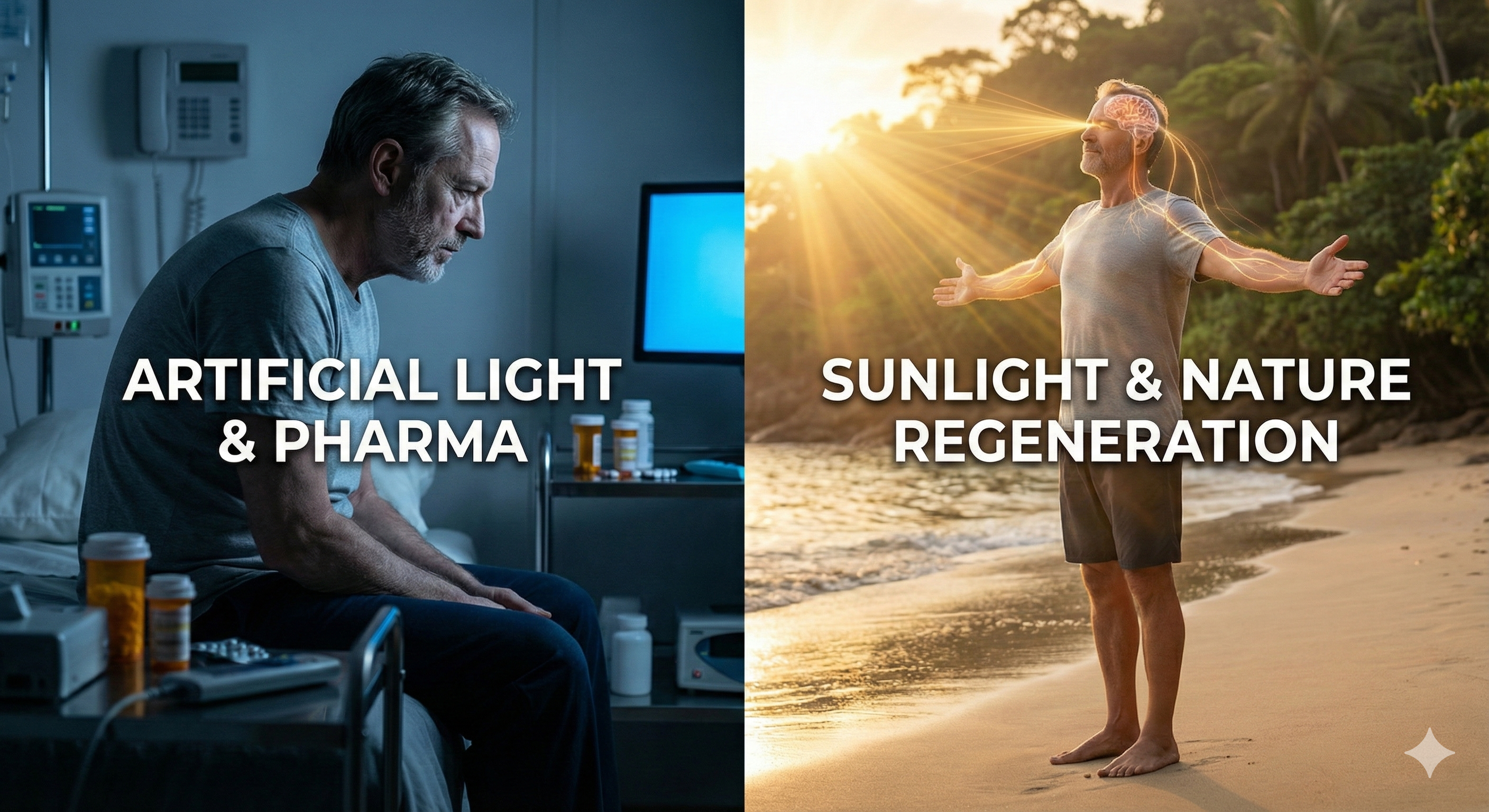
It may seem like a grim picture, but there is hope and it comes with perspective and asking the right questions. The human population didn’t have ADHD 30 years ago like we do today. So, there are significant environmental changes that have happened which are harming our brains and the building/breakdown of neurotransmitters, beyond nuclear genome mutations. So, what has changed? The visible and non-visible light environment we live within is the primary change our biology has noticed because of our biology importance it places on these signals to regulate all biochemistry and biology.
Clean up their visual and non-visual light environment and you create signalling which a brain in 1990 received and watch the behavioral, structural, and biochemical improvements occur. Clean the light environment and you allow the brain to clean itself and heal.
Cites:
The ADHD Brain has centers which need repair
The locus coeruleus is a small nucleus in the brainstem that plays a crucial role in regulating arousal, attention, and stress response by releasing the neurotransmitter noradrenaline. From a biophysics perspective, the production and regulation of noradrenaline are significantly influenced by environmental light exposure, particularly UV sunlight. Optimal levels of UV light help maintain the balance of noradrenaline, as neuromelanin within the locus coeruleus absorbs UV light, which then participates in the synthesis of this neurotransmitter. Conversely, exposure to artificial fields, such as the unbalanced artificial visible light from tech screens, indoor LED lighting, and various forms of wireless radiation, disrupts this natural synthesis process. These artificial EMFs can lead to oxidative stress and inflammation, damaging the neurons in the locus coeruleus and impairing their ability to produce noradrenaline effectively.
The substantia nigra is another critical brain region, primarily known for its role in producing dopamine, a neurotransmitter essential for movement, motivation, and reward processing. The biophysics of dopamine regulation involves the interaction of UV sunlight with neuromelanin in the substantia nigra, facilitating the synthesis and optimal levels of dopamine. However, prolonged exposure to artificial electromagnetic fields, including visible light from screens, LED lighting, and other non-visible EMFs, can significantly disrupt this process. These artificial fields generate excessive reactive oxygen species (ROS), which damage the dopaminergic neurons in the substantia nigra. This damage impairs dopamine production and can lead to neurological disorders such as Parkinson's disease. Maintaining a balance of natural sunlight exposure while minimizing artificial light and EMF exposure is crucial for preserving the health and function of these vital brain regions.
It has long been known that individuals with ADHD tend to suffer from dysfunctional sleep. It’s unclear whether this is inherent to the disorder itself or if it results from ADHD symptoms, for example from feeling stressed all the time. Either way, non-restorative sleep creates a vicious cycle—poor sleep begets an exhausted child (or adult), whose nervous system goes into overdrive (fight or flight reaction) to stay alert the next day (affecting attention and memory), and this prevents restorative sleep from occurring the following night. Furthermore, insomnia may be compounded by stimulant medication commonly used to treat the disorder. Add to this the nature of today’s ubiquitous high-stimulation environment (blue light/nnEMF) and sleep quality worsens still. By mitigating this artificial visible and non-visible light and simply making one positive change of adding back in AM sunlight daily (containing UVA and infrared light) can have seen symptoms of ADHD disappear over time.
An area of the brain impacted in cases of ADHD involve dysregulated function of the locus coeruleus containing large amounts of neuromelanin, a key brain region involved in arousal and attention[1]. This is important to note because neuromelanin can be degraded into dopamine to support executive function among other functions. The brain tells time in multiple areas including receiving vital inputs from the locus coeruleus, but with the primary being the master clock situated in the anterior hypothalamus called the suprachiasmatic nucleus (SCN). This clock regulates all biorhythms and subsequent autonomic nervous system and endocrine regulations/secretions. When time perception is off, so is the nervous system and hormones. Pharmaceutical companies know about this detail and hence why ADHD medication works on attempting to chemically modify arousal and sleep-wake behaviour, but what they won’t tell you is that this is not needed if you get your visible and non-visible light signals right!
The primary alteration of time in the human brain is light and darkness. We know this because we find it much more difficult to tell how much time has passed during the night than during the day. Keeping accurate biological time involves resting deeply at night and having exposure to natural light the entire day. Time perception is not all equal between different human brains. For example: Subjective time perception is different to objective perceptive time in an ADHD brain. A myriad of studies have shown that individuals with ADHD have difficulties in time estimation and discrimination activities, as well as often having the feeling that time is passing by without them being able to complete tasks accurately and well. In fact, time perception issues with those with ADHD is so prevalent that it is being considered as a diagnostic characteristic of ADHD itself. The Zimbardo Time Perspective Inventory (ZTPI) is currently used to measure this in the human brain.[9,10]
In terms of time perception, individuals with ADHD have been found to have difficulties in discriminating stimuli of very brief durations, especially in the sub-second range. They also show more variability in estimating the duration of stimuli lasting several seconds, indicative of an accelerated internal clock.[6] Sleep is fast becoming a centrepiece for optimal health. For any chance of perceiving time internally with any consistent accuracy, the light/dark environment needs to be managed well, as does the meal timing and the 3 hours beginning the day and before bed.
The neurotransmitter dysfunction in ADHD is thought to involve both dopaminergic and noradrenergic systems. The locus coeruleus, which is implicated in the circadian disruptions seen in ADHD, is the primary site of noradrenaline production in the brain. Dysregulation of this system could contribute to the arousal-related deficits seen in ADHD.[1] Dopamine, on the other hand, plays a crucial role in reward processing and motivation, functions that are often impaired in ADHD. Furthermore, medications used to manage ADHD, such as stimulants, primarily target these neurotransmitter systems, further supporting their role in the disorder.[7]
In addition, there is evidence of altered cortisol rhythms in ADHD, suggesting potential dysregulation of the hypothalamic-pituitary-adrenal (HPA) axis, which is a major neuroendocrine system that responds to stress.[3][8] This could further contribute to the circadian disruptions and sleep disturbances seen in ADHD. ADHD is associated with disruptions in circadian timing and altered time perception, likely due to dysfunctions in noradrenergic, dopaminergic, and HPA axis systems. Many believe dopamine has a primary role in reward seeking behaviour or pleasure/stimulus, but this is only 1 function of dopamine. In the case of ADHD, these peoples brains get worse when dopamine is low because low dopamine is connected to procrastination.
ADHD brains in childhood in our modern world can result from consistent exposure to pulsing non-visible light such as non-native electromagnetic fields (nnEMFs) originating from wireless, electrical and technological devices in the home This problem is so severe in children because their neural networks in the brain are unmyelinated and more vulnerable to/ready to receive electromagnetic signals (native and non-native). Thus, neurological dysfunction as a child in our modern world always has a nnEMF and artificial light toxicity component resulting in a Neurodevelopmental brain issue. Not only does this artificial visible and non-visible light slow myelination in the brain, but also degrades myelin in adults. Later in life if myelin degradation occurs this can result in worsening of ADHD or bring on conditions like MS. Either way this myelin issue is accelerated by exposure to artificial blue light after sunset, use of wireless technology and screens and avoiding full spectrum sunlight by living indoors. This is what most have missed with respect to ADHD.
When you read Dr. John Ott’s book – Health and Light you’ll understand why ADHD has become a real clinical problem. Within that book, you'll learn about the Sarasota school experiment. This experiment proved this link of ADHD and man-made light long ago and General Electric made sure to "bury and discredit" its results for years so humans would not know that man-made light from devices making corporations billions of dollars could change your behavior by changing your brain chemistry. This is why Big Pharma jumped on the train right after Ott's Sarasota experiment. They realized they could sell drugs and make billions in this new disease category GE created with their light bulbs, electrical devices and TV sets. This is a very important article if you have ADHD focus issues! The solution to ADHD may be more Sunlight and less fake light. Bright morning sunlight definitely heals an unhealthy brain's focus problems. This story links to the last one because obesity is a brain inflammation disease also relate to a poor light spectrum. This is why artificial light and obesity are linked to too. Article 1 the drugging of the American boy.
The Lady Gaga Example: In 2017, Lady Gaga disclosed she had ADHD/PTSD/FM, how did this likely happen? When one works at night rarely sees the sun, watch too many TV screens or tech screens, have creamy white skin covered in tattoo's and you work in blue light and with electrified instruments for most of your adult life, you likely will get a form of a mitochondrial disease. Choices are the cause. Fibromyalgia/ADHD is a disease linked to a loss of electrons and a serious breakdown in proton recycling in the muscles and collagen fascia. In muscle mitochondria, the 4th cytochrome is called cytochrome C oxidase or COX for short. COX is related to hemoglobin. They share a common heme protein. In muscle, this is calling myoglobin.
When light is not full spectrum, this alters the outer mitochondrial membrane lipid chemistry to allow too much heavy water (deuterium) from the cytosol to enter the outer mitochondrial space. If the disease progresses further the deuterium begins to clog up the TCA cycle and break this cycle in single substrates because of the kinetic isotope effect.
The same thing happens in Fibromyalgia in muscle myoglobin to cause a problem with the urea cycle in the cytoplasm of muscles cells. When either of these things occurs, metabolism is slowed, and fermentation of sugar is favored. Less cell water is made and less is structured because sunlight is needed to structure that cell water into a liquid crystal. This allows too much deuterium into the outer mitochondrial space in the muscles of your body, and this slows the ATPase and slows electron transport chains to lower the voltage in mitochondria. When this happens Ascorbate peroxidase (or APX) is activated. It is a member of the family of heme-containing peroxidases. Heme peroxidases catalyze the H2O2-dependent oxidation of a wide range of different, usually organic, substrates in biology.
Catalase is the QUICKEST acting enzyme in the body that turns H2O2 into water and oxygen. Deuterium slows its ability to work DRAMATICALLY in muscles. That heme comes from the breakdown of cytochrome c oxidase in mitochondria when mtDNA damage (mitochondrial heteroplasmy) rises. Cytochrome c is a multifunctional hemoprotein in the mitochondrial intermembrane space whereby its participation in electron shuttling between respiratory complexes III and IV are an alternative to its role in apoptosis in mitochondria with high heteroplasmy rates.
This occurs when a peroxidase activated by interaction with cardiolipin (CL) a lipid in the inner mitochondrial membrane that allows deuterium to get into the matrix to cause swelling. This action results in selective CL peroxidation. This causes an immediate switch from normal electron transfer (ECT) to peroxidase function, but it requires partial unfolding of the protein upon binding of CL, whose specific features combine negative charges of the two phosphate groups with four hydrophobic fatty acid residues. That unfolding exposes a histidine residue that has a high affinity for DEUTERIUM.
This ruins how mitochondrial reactive oxygen species (ROS) can be properly handled and leads to diseases like ADHD and Fibromyalgia. The unfolding of cardiolipin (CL) seems to be helped by compounds with a similar ultrastructure linked to Vitamin E and K which are related to the structure of quinones biomolecules. These things all act to dehydrate the cells of cytosolic water with a lowered deuterium content. This leads to deuterium leaking into parts of the cell it is normally tightly controlled to be kept low. The result in ADHD/Fibro is the body in afflicted tissues has a matrix (mitochondria) that cannot effectively use proteins or fat for fuel. This effect causes a simultaneous lowering of our piezoelectric abilities in cells and effects tensegrity and cell size and shape. These things also all lower the dielectric constant in cell water (normally 160 and it drops below 70) and it is become magnified when things like blue light and nnEMF and bad water (fluoride or deuterium) dehydrate our cells.
It usually starts with one cell type, but it can spread fast if your baseline mitochondrial redox potential (charge potential within the mitochondria) is low. Low redox is associated with poor cell membrane function. It also will alter proton recycling in the mitochondrial matrix. So, if you are "young healthy 30 something" like Lady Gaga who works out in a blue-lit gym or a blue-lit Harvard lab, you by definition, have a lowered redox potential. You also live at a high latitude and in a city with a high population density that is too high when you were struck down. You likely have no idea how those two things dehydrate cells to set the stage for ME/FM/CFS and ADHD. It turns out Ms. Gaga has both conditions. No shocker when you understand how it occurs. Most do not. Deuterium is an optical switch in cells it uses in ways few can fathom.
Dehydration of the matrix of cells due to mitochondrial damage is the key initial starting point for ME/Fibromyalgia or ADHD. It can lead to a local loss in physiologic control over certain muscles or behavior too, just by a lack of red light from the skin above the muscles. The goal is not to avoid foods, molds, or toxins, with this issue, but to fix your LIGHT environment so that the structure of the tissues and gut by replacing the electrons and proton recycling lost to build the capacitor in cell water back. SUNLIGHT IS the best medicine in this case. This turns your energy engine, the mitochondria, back on to protect your cells once again and make these diseases vanish when the heteroplasmy rate slows.
Regenerating Myelin in the ADHD brain: Strategies to promote myelination in an immature brain with mental health conditions like ADHD and neurodevelopmental conditions can be broadly categorized into environmental interventions. Environmental enrichment, involving increased exposure to natural sunlight, socialization, physical activity, and cognitive enhancement of surroundings, has been shown to enhance endogenous repair of the developing white matter by promoting oligodendroglial maturation, myelination, and functional recovery after perinatal brain injury.[11] Similarly, motor learning has been found to promote remyelination via new and surviving oligodendrocytes.[12]. All of these are of course in addition to disconnecting from artificial sources of light (visible and non-visible) and reconnecting with full spectrum Sunlight, especially in the mornings.
Conclusion
ADHD is the result of insufficient ultraviolet and infrared sunlight exposure/stimulus to make dopamine in your frontal lobes (inhibition) tied to an indoor childhood under the power of man-made visible and non-visible light. This man-made visible and non-visible light comes from wireless, technological and electrical devices and indoor man-made lighting. Our focus is the ability to inhibit impeding thoughts. This is directly tied to dopamine levels and along with time perception is always off in ADHD cases. Red light is the antidote to blue and there are a myriad of studies now showing the harmful neurological and behavioral issues with blue light exposure especially in young children and how red light helps in these situations. As it relates to light interventions, brain photobiomodulation is a non-invasive passive way to help the ADHD situation as shown in these two papers by Dr Michael Hamblin of Harvard University in 2016 and the other from 2019.[15,16]
If you want to dive a little deeper into how the brain perceives time and regulates behaviour based upon this perception, Dean Buonomano's book "Your Brain is a Time Machine" is a great resource.
References
-
Altered Circadian Profiles in Attention-Deficit/Hyperactivity Disorder: An Integrative Review and Theoretical Framework for Future Studies. Imeraj L, Sonuga-Barke E, Antrop I, et al. Neuroscience and Biobehavioral Reviews. 2012;36(8):1897-919. doi:10.1016/j.neubiorev.2012.04.007.
-
A Systematic Review of Circadian Function, Chronotype and Chronotherapy in Attention Deficit Hyperactivity Disorder. Coogan AN, McGowan NM. Attention Deficit and Hyperactivity Disorders. 2017;9(3):129-147. doi:10.1007/s12402-016-0214-5.
-
Adult Attention-Deficit Hyperactivity Disorder Is Associated with Alterations in Circadian Rhythms at the Behavioural, Endocrine and Molecular Levels. Baird AL, Coogan AN, Siddiqui A, Donev RM, Thome J. Molecular Psychiatry. 2012;17(10):988-95. doi:10.1038/mp.2011.149.
-
ADHD, Chronotype, and Circadian Preference in a Multi-Site Sample of College Students. Becker SP, Luebbe AM, Kofler MJ, Burns GL, Jarrett MA. Journal of Sleep Research. 2023;:e13994. doi:10.1111/jsr.13994.
-
ADHD Subtypes Are Associated Differently with Circadian Rhythms of Motor Activity, Sleep Disturbances, and Body Mass Index in Children and Adolescents: A Case-Control Study. Zerón-Rugerio MF, Carpio-Arias TV, Ferreira-García E, et al. European Child & Adolescent Psychiatry. 2021;30(12):1917-1927. doi:10.1007/s00787-020-01659-5.
-
Meta-Analysis: Altered Perceptual Timing Abilities in Attention-Deficit/Hyperactivity Disorder. Marx I, Cortese S, Koelch MG, Hacker T. Journal of the American Academy of Child and Adolescent Psychiatry. 022;61(7):866-880. doi:10.1016/j.jaac.2021.12.004.
-
Impact of Adult Attention Deficit Hyperactivity Disorder and Medication Status on Sleep/Wake Behavior and Molecular Circadian Rhythms. Coogan AN, Schenk M, Palm D, et al. Neuropsychopharmacology : Official Publication of the American College of Neuropsychopharmacology. 2019;44(7):1198-1206. doi:10.1038/s41386-019-0327-6.
-
Cortisol, Inflammatory Biomarkers and Neurotrophins in Children and Adolescents with Attention Deficit Hyperactivity Disorder (ADHD) in Taiwan. Chang JP, Mondelli V, Satyanarayanan SK, et al. Brain, Behavior, and Immunity. 2020;88:105-113. doi:10.1016/j.bbi.2020.05.017.
-
Time perception in ADHD – https://pubmed.ncbi.nlm.nih.gov/12959497/
-
Time Perception in ADHD – https://pubmed.ncbi.nlm.nih.gov/32757699/
-
Environmental Enrichment Ameliorates Perinatal Brain Injury and Promotes Functional White Matter Recovery. Forbes TA, Goldstein EZ, Dupree JL, et al. Nature Communications. 2020;11(1):964. doi:10.1038/s41467-020-14762-7. Copyright License: CC BY
-
Motor Learning Promotes Remyelination via New and Surviving Oligodendrocytes. Bacmeister CM, Barr HJ, McClain CR, et al. Nature Neuroscience. 2020;23(7):819-831. doi:10.1038/s41593-020-0637-3.
-
An in Vivo Accelerated Developmental Myelination Model for Testing Promyelinating Therapeutics. Lariosa-Willingham K, Leonoudakis D, Bragge T, et al. BMC Neuroscience. 2022;23(1):30. doi:10.1186/s12868-022-00714-y. Copyright License: CC BY
-
Myelin Regeneration Article - https://neurosciencenews.com/myelin-regeneration-23822/?fbclid=IwAR01X33t8wyX3QpK4Tv6q6F05Ia3pz23PvsSuT7WybDMZSkDonmHDJ6LsaE
-
PBM For Brain Diisorders – https://www.ncbi.nlm.nih.gov/pmc/articles/PMC5066074/
-
Brain PBM – https://www.ncbi.nlm.nih.gov/pmc/articles/PMC6041198/

ADHD, Flicker, and the Hidden Hazard of Artificial Light
The CDC now estimates that in 2025, 6 in 10 children show moderate to severe ADHD symptoms. While genetics and environment play a role, one overlooked driver is the invisible stress of modern lighting.
Flicker Stress
Every LED bulb and screen flickers at 100 to 120 times per second. The eye may not consciously register it, but the nervous system does. This creates chronic overstimulation, pushing the brain into a stress response that undermines focus, executive function, and calm. Gyms, classrooms, offices, and even digital clocks keep brains trapped in this low grade stress. Removing flicker reduces the micro stress load and restores resilience, focus, and regulation.
Blue Light and Dopamine Collapse
On top of flicker, artificial blue light from LEDs and screens targets dopamine reward tracts. Dopamine is the neurotransmitter that drives motivation, attention, and executive function. Exposure to artificial light at night destroys dopamine signaling, leaving the brain unable to sustain focus or feel rewarded by effort.
Acetylcholine and Memory Impairment
The same light also disrupts acetylcholine, the neurotransmitter critical for learning and memory consolidation. Without it, information does not stick. Over time, this weakens the circuits needed for academic performance and emotional stability.
The 455 nm Hazard
Peer reviewed research shows that blue light exposure, especially at wavelengths around 455 nanometers, is particularly harmful. In humans, light in the 446 to 477 nanometer range causes dose dependent suppression of melatonin, a key marker of circadian rhythm integrity. This suppression impairs sleep and alertness and is linked to diminished cognitive performance and neurobehavioral disorders (West et al., 2011). Evening exposure to LED backlit screens emitting 454 to 474 nanometer light further disrupts circadian physiology, increasing alertness at night while impairing sleepiness and EEG low frequency activity, a marker of cognitive dysfunction (Cajochen et al., 2011).
Reviews confirm that blue rich LED light is a recognized disruptor of the internal clock, producing chronodisruption and endocrine effects including altered estrogen secretion (Touitou & Point, 2020; Menéndez-Velázquez et al., 2022).
Animal models provide additional evidence. Chronic exposure to blue light in the 450 to 500 nanometer range induces spatial anxiety, alters hippocampal and thalamic connectivity, and upregulates the circadian protein Per2 (Hsieh et al., 2025). Other studies show blue light impairs motor memory, increases anxiety like behavior, decreases retinal melatonin, and elevates oxidative stress, indicating neuronal damage (Joylin et al., 2023). Nocturnal blue light exposure in hamsters has also been shown to trigger depressive like behaviors and alter neuronal plasticity through melanopsin retinal pathways projecting to mood regulating brain regions (Bedrosian et al., 2013).
The Bigger Picture
Flicker plus the 455 nanometer blue light spike is a perfect storm: constant micro stress on the nervous system, dopamine collapse that erodes focus and drive, acetylcholine disruption that weakens memory, and circadian misalignment that destabilizes brain function. For children already at risk of ADHD, or for adults battling distraction and fatigue, this is not a minor inconvenience. It is a silent but measurable erosion of the brain’s ability to regulate mood, sustain focus, and learn effectively.
Protecting against flicker and blocking the 455 nanometer hazard is no longer optional in the digital age. It is foundational for clarity, focus, memory, and long term neurological health.
References
-
Bedrosian, T. A., Vaughn, C. A., Galan, A., Daye, G., Weil, Z. M., & Nelson, R. J. (2013). Nocturnal light exposure impairs affective responses in a wavelength dependent manner. The Journal of Neuroscience, 33(32), 13081–13087. https://doi.org/10.1523/JNEUROSCI.5734-12.2013
-
Bedrosian, T. A., & Nelson, R. J. (2017). Timing of light exposure affects mood and brain circuits. Translational Psychiatry, 7(1), e1017. https://doi.org/10.1038/tp.2016.262
-
Kuse Y, Ogawa K, Tsuruma K, Shimazawa M, Hara H. Damage of photoreceptor-derived cells in culture induced by light emitting diode-derived blue light. Sci Rep. 2014 Jun 9;4:5223. doi: 10.1038/srep05223. PMID: 24909301; PMCID: PMC4048889.
-
Cajochen, C., Frey, S., Anders, D., Späti, J., Bues, M., Pross, A., Mager, R., Wirz-Justice, A., & Stefani, O. (2011). Evening exposure to a light emitting diodes (LED) backlit computer screen affects circadian physiology and cognitive performance. Journal of Applied Physiology, 110(5), 1432–1438. https://doi.org/10.1152/japplphysiol.00165.2011
-
Hsieh, Y. L., Huang, S. M., Yu, S., Wang, Y., & Wu, T. (2025). Chronic blue light exposure induced spatial anxiety in an adolescent mouse model: Per2 upregulation and altered brain resting state functional activity. NeuroImage, 314, 121259. https://doi.org/10.1016/j.neuroimage.2025.121259
-
Joylin, S., Mutalik, S., Kalaivani, M., Subramaniam, P., & Krishnan, P. (2023). Influence of different LED wavelengths on retinal melatonin levels: A rodent study. The Science of the Total Environment, 904, 166665. https://doi.org/10.1016/j.scitotenv.2023.166665
-
Menéndez-Velázquez, A., Morales, D., & García-Delgado, A. B. (2022). Light pollution and circadian misalignment: A healthy, blue free, white light emitting diode to avoid chronodisruption. International Journal of Environmental Research and Public Health, 19(3), 1849. https://doi.org/10.3390/ijerph19031849
-
Touitou, Y., & Point, S. (2020). Effects and mechanisms of action of light emitting diodes on the human retina and internal clock. Environmental Research, 190, 109942. https://doi.org/10.1016/j.envres.2020.109942
-
West, K. E., Jablonski, M. R., Warfield, B., Cecil, K. S., James, M., Ayers, M. A., Maida, J., Bowen, C., Sliney, D. H., Rollag, M. D., Hanifin, J. P., & Brainard, G. C. (2011). Blue light from light emitting diodes elicits a dose dependent suppression of melatonin in humans. Journal of Applied Physiology, 110(3), 619–626. https://doi.org/10.1152/japplphysiol.01413.2009
Neurotransmitters – Serotonin, Melatonin and Dopamine
Let’s dive a little deeper into the brain to understand what is going on.
Aromatic amino acids have benzene rings which act like photon traps for UV light designed to slow light down for specific reasons. The process of slowing light down creates matter from energy. Albert einstein showed us this with his theory of special relativity (E=mc2). To simplify this even more, everything we perceive as solid is actually vibrating energy fields containing enough density to be able to touch and feel the substance. If you slow light energy and information down by the radiant source interacting with something denser like water or aromatic amino acids, the energy and information contained in the light will begin to densify and transform into atoms, forming molecules, forming proteins like vitamin D and serotonin.
To different degrees, all aromatic amino acids absorb ultraviolet light. Tyrosine and tryptophan absorb more than does phenylalanine. The light absorption spectrum of a particular substance provides a clue into the specific energy and information required for its creation.
Let’s be sure to note that the solar spectrum is 51% red/infrared light and whenever ultraviolet light is present, red/infrared is always present in nature. So, anything created by ultraviolet light is also photonically supported by 51% red/infrared light and any application of ultraviolet light would be wise to copy nature and use red/infrared light in conjunction.
That being said, let’s talk about two of these special aromatic amino acids with their UV light capturing benzene rings:
-
Serotonin, Melatonin and Nicotinamide Adenine Dinucleotide (NAD) are all made from the aromatic amino acid Tryptophan. Tryptophan absorption peak at 220nm with a weaker absorption peak at 280nm.
-
Dopamine, Melanin, Thyroid Hormone and Adrenaline and noradrenaline are made from the aromatic amino acid Tyrosine. Tyrosine has a light absorption peak at 210nm with a weaker absorption peak at 260nm.

Cite:
https://www.pnas.org/doi/pdf/10.1073/pnas.1909722116

Whether its depression, anxiety, ADHD, OCD, SAD, Parkinson’s, Alzheimer’s, dementia, aspergers, addiction, narcolepsy, insomnia, adrenal fatigue and many other common diseases, these neurotransmitters are always off. These along with the most important urine/saliva/blood markets for mitochondrial health are listed here:
Suggested Tests:
-
Urinary neurotransmitter metabolite test (Dopamine, Adrenaline, etc)
-
Saliva Melatonin/Cortisol/DHEA – For Brain health and sleep
-
BUN/Creatinine Ratio (Kidney function test on a chem 7) to determine your mitochondrial water production indicating cellular hydration levels.
-
Unsupplemented Vitmain D level (25 Hydroxy Vit D and 1,25 Dihydroxy Vit D) – to determine how much high-quality light your body has captured and can make use of. It’s important for this to be Unsupplemented because supplementing vitamin D is like going to the gym and asking your trainer to do push-ups for you and expecting to get stronger. When you cut out your body ‘synthesis process and take a shortcut, you do not signal your body to become more resilient. Supplementation can cover up the fact that you have a systemic myriad of issues leading to strange seemingly unrelated symptoms. This is because you would cover up a poor immune system,. poor calcium control (artificial light and nnEMF exposure harms), poor liver and kidney function and issues with cholesterol, sulfate, and detoxification. Thus, you won’t address the root cause and it will continue to get worse until the vitamin D supplements are no longer powerful enough to support chronic systemic inflammation and mitochondrial dysfunction.
-
hsCRP – 3-month snapshot of total body inflammation.
-
Other tests for mitochondrial dysfunction revolve around checking to see Oura ring sleep scores, HRV and Melatonin/Cortisol levels just to name a few.
Let’s dive a little deeper into Serotonin and Melatonin and Dopamine.
Serotonin
Avoiding sunlight can lead to a drop in serotonin levels, impacting the body's ability to handle stress and increasing the risk of mental illnesses such as mania, depression, and Seasonal Affective Disorder (SAD). Conditions like bipolar disease, Electro-Hypersensitivity (EHS), chronic fatigue, infertility, low libido, and poor sleep are linked to melanopsin damage affecting serotonin photoreceptors in the skin and eyes. The absence of serotonin in the brain can disrupt the genomic function of glucocorticoid receptors, affecting acute stress responsiveness, especially when these receptors undergo oxidation, leading to a dysfunctional state. This oxidative process initiates in the eye and ultimately diminishes the efficacy of glucocorticoid receptors by introducing electrons to them.
Lacking Sunlight exposure and tryptophan which turns into Serotonin can lead to disease. Serotonergic projections innervate the paraventricular nucleus (PVN) of the hypothalamus as well as the brain regions involved in the stress-induced activity of the HPA axis, including the prefrontal cortex (PFC). This is why PVN damage is associated with EHS, POTS, and adrenal fatigue.
Serotonin helps the brainstem. So, lacking it can result in humans developing a condition called adrenal fatigue where it appears there is a global dysfunction of how their hormone receptors operate. This can alter how the brain functions leading to many different types of mental illness.
Citation:
Serotonin is the neurotransmitter of gut function and has a massive effect on the absorption of tryptophan. 80% of serotonin is stored in the small bowel.
Serotonin is mostly produced in the large intestine (95%) and some in the Hypothalamus (5%) and Serotonin is Melatonin’s breaking mechanism. Serotonin can be made from melatonin because melatonin and serotonin are both made from light interactions with the aromatic amino acid tryptophan.
-
One simple indicator of serotonin function. If the body has excess serotonin diarrhoea is likely to be experienced If the body has too little serotonin, constipation is likely a symptom experienced.
Sunlight stimulates serotonin function via the skin. Human skin has an inherent serotonergic system that is capable of generating serotonin. We know this because serotonin is made from the aromatic amino acid Tryptophan, which has a light absorption spectrum of 200nm - 400nm (the UV light range). When UV light interacts with our skin, it provides the signal for serotonin creation. During the wintertime above the 40th latitude, there is no UV light at all and as such the serotonergic system does not receive the external signal to biosynthesize.
This leaves the body with a limited serotonin reserve to last through the winter. For completeness I will also share some complex biophysics, so I don’t leave you with a half-truth on the subject. If humans capture large amounts of UVB sunlight we store this light in many biomolecules, the most of which is in the form of the hormone vitamin D.
Our vitamin D levels at the beginning of winter are designed to be quite high so that we are able to power through the winter with a functioning immune system amongst other things. When our vitamin d levels are high at the beginning of winter, this light storage hormone, slowly releases the UV light internally over the winter which signals tryptophan and other aromatic amino acids to produce the neurotransmitters like serotonin internally even when there is no UV light on the skin surface. But with insufficient light stores inside the body at the beginning of winter, neurotransmitter dysfunction is present leading to mental health challenges such as mood disorders like Seasonal Affective Disorder (SAD).
If you want healthy levels of serotonin, melatonin, dopamine, adrenaline, nor-adrenaline, nicotinamide adenine dinucleotide (NAD), thyroid hormone (T3), melanin and so many more, capturing high quality midday sunlight during the times of the year it is available is the key to stay robust and resilient in all ways during the winter months, especially in the northern part of the USA , Canada and Europe.
I’ll give you another strategy which nature has provided during the wintertime to boost neurotransmitter function, mitochondrial function and immune system function during the winter months. Cold exposure.
Did you know when you expose your skin or eyes to cold temperature air or water it allows your body to produce more internal biophotons and DC electricity? Well, you know that when you put an ice pack on your arm, that your body heats up internally to maintain homeostasis so you get hotter.
This heat is produced from your mitochondrial engines within your cells and is in the form of predominantly infrared light. The mitochondria are able to mount this response because the cold temperature stimulus initiates DC electrical charge flow in the body to increase. So cold exposure boosts your body’s electric charge and biophoton production to make your mitochondrial engines more efficient and able to deal with incoming pathogens, bacteria, radiation toxins, air toxins, food toxins, physical and emotional stressors, and so on. Yep. What else does it do? It sensitizes the receptor sites on your cells to increase their binding affinity to less available circulating hormones such as serotonin, testosterone, progesterone and pregnenolone.
With low serotonin for example, and cold exposure, a person can emulate high serotonin levels whilst still triggering a good level of endogenous production via the feedback loop of serotonin given its being used efficiently, sustaining good health with low serotonin. So, you know when you have low serotonin, and the doctor puts you on SSRI’s? And these SSRI’s ration your serotonin so you don’t run out so quickly, but you end up with a low mood just not as low as you could have been without the drug if you kept living that way… and at the end of the winter your serotonin is depleted because the endogenous production was reduced given the rationed use of serotonin endogenously via the hormonal feedback loop… They do this because your doctor doesn’t teach you that UV sunlight exposure and cold exposure on your surfaces allows you to produce more and ration more naturally… right. Well, even though there may be no UV light available instead of taking a pharmaceutical drug to ration your serotonin, how about sensitizing your serotonin receptors to lower levels of serotonin so that you can maintain good gut function, sleep and brain health during the winter without the need to experience UV light. That sounds like a much better strategy to me.
Not to mention that cold exposure and UV sunlight both boost dopamine production in the body at the same time.
With good levels of Dopamine and Serotonin, Melatonin will be high and brain health and sleep will be far from experiencing SAD. Nature makes no mistakes. How many times have you heard Wim Hoff or other cold experts talk about cold exposure helping to boost internal light production and the implications of this for human health? This is because they fundamentally do not understand the biophysics of cold and its impact on our vital ancient hormonal pathway within the body called the leptin-melanocortin pathway. That’s a story for another day, but the biochemistry of this pathway underlies the cellular and hormonal cascade behind this neurotransmitter supportive biologic process.
What suppresses serotonin?
-
Artificial light and wireless radiation exposure – especially after sunset
-
Living indoors most of the day – spending time in sterile ‘clean’ environments.
-
Eating processed foods, vegetable oils, refined sugars, summer fruits and vegetables in winter (pineapple, peaches, watermelon, cucumbers, bananas, mangos, etc).
-
Avoiding sunlight during the late morning, solar noon and early afternoon
What builds serotonin?
-
AM sunlight exposure on eyes and skin
-
Eating during daylight hours
-
Exercise in the afternoon
-
Playing in nature and spending time in biodiverse environments like forests or gardens.
-
Nutrients: Tryptophan, B Vitamins, high quality amino acids, omega 3 fatty acids.
Melatonin
Melatonin protects cells from excess UVB damage.
-
IR and UVA generate Melatonin, specifically in the AM sunlight. This is key to have in place before you go out into the UVB Sun. Remember: This UVA light to absorb into Tryptophan’s benzene rings can come from internally. Infrared light is the light of life. All cells communicate via ELF-UV Light which is then turned into IR light for healing and regeneration.
Melatonin’s Key Basic Functions (Mitochondria Benefits)
"Melatonin is able to directly scavenge a variety of toxic oxygen and nitrogen-based reactants, stimulates antioxidative enzymes, increases the efficiency of the electron transport chain thereby limiting electron leakage and free radical generation, and promotes ATP synthesis. Via these actions, melatonin preserves the integrity of the mitochondria and helps to maintain cell functions and survival."
Melatonin in the skin works to repair cells locally and distally. This is because it is the hormone that controls autophagy and apoptosis globally in the body.
The Melatonin Cycle
The Melatonin Cycle is controlled by Light and Dark. Blue Light supresses the release of Melatonin, principally around 460 to 480 nm, proportional to the light intensity and length of exposure, and IR + UV-A light generates Melatonin from Tryptophan. ELF-UV light also regenerates Melatonin from Serotonin in the gut.
Melatonin secretion is biologically regulated by norepinephrine another catecholamine called noradrenaline (synonymous with norepinephrine). It is the main neurotransmitter of the sympathetic nervous system. This system is driven by the PVN in the hypothalamus. It is responsible for tonic and reflexive changes in cardiovascular tone, thus the eye links directly to the circulatory system. This is important for collection of light frequencies from the surface skin where the circulatory system can reach the surface when incident light hits it. Here you can see how melatonin in the eye, WBCs, and skin are coupled to the circulatory system. Norepinephrine is a cold mediated catecholamine hormone. Cooling skin temperature stimulates plasma norepinephrine release. UV light also stimulates it. When noradrenaline is released, calcium is released into the cytosol of a cell. This calcium release increases the amount of ultraweak-UV biophotons from fluorophore proteins in cells under stress using the IP3/DAG signaling pathways; as Roeland Van Wijk talked about in his book Light Shaping Life. Ultraweak-UV light biophotons and cooling both increase catecholamines and this in turn helps increase melatonin secretion in WBCs to modulate inflammation in the skin and blood plasma.
At ~4am The Melatonin Cycle stimulates Cortisol to be released via the action of Ultraweak-UV biophotons emissions inside the body linked to the body’s circadian rhythm. Then, the first signs of morning light appear, containing a greater portion more Blue than Green and a Red equivalent to blue. This light unzip collagen in cells to allow water to flow between glial cells and neurons via the aquaporin 4 gates in the brain and eye to wake us up and make us alert. This cortisol release and initial sunlight stimulates adrenaline, the stress hormone of the sympathetic nervous system. This blue light from sunlight is also the initial stimulus to anterior pituitary hormone release. Then, UV-A light shows up later in the morning. This light begins to limit hormone release from the anterior pituitary gland. Adrenaline, Cortisol and the rezipping of Collagen then occurs as full spectrum sunlight containing UV becomes present in the later morning. Every AM these UV-A frequencies of light act to begin to re-zip the collagen in our skin and eyes and regenerate the melanopsin receptors in the retina.
Every AM when the angle of the sun is above 14 degrees, UV-A frequencies of light act to begin to re-zip the collagen in our skin and eyes which were unzipped by cortisol at 4am and regenerate the melanopsin receptors in the retina.
When a human biologic system is missing UV and/or IR light frequencies for any reason, the biogenic amines, such as Dopamine and Melatonin, built photoelectrically and photochemically are not made properly nor are they coupled to the cycles of light.
Melatonin and Tryptophan
Sub-cellular melatonin is made in every cell of the body as the #1 antioxidant system combatting excess free radical damage and other oxidative stressors, this type of melatonin is made in response to hermetic stress, infrared light or magnetic and electric flux changes. This sub-cellular melatonin makes up approximately 95% of all the melatonin in the body. Pineal melatonin, which is specifically relevant for sleep, is initially made in the eye from AM sunlight interacting with the aromatic amino acid tryptophan. It is then stored in the pineal gland and its release is activated by darkness, allowing melatonin to be active at night. This activation occurs when light levels fall below ~200 LUX. Bright light at night can completely supress the release of melatonin. When you supplement melatonin at night and it’s absorbed via the gut, this can down regulate your endogenous production of melatonin in the pineal gland because of the negative feedback loop / so if it’s supplemented consistently the body’s ability to fall asleep without the melatonin is mildly reduced. Supplemental melatonin may also alter the body’s circadian rhythm to what we think is the right schedule without respecting our body’s strategy to best accommodate our lifestyle and choices.
What Suppresses Melatonin?
-
Exposure to bright lights and electromagnetic fields
-
Including: Night shift work and Airplane travel, Wi-Fi routers and 5G cell phones in the bedroom.
-
Eating after sunset.
-
Excessive exercise after sunset
-
Stress
-
i.e., High Cortisol
-
Caffeine, Nicotine and Alcohol
What Builds Melatonin?
-
AM sunlight exposure on the eyes and skin.
-
Red and infrared light exposure (reflected back to us from our green friends leaves around us)
-
Wearing blue blockers after sunset and receiving no artificial visible light on our skin and eyes after sunset.
-
Adequate Nutrients: High quality proteins like seafood, organ meat, duck and pork – Tryptophan, B3, B6, Calcium, Magnesium support healthy Melatonin in the body.
Target Labs: Wake Up = 5, Midnight = 95
Cites:
-
https://link.springer.com/article/10.1007/BF02463562
Kerenyi NA, Sotonyi P, Somogyi E (1975) Localizing acetylserotonin transferase by electron microscopy. Histochemistry 46:77–80 127. -
https://www.ncbi.nlm.nih.gov/pubmed/526980
Kerenyi NA, Balogh I, Somogyi E, Sotonyi P (1979) Cytochemical investigation of acetylserotonin-transferase activity in the pineal gland. Cell Mol Biol Incl Cyto Enzymol 25:259–262 -
https://link.springer.com/article/10.1007%2Fs00018-017-2609-7 Sakaguchi K, Itoh MT, Takahashi N, Tarumi W, Ishizuka B (2013) The rat oocyte synthesizes melatonin. Reprod Fertil Rev 25:674–682
-
Melatonin issues lead to excess weight https://www.ncbi.nlm.nih.gov/pmc/articles/PMC5881424/?fbclid=IwAR0PH9qmeCD7eYBah7imoAAMEU7Vfrn7XS3Xm2sDGksTGSr7jUZ5Ic6buoY
Dopamine
Dopamine is a neurotransmitter and neuro-hormone that plays a crucial role in various physiological functions. L-DOPA is its precursor, and it mediates neurotrophic factor release, influencing reward-motivated behavior and motor control. Dopamine is linked to UV and IR light exposure, and natural sunlight is the best way to generate it, avoiding potential side effects associated with artificial supplementation.
The role of dopamine extends beyond the central nervous system, affecting blood vessels, kidneys, pancreas, digestive system, and immune system functions. Dopamine's synthesis and effects are locally controlled, and sunlight, specifically UV and IR light, plays a key role in directing its release.
Low dopamine levels are associated with addiction, poor choices, and clinical outcomes such as cancer and strokes. Conditions like Parkinson’s, SAD and depression are sates of low dopamine in the brain. Conditions like ADHD often show low dopamine but can also show spikes of high release. And conditions like schizophrenia are extremely dopaminergic with peaks and troughs but overall, excessively high dopamine.
The gut flora, cortisol, progesterone, and melatonin levels influence dopamine levels, emphasizing the importance of a holistic approach to maintaining optimal dopamine function. Additionally, learning and environmental perception are closely tied to dopamine, with natural movement and exposure to sunlight playing crucial roles. Indicators of low dopamine include procrastination, lack of curiosity, brain fog, and yawning. Addressing factors like altered free radical signaling, iron deficiency, and addiction can help improve dopamine function and overall well-being.
Excessive exposure to blue light, nnEMF, or higher heteroplasmy rates disrupts calcium balance in mitochondria, leading to the interference of neurotransmitter (NT) release. Proper NT function depends on balanced calcium ion levels for synaptic and neuronal activity. Tyrosine, a precursor to hormones like thyroxine and neurotransmitters like dopamine, can undergo metabolism in UV light or cold environments, allowing animals to thrive in any season. Dopamine, primarily produced in the substantia nigra and the locus coeruleus, is linked to neuromelanin's UV light release to tyrosine, connecting UV light to dopamine in the human brain. This process in the locus coeruleus not only produces dopamine but also gives rise to norepinephrine and epinephrine, crucial for the body's stress response. Additionally, the conversion of tyrosine into catecholamines results in the production of water as a byproduct.
Best ways to boost dopamine
-
Sunlight Exposure: Natural sunlight, especially in the morning, stimulates dopamine production in the brain.
-
Cold Exposure: Exposure to cold temperatures, such as taking a cold shower or being in a cold environment, can increase dopamine levels.
-
Exercise: Regular physical activity, particularly aerobic exercise, has been shown to boost dopamine levels.
-
Healthy Diet: Consuming foods rich in tyrosine, the precursor to dopamine, like beef, pork, fish, eggs, almonds and avocados can support dopamine synthesis.
-
Adequate Sleep: Getting sufficient and quality sleep is essential for maintaining optimal dopamine levels.
-
Reducing Stress: Chronic stress can deplete dopamine levels, so stress management techniques such as meditation or deep breathing can be beneficial.
-
Music: Listening to music, especially music that brings pleasure, can trigger the release of dopamine.
-
Socializing: Positive social interactions and bonding with others can contribute to increased dopamine levels.
-
Setting and Achieving Goals: Accomplishing tasks or setting and reaching goals can lead to a sense of reward, positively impacting dopamine release.
-
Novelty and Learning: Engaging in new and challenging activities stimulates the brain and can enhance dopamine production.
Cites:
Artificial Visible and Non-Visible Light
The Molecular Mechanism of Artificial Visible and Non-Visible Light causing Oxidative Stress: Vitamin A and Melanopsin Uncoupling
Artificial blue light exposure was not widespread inside the home until the 1990's when all children and adults had access to multiple screens (computers, TVs, and so on). This bright artificial indoor lighting became our artificial sun lighting up our lives more than we allowed natural light to do so. As such, diseases metrics across the board but predominantly around the brain and heart have skyrocketed without adequate explanation by modern medicine. This is where things begin to make sense when you understand some of the basic principles of the biophysics of light and how powerful light and dark are at regulating healthy brain function.
When a child is very young, the eye and brain is not fully developed so when their eyes are hit with sharp, narrow wavelengths of artificial indoor lighting and screens, compared with the broad full spectrum of natural sunlight, photoreceptors in the eye are destroyed leading to a cascade of oxidative stress from the outside of the eye and skin to the inside of the brain and body. Because we want to keep receiving the benefits technology and indoor lighting brings we are now required to be more innovative and strategic with our lighting choices. One of my passion projects is bringing natural light indoors to help heal the eye and brain. And to use phototherapy to restore regenerative pathways in the brain to overcome neurological challenges.
All OPSIN proteins (human visual and non-visual photoreceptors) like Melanopsin are covalently bound to vitamin A. When artificial blue and green light or 3G, 4G, 5G, Wi-Fi, Bluetooth or high electric/magnetic fields from electrical devices/appliances and in your immediate environment, they break this bond and free an aldehyde version of Vitamin A. This aldehyde free radical is hungry for electrons and will cause oxidative stress in the surrounding area. So, if the eye is exposed to this light, that is where the oxidation will occur. If it’s the skin that is exposed, that is where the oxidation will occur.
If you, your child, or anyone you know are seeing light on any devices your eye and brain are being programmed to think it’s solar moon time in the middle of summer and will begin to act accordingly. The signals the hypothalamus and subsequently the pineal gland which regulates cortisol and melatonin cycles. Although melatonin is made in every cell, the pineal gland signaling trumps when it comes to times between 9pm to 4am.
This melatonin created in all our cells acts as the body’s key endogenous antioxidant to fuel preventative and regenerative pathways and is very dependent on the skin and eyes receiving the light wavelengths in the red, near infrared and UV-A ranges as nature designed in sunlight. If you are unable to receive the signals because you believe other choices to be more important like working indoors or the like - you can use your red-light device you have.
These red light devices are all made differently and contain different intensities, wavelengths and pulse rate options - it can be a little confusing at the outset - but once you dig into the thousands of peer reviewed studies you detect a theme in the literature - every person has a different biphasic dose response (how much light they can have before the benefits Stop being accumulated) and the average person can sit in front of a 660mm + 850nm light panel at an irradiance of approx. 30mW/cm2 at a distance of 1ft for 10 minutes twice a day (ideally whilst the sun is up) and get melatonin production benefits, brain and eye health benefits, inflammatory control benefits, behavioral benefits and neuroplasticity benefits and so on. Dr. Michael Hamblin is the master at sharing these in a clinical setting.
Red light is powerful medicine and is generally side effect free - that being said every red-light company out there gives very little guidance on treatments so it’s important to let them know your context and ask for their recommendation as they have a duty of care to stand behind their products. When in doubt go back to natures guidance and use sunrise and sunset exposure to normalize sleep patterns.
Add in visible and non-visible light solutions to allow the innate circadian rhythm, neuroendocrine secretions and brain clearance programs to be optimized. The most important ones for those with ADHD, Autism or SAD are 1. To avoid artificial blue light after sunset from reaching his brain (through the use of blue light blocking glasses or a hat whenever exposed to artificial home lighting sources which appear slightly white). And 2. Avoid eating after sunset. This second one is less intuitive but should make sense to you after reading the following sentence. Food is grown under the power of sunlight via photosynthesis; thus, food contains the light it was grown under – when we eat food, our digestive system extracts this light internally and impacts our neurotransmitters such as serotonin and melatonin which tells our body its daytime and not to get ready to go to sleep
The process of healing the eyeing brain requires not only control over Cortisol and Melatonin but also regulation of serotonin, adrenaline, dopamine and leptin. These key hormones have interplay with prolactin, nor-epinephrine, ghrelin, vasopressin, growth hormone and the thyroid hormones. In biology we call these feedback loops. These loops all have one end in the brain and the other throughout the body’s various organ systems. To heal the brain and eye from years (in the case of children) or decades (in the case of adults) of environmental damage from incorrect visible and non-visible light signals we begin with protecting the brain and eye from more harm. This means reducing artificial blue light exposure after sunset being perceived by the eye with blue light filtering lenses. Then reducing or mitigating all together the artificial electric, magnetic and wireless fields from the home and especially bedroom environment. This is always best done under the guidance of a registered and certified Building Biologist. You can find one near you at The Building Biology Institute - https://buildingbiologyinstitute.org/find-an-expert/. Then, it’s time address the rest of the body to ensure the rest of the feedback loop system is functioning optimally. This can be done through meal timing, exercise timing and sleep and wake timing whilst managing stressors and toxin load.
We must protect our brains and those of our children from this photoreceptor destruction and cascading damage going on at the speed of light whenever exposure to these fields occurs.

How to test sensitivity to artificial light
-
In order to test your body’s tolerance to artificial blue light - you can test the pupillary response to light. Dilation of the pupils is regulated by the sympathetic nervous system and contraction by the parasympathetic system. Hence the speed of your pupillary response to light shows the status of your paraventricular nucleus in the brain and how stressed it is with respect to light exposure through the eye.
-
To test nnEMF (non-native electromagnetic field) impact on your body you can test your hydration levels - easiest way to do this is determining if you have a headache or brain fog, otherwise you can do a simple chem 7 and check your BUN/Creatinine Ratio.
Cites:
-
https://www.sciencedirect.com/science/article/pii/S2211124718317546
-
https://www.cell.com/cell-reports/pdf/S2211-1247(18)31754-6.pdf
-
https://iovs.arvojournals.org/article.aspx?articleid=2401716
This information document would not be complete without a little explanation about the context of food as it relates to the brain.
Food is an electron, proton and photon (light) story.
What is food? Food is light and water in storage. Let me explain. Food grows via photosynthesis and photosynthesis requires plants to use this magnesium loaded chlorophyll molecules in their leaves to turn sunlight, carbon dioxide and water from their roots into sugars, fats, and oxygen to be eaten and breathed by animals and humans.
Humans reverse the process. We take in sugars, fats and proteins, breath in the oxygen and through our carbon and iron-based haemoglobin, melanin and mitochondria make carbon dioxide, water and energy (ATP). Humans/animals and plants are designed to be a coupled system. So, if that is the case then what happens to an orange tree if you put a tarp over it? It dies. And what happens if you starve a tree of water? It dies. And what is the #1 substance on planet earth and in our human living system? H2O. and What gives everything energy on this planet? The Sun. So, light's interaction with water within a biologic system is a very important process of understanding how life stores energy and information. And from this energy and information minerals, vitamins, amino acids, and so on emerge. So, I ask again, what is food? Light and water in storage.
Just in case you missed it: Did you know chlorophyll in plants and haemoglobin in our blood have almost the identical chemical structure... The only difference is that we use iron in our molecules and plants use magnesium! Isn't nature a beautiful genius!?
When we consume food, it is broken down into its subatomic particles, electrons and protons. And these feed into the mitochondria within our cells to make energy and water for our bodies. Did you ever wonder why in high school science the process by which the entire body generates energy was called "Electron Transport"? Not protein, lipid, or carbohydrate/glucose transport, but "Electron" transport. And what is the most fundamental things we know about electrons from our good friend Albert Einstein? Electrons only interact with light! Ok so now we know that light interacts with waters electrons to create food and when we eat the food, we extract that light off the electron into our mitochondria in our stomachs and GI tract to provide energy and information to our living system to organise it as per the energy and instructions within those electrons.
Now, I know your head might be hurting already, but please bear with me as I finish up the story - We all know that sleep is foundational to health and we all know the foundation of sleep is our circadian rhythm, which says that we need to be awake and exposed to light during the day and asleep and night with absolute darkness. So, if we experience bright light on our eyes and skin after sunset this messes up our circadian rhythm, which impacts our sleep, which impacts our health and longevity. Ok. So then if food is a light signal when we consume it, why would unpacking light inside our bodies when it's dark outside be a smart idea? It isn't. Food is designed to be eaten during the day. And how many people break this fundamental rule for decades and end up with gout, chronic, leaky gut, SIBO, or a Colon Cancer that they are told is genetic?
Ok, to really nail the point home - Plants do not move, they are plugged into a specific part of the earth and either do well or don't. If they do well and fruit, then the fruit has the exact light and water signature of that specific location. This means that the instructions within this food have optimized longevity for that specific environment and all living beings within that environment to best thrive under the same environmental living conditions. So, eating food from a different location to the one you live in, and unpacking this energy and information inside our bodies from that foreign food, will lead to a circadian mismatch and result in inflammation, if this goes on long enough, allergies, digestive issues, and oxidative stress takes hold leading to the creation of chronic disease. If a person in Wisconsin at the 40th latitude decides to eat a banana grown in Brazil from their local food store their skin and eyes are receiving one energy and information signal and their stomach and gut is receiving a dramatically conflicting light signal... and so the gut issues begin... malabsorption.... low digestive enzyme or bile production... poor detoxification in the liver... Gaul stones... and so on can result... Just because you can buy a coconut, banana, mango, cucumber, watermelon, or orange at your local supermarket, doesn't mean you should be eating it. That's right, organic, wild grown fruit and vegetables can cause digestive issues if it's eaten away from its light context.
So the next time an 'expert' tells you about what food is healthy for you, or what diet will extend your longevity the most, or what nutritional component will repair your gut issues, remember, if they cannot explain the light and water context of that particular food, diet or nutritional recommendation, kindly make your way to your local farmers market and ask them what is grown in the farm closest to your location, what is organically grown and what is in season.
Here is the proton side of the electron/proton equation to fully understand the + and - charge life uses to thrive, and how deuterium (heavy hydrogen) relates to food. And I will demonstrate why someone gets fat and unhealthy and why we feel fatigue and so much more.
Above was the electron part of the story, I don't want to leave you hanging because I know you want the proton side of the story too. Scientifically, an electron is a negatively charged subatomic particle orbiting the nucleus of an atom and has a mass of almost 0 atomic mass units. A proton is a positively charged subatomic particle found in the nucleus of an atom and has a mass of 1 atomic mass unit. A neutron is a proton and an electron combined and has a mass of 1 atomic mass unit. A hydrogen atom has 1 proton and 1 electron. Hydrogen's first isotope, Deuterium, has 1 proton, 1 neutron and 1 electron and has a mass twice that of hydrogen, Deuterium is much rarer in nature, but no less important when it comes to understanding biology. Ok enough with the biochemistry lesson... Imagine you are a hydrogen atom and another version of yourself, twice as heavy, is a deuterium atom. This is the way biology sees these two versions of water: light water (H2O) and heavy water (D2O). Knowing that our bodies are 99% water molecules - therefore our heart, brain, muscles, eyes, skin, and every other organ is made up of 99% water molecules, understanding where the heavy water belongs and where the light water belongs would seem paramount right? So, D2O in our blood and in the oceans is approximately 155 parts per million (ppm). Deuterium concentration in the water within our cells is much lower, and in the mitochondria no deuterium is designed to enter as it would clog up the oxidative phosphorylation system which creates energy (ATP). This is a really key point. We know our mitochondria are hydrogen powered engines fuelled by full spectrum light. Hydrogen is the most efficient fuel source for our mitochondria and deuterium is a terrible fuel choice. 4 x 1 atomic mass unit protons are required to make 1 ATP which creates 1.65×10^26 ATP per day, if these protons are deuterium protons and have a mass twice as heavy, the body will make much less ATP.
This is a big problem resulting in symptoms like fatigue, needing to take naps in the afternoon, burnout, brain fog, hypothyroid, adrenal issues, metabolic diseases (metabolic syndrome, diabetes, obesity, and cancer), and when a body loses energy it gets bigger! How do we know this? What happens to a heart when you get a heart attack? It gets bigger. What happens to a sprained ankle when it gets injured? It gets bigger. What happens to a star when it dies, it gets bigger. So that means that as humans get bigger, its evidence showing that they are losing energy. Most functional medicine docs will tell you that fat is excess energy, which would be incorrect. This can be shown by doing a simple MRI scan. MRI's detect magnetic moment differences in the water binding networks in the tissue scanned. That means MRI machines can distinguish the isotopic difference between Hydrogen (Protium) and Deuterium water. When an MRI machine is used to scan a person with obesity or non-alcoholic fatty liver, you will see a relatively large amount of deuterium water (D2O) in the fat tissue. So, I know you're wondering, how do I stop excess deuterium from getting into my body in the first place to lower my risk of having low energy? And what can I do to stop Deuterium water from leaking into my mitochondria and lowering my mitochondrial bioenergetics? Let me answer these related to food as we talked about previously. Food filled with water in the tropics contains more deuterium (think summer fruits and vegetables and grasses), food grown away from the tropics has less deuterium in it (think winter fruits, vegetables, and animal fats). To make a long story short, after analysing a great number of heavy water science papers we learn that strong sunlight 'deuterium depletes' living systems of deuterium so they are more energy efficient. So, if we live in Cancun, Mexico we eat food containing more heavy water (D2O), but we have sunlight there to help us deplete the blood and if we live in Wisconsin in North America, we have local food with far less deuterium in it because there is less sun available to assist with depleting it.
But this perfectly designed system by nature can break down if we begin to eat foods out of season such as eating summer foods in winter (either preserved or shipped from other areas of the planet), or if we stop living under the power of sunlight and our bodies become net collectors of deuterium.
So why does ketosis really work for cancer, weight loss and many other metabolic diseases? Because it's a low deuterium diet. Now it's only part of the story because true ketosis should only really be done in the wintertime as diets are seasonal based around what is available in your local environment, so ketosis doesn't work all the time, but that's not the point I'm trying to make here. Bag and box processed food is loaded with deuterium, as is drinking water from tropical regions. Did you know that when scientists MRI'd a coconut they found the water to be deuterium loaded and the flesh to be deuterium depleted? Yep. People who drink coconut water in any season other than summer outside of the tropics are loading their blood with heavy water and all it takes is to come into contact with a mitochondrial toxin and bam, there's the beginnings of your chronic disease and a biochemical level. Mangos, bananas, dragon fruit, watermelon and cucumber are deuterium bombs. And grass-fed organ meat, muscle meat and seafood are all deuterium depleted. As is pasture raised pork belly and duck. Just google deuterium depleted foods and you will see a whole list of potential ways you can lower your biochemical risk of fuelling weight gain and metabolic inefficiency which always precedes chronic disease.
Ok, please let me continue, don’t think I've forgotten the final question I asked earlier to finish the story... how does the deuterium in the blood get into the mitochondria to clog up the system and lower bioenergetics dramatically? Any mitochondrial toxin will mess up the TCA cycle, Urea cycle and electrical membrane charge potential to allow maple syrup (deuterium) to enter the gears of the mitochondria and slow it down. This means, medications like statins, wireless radiation like 5G, Wi-Fi, Bluetooth, and AC dirty electric and magnetic fields, artificial blue and green light isolated from the rest of the full rainbow (delivered at the wrong time of day), overuse of technology devices, indoor living, wearing rubber sole shoes the entire day, and so on. Just google known mitochondrial toxins and ensure you avoid these if you want to keep deuterium out of the way of you making enough energy to carry out a productive happy day of success.
Some great water researchers in this field if you'd like to check the science are Dr. Robert Slovak, Dr. Laszlo Boros, Dr. Gerald Pollack, Dr. Mae Wan Ho, Dr. Gilbert Ling and Dr. Gabor Somlyai. Isn't water awesome!


Disclaimer
The information on this site is provided by BioSpectral Systems for educational and informational purposes only. It is not intended to diagnose, treat, cure, or prevent any disease and has not been evaluated by the U.S. Food and Drug Administration or any other regulatory authority. Always consult a qualified healthcare professional before making any changes to your health regimen. By using this site, you acknowledge that you do so at your own discretion and agree that BioSpectral Systems, its affiliates, and contributors are not liable for any outcome resulting from the use of the information presented.
Share:
Why Most People Are Fueling Their Engines Below Potential
Brighter Nights, Darker Days, and the Disruption of Human Light Biology